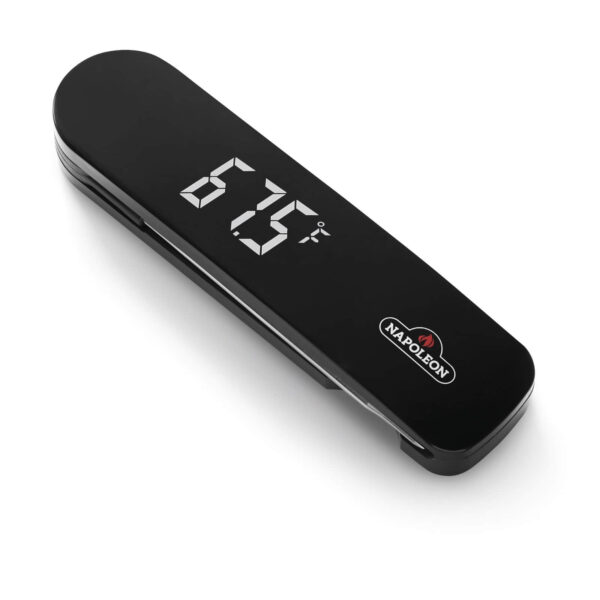
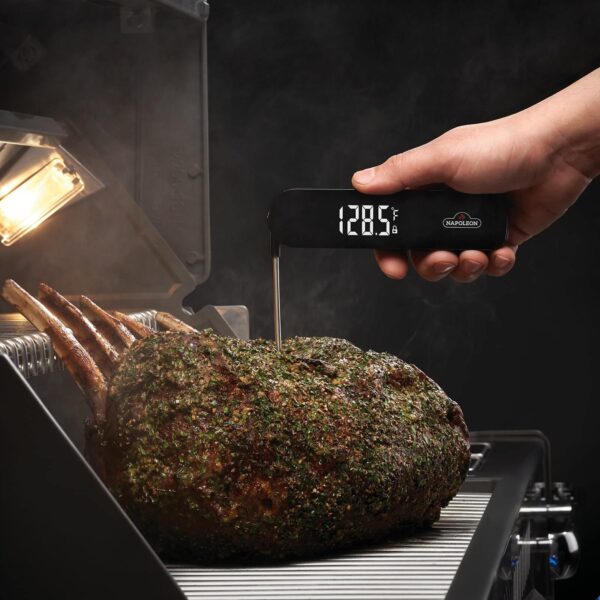
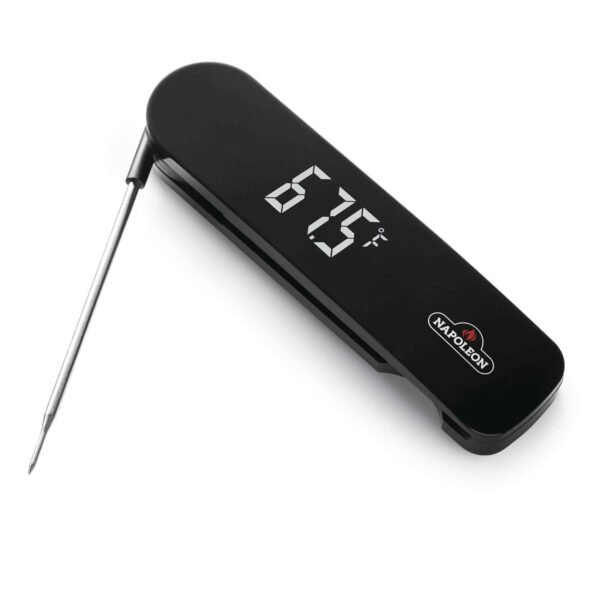
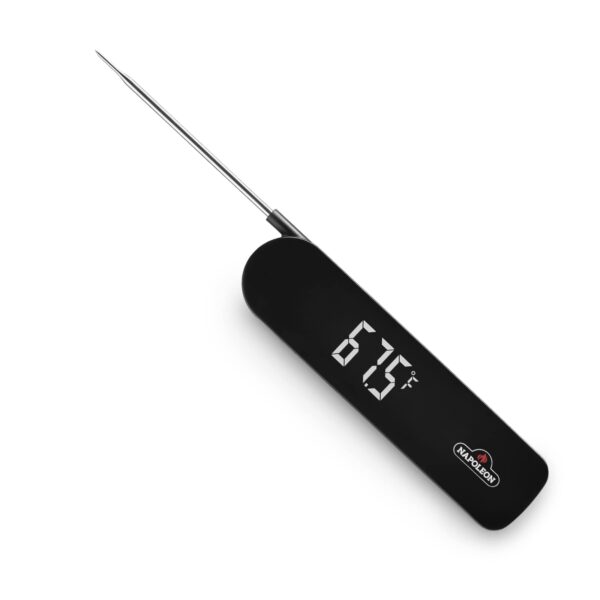
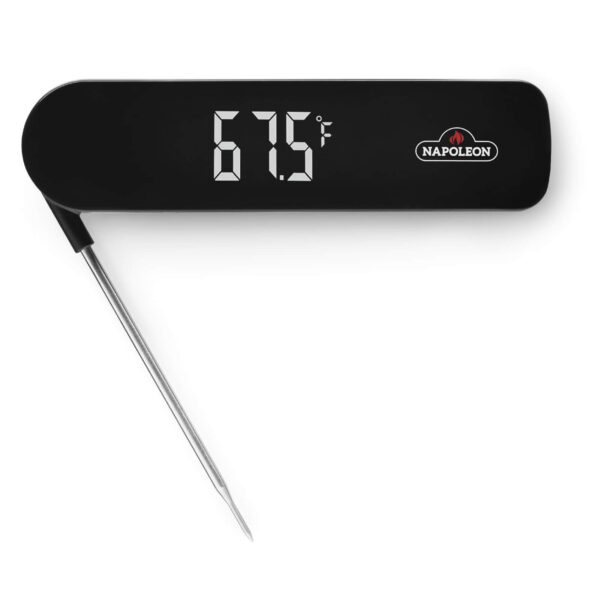
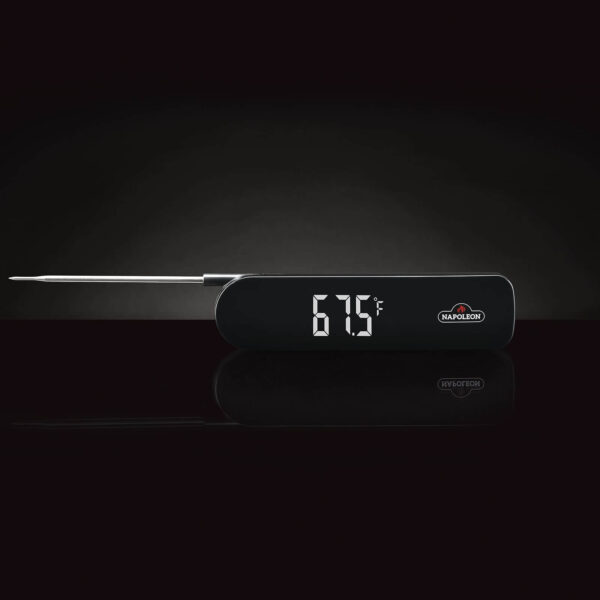
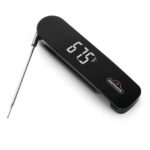
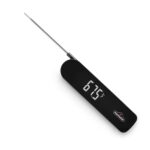
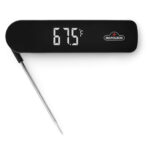
The quick-read function of this digital thermometer guarantees results in just 4 to 5 seconds. Whether you’re cooking meat, fish or poultry, the instant accuracy lets you know exactly when your food has reached the perfect temperature, ensuring perfectly cooked dishes every time.
Versatility in Units of Measurement
This thermometer offers the convenience of choosing between Celsius and Fahrenheit, making it ideal for both amateur and professional chefs. The ease of switching between these units of measurement makes it versatile and suitable for a variety of recipes and culinary preferences.
Foldable Design for Safe Storage
The clever folding design of this thermometer not only makes it compact and easy to handle, but also protects the probe when not in use. This feature enhances durability and safety, making it an essential and durable accessory for any kitchen or grill.
Auto Shut-Off Function for Durability
The thermometer automatically shuts off after 5 minutes of inactivity, helping to conserve battery life. This smart feature ensures that the thermometer is always ready to use when you need it, without the worry of changing batteries frequently.
Wide Temperature Range for Diverse Applications
With a temperature range from -50°C to 300°C, this thermometer is exceptionally versatile. It is ideal for a wide range of culinary applications, from grilling to baking, always ensuring the right temperature for every dish.
🛠️ Maintenance and Uses of Digital Thermometers to Extend Their Lifespan and Maximise Their Efficiency
The quick-read digital thermometer is not only a precision tool, but also an indispensable ally in any modern kitchen, whether at home or in a professional setting. Its ability to deliver results in just 4 to 5 seconds allows you to cook with confidence, avoiding both undercooking and overcooking food. However, to ensure optimal long-term performance, it is essential to adopt a proper routine of use and maintenance.
In addition to ensuring accurate readings, proper care of the thermometer extends its useful life, improves food hygiene, and protects your investment. Below are detailed recommendations that all users should follow to get the most out of this device.
✅ Steps for Proper Use and Maintenance
1. Before first use: Preparation and initial inspection
- Basic cleaning: Use a clean cloth slightly dampened with warm water and a few drops of mild soap to clean the stainless steel probe. Be sure not to wet the electronic body of the thermometer, especially the joints and LED display.
- Function test: Turn on the device to verify that the display lights up correctly and that the readings change when you move the probe or bring it close to heat sources.
- Initial setup: Select your preferred unit of measurement (°C or °F) using the corresponding button, depending on the recipes you plan to follow.
2. During use: Proper measurement technique
- Accurate insertion: Insert the probe into the centre of the thickest part of the food. In meat and poultry, avoid bones; in fish, be sure not to touch the skin or bones.
- Avoiding sources of error: Do not rest the probe on hot metal surfaces such as grills or trays, as this may alter the reading.
- Minimum wait: Wait 4 to 5 seconds for the sensor to accurately record the internal temperature.
- Cross-checking (optional): For large pieces, measure at different points to ensure even cooking.
3. After use: Cleaning, drying and storage
- Recommended manual cleaning: Never put it in the dishwasher or immerse it in water. Clean the probe with a damp cloth, warm water and soap, making sure to remove any grease or juice residue.
- Complete drying: Use a dry cloth or paper towel to remove all moisture. This prevents corrosion of the probe and prevents liquids from entering the internal mechanism.
- Safe storage: Fold the probe completely into the thermometer body. Thanks to its compact, foldable design, it can be easily stored in drawers or hung on kitchen hooks without risk of damage.
4. Additional storage and safety tips
- Avoid humid or hot environments: Do not store the thermometer near the sink or oven. Excessive humidity and heat can damage the internal electronic components.
- Check the battery periodically: The auto-off system after 5 minutes of inactivity helps conserve battery life, but it is advisable to check it monthly if used intensively.
- Protect the LED display: Avoid knocks, scratches or excessive pressure on the display to ensure the readings are clearly visible.
- For food use only: Do not use this thermometer to measure other substances such as industrial liquids, used oils or hot wax, as this could damage the sensor or affect its accuracy.
🍖 Recipe for Grilled Pork Loin Stuffed with Plums and Blue Cheese
A dish that combines sweet, savoury and smoky flavours: pork loin stuffed with prunes and blue cheese, cooked to perfection with the help of a digital thermometer. The result is juicy meat with a spectacular contrast of flavours, ideal for special dinners or gourmet weekends.
🧄 Ingredients:
- 1 pork tenderloin (approx. 1 kg)
- 100 g pitted prunes
- 80 g crumbled blue cheese
- 1 tablespoon whole grain mustard
- 2 tablespoons olive oil
- 1 clove garlic, minced
- Salt and pepper to taste
- Kitchen string (to tie the tenderloin)
👨🍳 Step-by-step preparation:
- Prepare the tenderloin:
- Make a deep longitudinal cut in the centre of the tenderloin without cutting all the way through (as if it were an open book).
- Season the inside with salt and pepper and spread with mustard.
- Filling:
- Distribute the prunes and blue cheese inside the tenderloin.
- Carefully close the tenderloin and tie it with kitchen string to maintain its shape and prevent the filling from escaping.
- Marinating:
- Mix the chopped garlic with the olive oil and a little more salt and pepper.
- Coat the outside of the tenderloin with this mixture and let it rest for 30 minutes in the refrigerator.
- Grill or bake:
- Preheat the grill to medium heat or the oven to 180°C.
- Place the tenderloin on the indirect grill or baking tray and cook slowly.
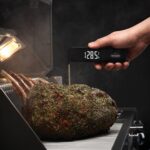
- Use a digital thermometer inserted into the centre of the tenderloin to ensure it reaches an internal temperature of 68°C (155°F). When removed from the heat, it will rise slightly to 70°C, the ideal cooking point for pork.
- Rest and serve:
- Let the tenderloin rest for 10 minutes before cutting.
- Serve in thick slices, accompanied by a fresh salad or rustic baked potatoes.
🌱 Vegetarian version of Roasted Aubergine Rolls with Plums and Blue Cheese
A meat-free alternative that maintains the contrast of flavours and enveloping texture. Ideal as a light main course or sophisticated starter.
🍆 Ingredients:
- 2 large aubergines, cut into long slices
- 80 g blue cheese
- 50 g chopped prunes
- Olive oil, salt and pepper
- Fresh basil leaves (optional)
👩🍳 Preparation:
- Roast the slices:
- Brush the aubergine slices with oil and roast them on the grill or in a frying pan until they are tender and marked.
- Fill and roll:
- Place a little blue cheese and prunes on each slice and roll it up carefully.
- Secure with toothpicks if necessary.
- Bake or grill:
- Place the rolls in the oven or on the grill for about 5-7 minutes. Use a thermometer to ensure the internal temperature reaches 70°C (158°F), which is ideal for melting the cheese without overcooking the aubergine.
- Serve:
- Garnish with fresh basil and serve with couscous or wild rice.