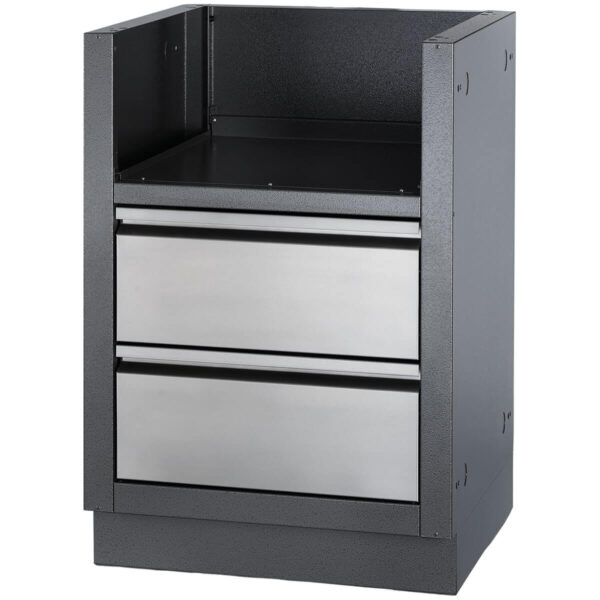
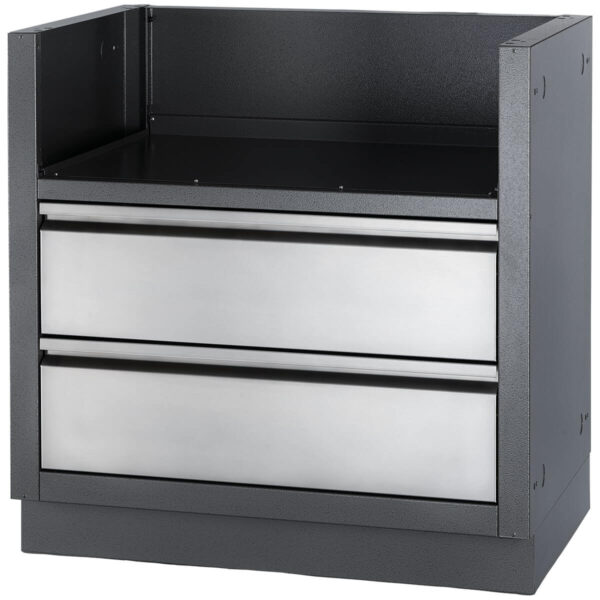
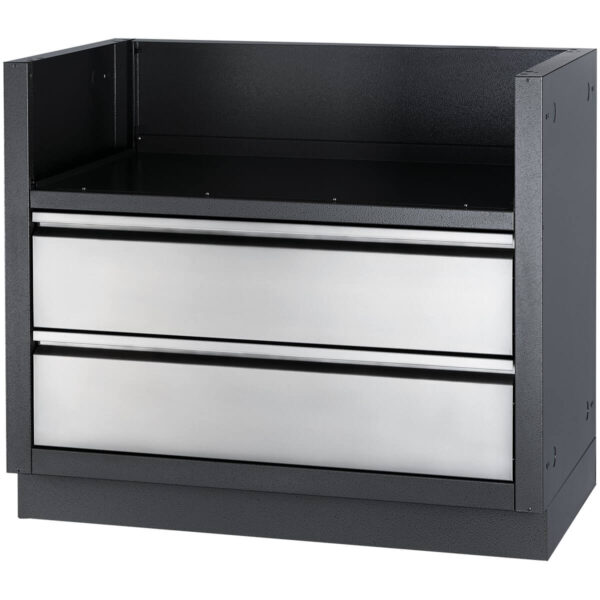
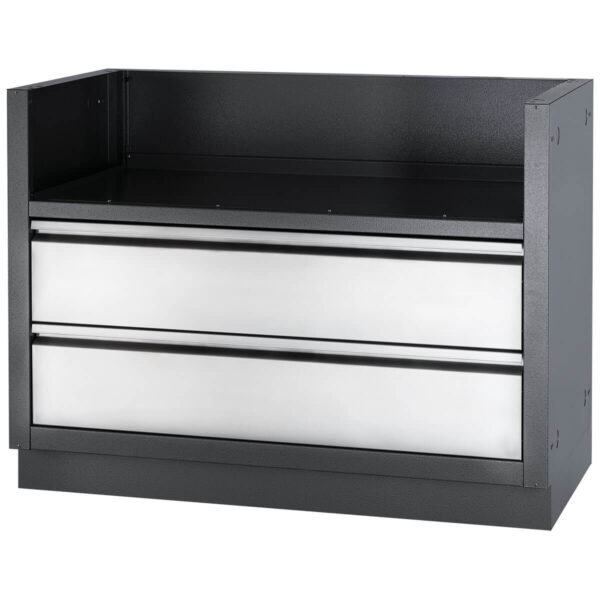
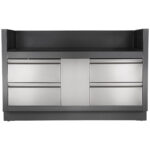
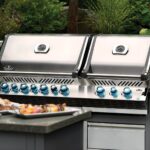
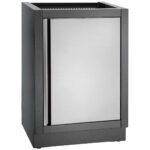
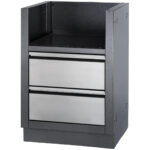
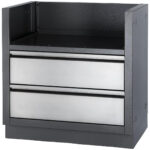
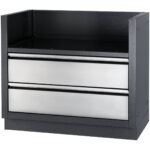
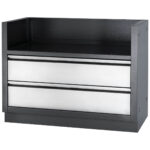
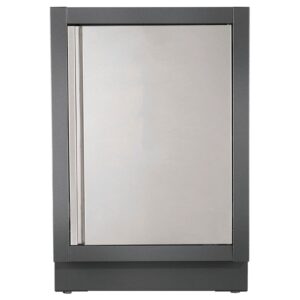
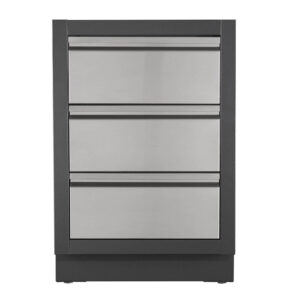
Design your outdoor kitchen like a pro, offering strength, modularity and high-level performance.
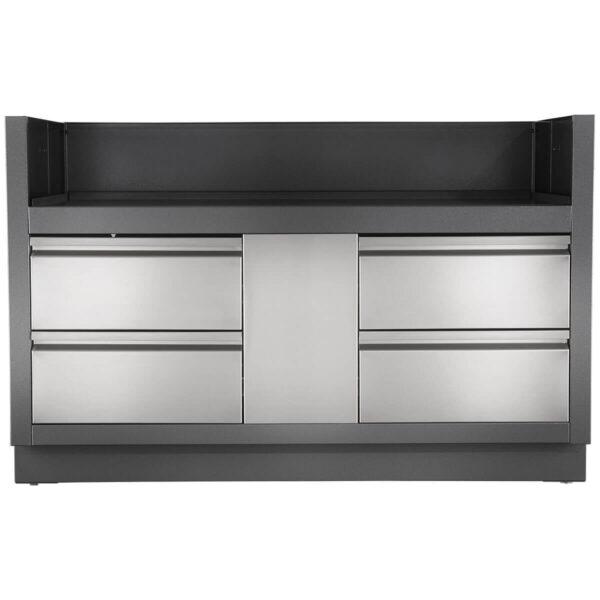
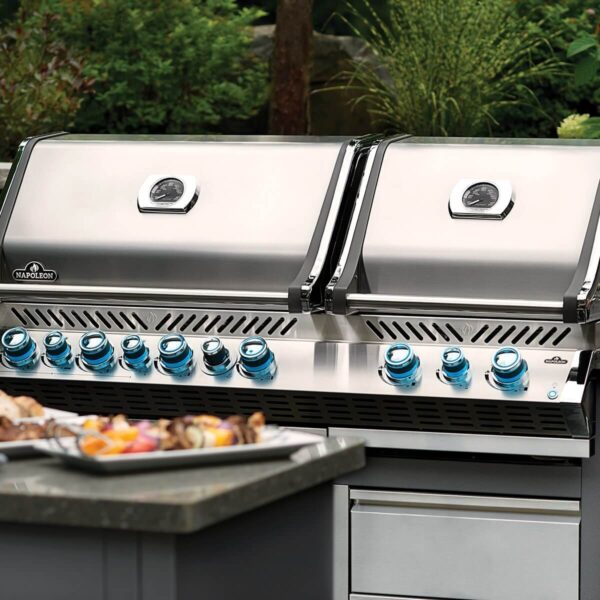
Napoleon Oasis built-in modules form the perfect basis for building a durable, functional and professionally designed outdoor kitchen. Their modular structure, thought out down to the smallest detail, allows each configuration to be adapted to the real needs of the user, integrating all types of components such as grills, side burners, storage cabinets or gas cylinders, with uniform aesthetics and long-lasting materials.
These modules are more than simple structures: they are the heart of a kitchen designed for high outdoor performance, capable of withstanding intense cooking sessions and the most demanding weather conditions.
Outdoor culinary architecture
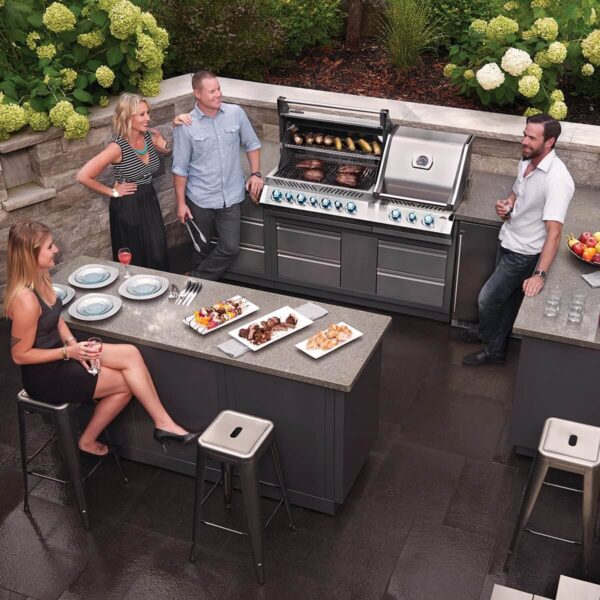
One of the greatest achievements of the Oasis series is its architectural flexibility. Each module can be combined with others using a system that maintains aesthetic and structural coherence. This not only makes it possible to adapt to large or small spaces, but also to configure separate cooking, preparation, washing and storage areas within a single outdoor kitchen.
In addition, the modules are designed to be integrated with customised worktops, allowing the user to choose between granite, stainless steel or composite materials, depending on their style and environment. The result is a professional, hard-wearing and visually striking kitchen that adapts to any outdoor project, whether domestic or commercial.
Corrosion-resistant technology designed to last
Each module in the Oasis range is made from high-density galvanised steel, a material that has been proven to withstand harsh weather conditions. This steel is subjected to a double-layer powder coating process, making it a structure that is highly resistant to water, UV rays, salt spray and intensive use.
This protection system not only prevents corrosion and aesthetic deterioration, but also prevents deformation or premature wear. The dark anthracite finish, with its smooth, contemporary texture, remains intact over time, bringing elegance and professionalism to any outdoor space.
Organisation, ergonomics and efficiency
The Oasis modules are designed to work as a natural extension of the chef or grill. They incorporate between two and four spacious drawers, depending on the model, all constructed in stainless steel and with full extension rail mechanisms and soft close. This allows kitchen tools, trays, spices and accessories to be organised with full accessibility, even during intense cooking.
They also incorporate pre-drilled technical openings, ready for the installation of natural gas or propane lines, electrical wiring and other components without the need for additional modifications. Each module includes high-precision adjustable levelling feet, essential for installations on terraces or stone floors where the surface is not completely even.
Ready to use and expandable for the future
One of the features most valued by users is the pre-assembled delivery of the modules, which minimises installation time and eliminates the need for technical assembly. This ensures not only faster installation, but also precise and safe alignment right from the start.
And because they are designed as an expandable system, Oasis modules can grow with the user: it is possible to start with a basic configuration and, as needs grow or space expands, add new storage modules, built-in ovens or additional preparation surfaces.
Total control over the final design
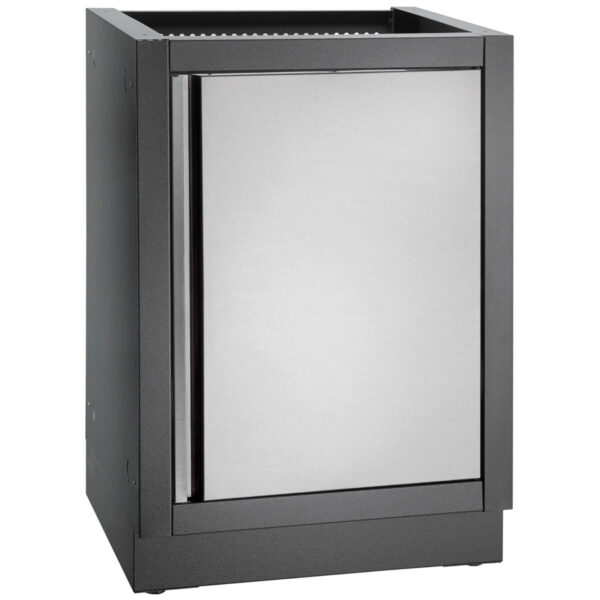
The ability to install the doors of some modules (such as the BI10/BIB10) in left or right-hand opening provides total design versatility, especially useful when space is limited or you want to maintain an ergonomic flow between the different components.
This, coupled with the rear ventilation ducts and blind installation holes, makes the modules effortless to integrate even in complex architectural projects, whether by swimming pools, in semi-covered kitchens, or terraces integrated into the interior.
Compatibility with cooling systems and external fittings
Some modules in the Oasis series are designed to integrate with external systems such as low-profile refrigerators or built-in sinks, making them the ideal base for a complete outdoor kitchen. This feature makes it possible to create free-standing kitchen islands with everything from refrigeration to running water, without losing aesthetic cohesion or structural functionality.
Models for every need
Much more than a barbecue
The Oasis modules also excel outside the world of grilling. They are ideal for:
-
Residential gourmet terraces with minimalist aesthetics and durable materials.
-
Commercial installations in hotels or restaurants with outdoor kitchens.
-
Food trucks or mobile showcooking stations, thanks to their strength and modularity.
-
Community kitchens or social clubs, where strength, order and flexibility are required.
Maintenance and Care of the Oasis Module to keep your outdoor kitchen investment performing at its best
Maintenance of
Napoleon Oasis modules is not only intended to preserve their aesthetic appearance, but also to ensure their structural and mechanical functionality for many years to come. As this is a high-end modular system with moving parts and technical connections, it is essential to follow a structured and regular care routine. Below, we offer a comprehensive guide divided by frequency and area of the module to help you keep your units in perfect condition, even in demanding weather conditions.
1. Cleaning exterior surfaces (daily or weekly use)
Objective: to prevent the accumulation of dust, grease, salt and surface stains.
Recommended frequency: after each use or at least once a week.
Steps to follow:
- Use a soft microfibre cloth and warm water with neutral soap.
- Never use metal scourers or abrasive products, as these could damage the powder coating.
- For stubborn stains (such as baked-on grease or char marks), apply mild, acid-free degreasers.
- Dry surfaces with a dry cotton cloth to prevent moisture stains or limescale marks, especially in coastal environments.
Technical tip: avoid using products containing ammonia, as these can affect the integrity of the powder coating over time.
2. Stainless steel maintenance (monthly)
Objective: to preserve shine, prevent surface oxidation and remove fingerprints or grease.
Recommended frequency: once a month (more often if cooking daily).
Steps to follow:
- Apply specific stainless steel cleaners with a microfibre cloth, following the direction of the metal grain.
- For more difficult areas, use white vinegar diluted in warm water as a natural option.
- Dry thoroughly to prevent water spots.
Extra: you can apply a light coat of food-grade mineral oil to the drawers to create an additional protective film.
3. Check and lubricate moving parts (every 3 months)
Objective: to ensure the smooth operation of drawers, hinges and levelling feet.
Recommended frequency: every three months, or before the peak season.
Steps to follow:
- Fully extend the drawers and clean the guides with compressed air or a dry brush.
- Apply silicone spray lubricant or white lithium grease to ensure smooth sliding.
- Check that the door hinges are aligned and securely fastened.
- Check the levelling feet and adjust them if there are any uneven surfaces that affect the stability of the unit.
Important: do not use industrial mineral oils, as these can accumulate dust or interfere with the soft-close mechanism.
4. Technical inspection of gas and electrical connections (annually or upon installation)
Objective: to ensure safety, energy efficiency and prevent leaks.
Recommended frequency: once a year or whenever new elements are added to the outdoor kitchen.
Steps to follow:
- Check that blind holes and access perforations are not blocked by dust, grease or debris.
- Check the condition of the gas hoses: if you notice cracks, hardening or discolouration, replace them immediately.
- Ensure that electrical connections (if lighting or sockets are integrated) are protected from moisture using sealants or protective covers.
Professional recommendation: hire a specialist technician if you detect a gas smell, irregular sputtering or any other abnormal symptoms during operation.
5. Seasonal protection and long-term storage
Objective: to preserve the integrity of the module during periods of prolonged inactivity (winter or heavy rain).
Recommended frequency: whenever the module will not be used for more than 2 consecutive weeks.
Steps to follow:
- Thoroughly clean all surfaces, both internal and external.
- Apply protective products for stainless steel or ceramic spray coatings to preserve the outer layer.
- Cover the module with a high-quality breathable cover that protects against dust and moisture without condensation.
- If possible, disconnect gas or power lines until normal use resumes.
Pro Tip: label modules if they are part of a complex kitchen to keep track of individual maintenance.
6. Preventing common problems: how to anticipate wear and tear
Slight surface oxidation: usually occurs in marine environments. Solution: apply stainless steel cleaner + dry immediately.
Difficulty opening drawers: this may be due to dirt build-up on the runners. Solution: clean with compressed air + lubricate.
Noise or structural imbalance: the levelling feet may be loose or poorly adjusted. Solution: readjust using a spirit level.
Maintenance and Care of the Oasis Module to keep your outdoor kitchen investment performing at its best
Maintenance of
Napoleon Oasis modules is not only intended to preserve their aesthetic appearance, but also to ensure their structural and mechanical functionality for many years to come. As this is a high-end modular system with moving parts and technical connections, it is essential to follow a structured and regular care routine. Below, we offer a comprehensive guide divided by frequency and area of the module to help you keep your units in perfect condition, even in demanding weather conditions.
1. Cleaning exterior surfaces (daily or weekly use)
Objective: to prevent the accumulation of dust, grease, salt and surface stains.
Recommended frequency: after each use or at least once a week.
Steps to follow:
- Use a soft microfibre cloth and warm water with neutral soap.
- Never use metal scourers or abrasive products, as these could damage the powder coating.
- For stubborn stains (such as baked-on grease or char marks), apply mild, acid-free degreasers.
- Dry surfaces with a dry cotton cloth to prevent moisture stains or limescale marks, especially in coastal environments.
Technical tip: avoid using products containing ammonia, as these can affect the integrity of the powder coating over time.
2. Stainless steel maintenance (monthly)
Objective: to preserve shine, prevent surface oxidation and remove fingerprints or grease.
Recommended frequency: once a month (more often if cooking daily).
Steps to follow:
- Apply specific stainless steel cleaners with a microfibre cloth, following the direction of the metal grain.
- For more difficult areas, use white vinegar diluted in warm water as a natural option.
- Dry thoroughly to prevent water spots.
Extra: you can apply a light coat of food-grade mineral oil to the drawers to create an additional protective film.
3. Check and lubricate moving parts (every 3 months)
Objective: to ensure the smooth operation of drawers, hinges and levelling feet.
Recommended frequency: every three months, or before the peak season.
Steps to follow:
- Fully extend the drawers and clean the guides with compressed air or a dry brush.
- Apply silicone spray lubricant or white lithium grease to ensure smooth sliding.
- Check that the door hinges are aligned and securely fastened.
- Check the levelling feet and adjust them if there are any uneven surfaces that affect the stability of the unit.
Important: do not use industrial mineral oils, as these can accumulate dust or interfere with the soft-close mechanism.
4. Technical inspection of gas and electrical connections (annually or upon installation)
Objective: to ensure safety, energy efficiency and prevent leaks.
Recommended frequency: once a year or whenever new elements are added to the outdoor kitchen.
Steps to follow:
- Check that blind holes and access perforations are not blocked by dust, grease or debris.
- Check the condition of the gas hoses: if you notice cracks, hardening or discolouration, replace them immediately.
- Ensure that electrical connections (if lighting or sockets are integrated) are protected from moisture using sealants or protective covers.
Professional recommendation: hire a specialist technician if you detect a gas smell, irregular sputtering or any other abnormal symptoms during operation.
5. Seasonal protection and long-term storage
Objective: to preserve the integrity of the module during periods of prolonged inactivity (winter or heavy rain).
Recommended frequency: whenever the module will not be used for more than 2 consecutive weeks.
Steps to follow:
- Thoroughly clean all surfaces, both internal and external.
- Apply protective products for stainless steel or ceramic spray coatings to preserve the outer layer.
- Cover the module with a high-quality breathable cover that protects against dust and moisture without condensation.
- If possible, disconnect gas or power lines until normal use resumes.
Pro Tip: label modules if they are part of a complex kitchen to keep track of individual maintenance.
6. Preventing common problems: how to anticipate wear and tear
Slight surface oxidation: usually occurs in marine environments. Solution: apply stainless steel cleaner + dry immediately.
Difficulty opening drawers: this may be due to dirt build-up on the runners. Solution: clean with compressed air + lubricate.
Noise or structural imbalance: the levelling feet may be loose or poorly adjusted. Solution: readjust using a spirit level.
Maintenance and Care of the Oasis Module to keep your outdoor kitchen investment performing at its best
Maintenance of
Napoleon Oasis modules is not only intended to preserve their aesthetic appearance, but also to ensure their structural and mechanical functionality for many years to come. As this is a high-end modular system with moving parts and technical connections, it is essential to follow a structured and regular care routine. Below, we offer a comprehensive guide divided by frequency and area of the module to help you keep your units in perfect condition, even in demanding weather conditions.
1. Cleaning exterior surfaces (daily or weekly use)
Objective: to prevent the accumulation of dust, grease, salt and surface stains.
Recommended frequency: after each use or at least once a week.
Steps to follow:
- Use a soft microfibre cloth and warm water with neutral soap.
- Never use metal scourers or abrasive products, as these could damage the powder coating.
- For stubborn stains (such as baked-on grease or char marks), apply mild, acid-free degreasers.
- Dry surfaces with a dry cotton cloth to prevent moisture stains or limescale marks, especially in coastal environments.
Technical tip: avoid using products containing ammonia, as these can affect the integrity of the powder coating over time.
2. Stainless steel maintenance (monthly)
Objective: to preserve shine, prevent surface oxidation and remove fingerprints or grease.
Recommended frequency: once a month (more often if cooking daily).
Steps to follow:
- Apply specific stainless steel cleaners with a microfibre cloth, following the direction of the metal grain.
- For more difficult areas, use white vinegar diluted in warm water as a natural option.
- Dry thoroughly to prevent water spots.
Extra: you can apply a light coat of food-grade mineral oil to the drawers to create an additional protective film.
3. Check and lubricate moving parts (every 3 months)
Objective: to ensure the smooth operation of drawers, hinges and levelling feet.
Recommended frequency: every three months, or before the peak season.
Steps to follow:
- Fully extend the drawers and clean the guides with compressed air or a dry brush.
- Apply silicone spray lubricant or white lithium grease to ensure smooth sliding.
- Check that the door hinges are aligned and securely fastened.
- Check the levelling feet and adjust them if there are any uneven surfaces that affect the stability of the unit.
Important: do not use industrial mineral oils, as these can accumulate dust or interfere with the soft-close mechanism.
4. Technical inspection of gas and electrical connections (annually or upon installation)
Objective: to ensure safety, energy efficiency and prevent leaks.
Recommended frequency: once a year or whenever new elements are added to the outdoor kitchen.
Steps to follow:
- Check that blind holes and access perforations are not blocked by dust, grease or debris.
- Check the condition of the gas hoses: if you notice cracks, hardening or discolouration, replace them immediately.
- Ensure that electrical connections (if lighting or sockets are integrated) are protected from moisture using sealants or protective covers.
Professional recommendation: hire a specialist technician if you detect a gas smell, irregular sputtering or any other abnormal symptoms during operation.
5. Seasonal protection and long-term storage
Objective: to preserve the integrity of the module during periods of prolonged inactivity (winter or heavy rain).
Recommended frequency: whenever the module will not be used for more than 2 consecutive weeks.
Steps to follow:
- Thoroughly clean all surfaces, both internal and external.
- Apply protective products for stainless steel or ceramic spray coatings to preserve the outer layer.
- Cover the module with a high-quality breathable cover that protects against dust and moisture without condensation.
- If possible, disconnect gas or power lines until normal use resumes.
Pro Tip: label modules if they are part of a complex kitchen to keep track of individual maintenance.
6. Preventing common problems: how to anticipate wear and tear
Slight surface oxidation: usually occurs in marine environments. Solution: apply stainless steel cleaner + dry immediately.
Difficulty opening drawers: this may be due to dirt build-up on the runners. Solution: clean with compressed air + lubricate.
Noise or structural imbalance: the levelling feet may be loose or poorly adjusted. Solution: readjust using a spirit level.
Maintenance and Care of the Oasis Module to keep your outdoor kitchen investment performing at its best
Maintenance of
Napoleon Oasis modules is not only intended to preserve their aesthetic appearance, but also to ensure their structural and mechanical functionality for many years to come. As this is a high-end modular system with moving parts and technical connections, it is essential to follow a structured and regular care routine. Below, we offer a comprehensive guide divided by frequency and area of the module to help you keep your units in perfect condition, even in demanding weather conditions.
1. Cleaning exterior surfaces (daily or weekly use)
Objective: to prevent the accumulation of dust, grease, salt and surface stains.
Recommended frequency: after each use or at least once a week.
Steps to follow:
- Use a soft microfibre cloth and warm water with neutral soap.
- Never use metal scourers or abrasive products, as these could damage the powder coating.
- For stubborn stains (such as baked-on grease or char marks), apply mild, acid-free degreasers.
- Dry surfaces with a dry cotton cloth to prevent moisture stains or limescale marks, especially in coastal environments.
Technical tip: avoid using products containing ammonia, as these can affect the integrity of the powder coating over time.
2. Stainless steel maintenance (monthly)
Objective: to preserve shine, prevent surface oxidation and remove fingerprints or grease.
Recommended frequency: once a month (more often if cooking daily).
Steps to follow:
- Apply specific stainless steel cleaners with a microfibre cloth, following the direction of the metal grain.
- For more difficult areas, use white vinegar diluted in warm water as a natural option.
- Dry thoroughly to prevent water spots.
Extra: you can apply a light coat of food-grade mineral oil to the drawers to create an additional protective film.
3. Check and lubricate moving parts (every 3 months)
Objective: to ensure the smooth operation of drawers, hinges and levelling feet.
Recommended frequency: every three months, or before the peak season.
Steps to follow:
- Fully extend the drawers and clean the guides with compressed air or a dry brush.
- Apply silicone spray lubricant or white lithium grease to ensure smooth sliding.
- Check that the door hinges are aligned and securely fastened.
- Check the levelling feet and adjust them if there are any uneven surfaces that affect the stability of the unit.
Important: do not use industrial mineral oils, as these can accumulate dust or interfere with the soft-close mechanism.
4. Technical inspection of gas and electrical connections (annually or upon installation)
Objective: to ensure safety, energy efficiency and prevent leaks.
Recommended frequency: once a year or whenever new elements are added to the outdoor kitchen.
Steps to follow:
- Check that blind holes and access perforations are not blocked by dust, grease or debris.
- Check the condition of the gas hoses: if you notice cracks, hardening or discolouration, replace them immediately.
- Ensure that electrical connections (if lighting or sockets are integrated) are protected from moisture using sealants or protective covers.
Professional recommendation: hire a specialist technician if you detect a gas smell, irregular sputtering or any other abnormal symptoms during operation.
5. Seasonal protection and long-term storage
Objective: to preserve the integrity of the module during periods of prolonged inactivity (winter or heavy rain).
Recommended frequency: whenever the module will not be used for more than 2 consecutive weeks.
Steps to follow:
- Thoroughly clean all surfaces, both internal and external.
- Apply protective products for stainless steel or ceramic spray coatings to preserve the outer layer.
- Cover the module with a high-quality breathable cover that protects against dust and moisture without condensation.
- If possible, disconnect gas or power lines until normal use resumes.
Pro Tip: label modules if they are part of a complex kitchen to keep track of individual maintenance.
6. Preventing common problems: how to anticipate wear and tear
Slight surface oxidation: usually occurs in marine environments. Solution: apply stainless steel cleaner + dry immediately.
Difficulty opening drawers: this may be due to dirt build-up on the runners. Solution: clean with compressed air + lubricate.
Noise or structural imbalance: the levelling feet may be loose or poorly adjusted. Solution: readjust using a spirit level.
Maintenance and Care of the Oasis Module to keep your outdoor kitchen investment performing at its best
Maintenance of
Napoleon Oasis modules is not only intended to preserve their aesthetic appearance, but also to ensure their structural and mechanical functionality for many years to come. As this is a high-end modular system with moving parts and technical connections, it is essential to follow a structured and regular care routine. Below, we offer a comprehensive guide divided by frequency and area of the module to help you keep your units in perfect condition, even in demanding weather conditions.
1. Cleaning exterior surfaces (daily or weekly use)
Objective: to prevent the accumulation of dust, grease, salt and surface stains.
Recommended frequency: after each use or at least once a week.
Steps to follow:
- Use a soft microfibre cloth and warm water with neutral soap.
- Never use metal scourers or abrasive products, as these could damage the powder coating.
- For stubborn stains (such as baked-on grease or char marks), apply mild, acid-free degreasers.
- Dry surfaces with a dry cotton cloth to prevent moisture stains or limescale marks, especially in coastal environments.
Technical tip: avoid using products containing ammonia, as these can affect the integrity of the powder coating over time.
2. Stainless steel maintenance (monthly)
Objective: to preserve shine, prevent surface oxidation and remove fingerprints or grease.
Recommended frequency: once a month (more often if cooking daily).
Steps to follow:
- Apply specific stainless steel cleaners with a microfibre cloth, following the direction of the metal grain.
- For more difficult areas, use white vinegar diluted in warm water as a natural option.
- Dry thoroughly to prevent water spots.
Extra: you can apply a light coat of food-grade mineral oil to the drawers to create an additional protective film.
3. Check and lubricate moving parts (every 3 months)
Objective: to ensure the smooth operation of drawers, hinges and levelling feet.
Recommended frequency: every three months, or before the peak season.
Steps to follow:
- Fully extend the drawers and clean the guides with compressed air or a dry brush.
- Apply silicone spray lubricant or white lithium grease to ensure smooth sliding.
- Check that the door hinges are aligned and securely fastened.
- Check the levelling feet and adjust them if there are any uneven surfaces that affect the stability of the unit.
Important: do not use industrial mineral oils, as these can accumulate dust or interfere with the soft-close mechanism.
4. Technical inspection of gas and electrical connections (annually or upon installation)
Objective: to ensure safety, energy efficiency and prevent leaks.
Recommended frequency: once a year or whenever new elements are added to the outdoor kitchen.
Steps to follow:
- Check that blind holes and access perforations are not blocked by dust, grease or debris.
- Check the condition of the gas hoses: if you notice cracks, hardening or discolouration, replace them immediately.
- Ensure that electrical connections (if lighting or sockets are integrated) are protected from moisture using sealants or protective covers.
Professional recommendation: hire a specialist technician if you detect a gas smell, irregular sputtering or any other abnormal symptoms during operation.
5. Seasonal protection and long-term storage
Objective: to preserve the integrity of the module during periods of prolonged inactivity (winter or heavy rain).
Recommended frequency: whenever the module will not be used for more than 2 consecutive weeks.
Steps to follow:
- Thoroughly clean all surfaces, both internal and external.
- Apply protective products for stainless steel or ceramic spray coatings to preserve the outer layer.
- Cover the module with a high-quality breathable cover that protects against dust and moisture without condensation.
- If possible, disconnect gas or power lines until normal use resumes.
Pro Tip: label modules if they are part of a complex kitchen to keep track of individual maintenance.
6. Preventing common problems: how to anticipate wear and tear
Slight surface oxidation: usually occurs in marine environments. Solution: apply stainless steel cleaner + dry immediately.
Difficulty opening drawers: this may be due to dirt build-up on the runners. Solution: clean with compressed air + lubricate.
Noise or structural imbalance: the levelling feet may be loose or poorly adjusted. Solution: readjust using a spirit level.
Maintenance and Care of the Oasis Module to keep your outdoor kitchen investment performing at its best
Maintenance of
Napoleon Oasis modules is not only intended to preserve their aesthetic appearance, but also to ensure their structural and mechanical functionality for many years to come. As this is a high-end modular system with moving parts and technical connections, it is essential to follow a structured and regular care routine. Below, we offer a comprehensive guide divided by frequency and area of the module to help you keep your units in perfect condition, even in demanding weather conditions.
1. Cleaning exterior surfaces (daily or weekly use)
Objective: to prevent the accumulation of dust, grease, salt and surface stains.
Recommended frequency: after each use or at least once a week.
Steps to follow:
- Use a soft microfibre cloth and warm water with neutral soap.
- Never use metal scourers or abrasive products, as these could damage the powder coating.
- For stubborn stains (such as baked-on grease or char marks), apply mild, acid-free degreasers.
- Dry surfaces with a dry cotton cloth to prevent moisture stains or limescale marks, especially in coastal environments.
Technical tip: avoid using products containing ammonia, as these can affect the integrity of the powder coating over time.
2. Stainless steel maintenance (monthly)
Objective: to preserve shine, prevent surface oxidation and remove fingerprints or grease.
Recommended frequency: once a month (more often if cooking daily).
Steps to follow:
- Apply specific stainless steel cleaners with a microfibre cloth, following the direction of the metal grain.
- For more difficult areas, use white vinegar diluted in warm water as a natural option.
- Dry thoroughly to prevent water spots.
Extra: you can apply a light coat of food-grade mineral oil to the drawers to create an additional protective film.
3. Check and lubricate moving parts (every 3 months)
Objective: to ensure the smooth operation of drawers, hinges and levelling feet.
Recommended frequency: every three months, or before the peak season.
Steps to follow:
- Fully extend the drawers and clean the guides with compressed air or a dry brush.
- Apply silicone spray lubricant or white lithium grease to ensure smooth sliding.
- Check that the door hinges are aligned and securely fastened.
- Check the levelling feet and adjust them if there are any uneven surfaces that affect the stability of the unit.
Important: do not use industrial mineral oils, as these can accumulate dust or interfere with the soft-close mechanism.
4. Technical inspection of gas and electrical connections (annually or upon installation)
Objective: to ensure safety, energy efficiency and prevent leaks.
Recommended frequency: once a year or whenever new elements are added to the outdoor kitchen.
Steps to follow:
- Check that blind holes and access perforations are not blocked by dust, grease or debris.
- Check the condition of the gas hoses: if you notice cracks, hardening or discolouration, replace them immediately.
- Ensure that electrical connections (if lighting or sockets are integrated) are protected from moisture using sealants or protective covers.
Professional recommendation: hire a specialist technician if you detect a gas smell, irregular sputtering or any other abnormal symptoms during operation.
5. Seasonal protection and long-term storage
Objective: to preserve the integrity of the module during periods of prolonged inactivity (winter or heavy rain).
Recommended frequency: whenever the module will not be used for more than 2 consecutive weeks.
Steps to follow:
- Thoroughly clean all surfaces, both internal and external.
- Apply protective products for stainless steel or ceramic spray coatings to preserve the outer layer.
- Cover the module with a high-quality breathable cover that protects against dust and moisture without condensation.
- If possible, disconnect gas or power lines until normal use resumes.
Pro Tip: label modules if they are part of a complex kitchen to keep track of individual maintenance.
6. Preventing common problems: how to anticipate wear and tear
Slight surface oxidation: usually occurs in marine environments. Solution: apply stainless steel cleaner + dry immediately.
Difficulty opening drawers: this may be due to dirt build-up on the runners. Solution: clean with compressed air + lubricate.
Noise or structural imbalance: the levelling feet may be loose or poorly adjusted. Solution: readjust using a spirit level.
Maintenance and Care of the Oasis Module to keep your outdoor kitchen investment performing at its best
Maintenance of
Napoleon Oasis modules is not only intended to preserve their aesthetic appearance, but also to ensure their structural and mechanical functionality for many years to come. As this is a high-end modular system with moving parts and technical connections, it is essential to follow a structured and regular care routine. Below, we offer a comprehensive guide divided by frequency and area of the module to help you keep your units in perfect condition, even in demanding weather conditions.
1. Cleaning exterior surfaces (daily or weekly use)
Objective: to prevent the accumulation of dust, grease, salt and surface stains.
Recommended frequency: after each use or at least once a week.
Steps to follow:
- Use a soft microfibre cloth and warm water with neutral soap.
- Never use metal scourers or abrasive products, as these could damage the powder coating.
- For stubborn stains (such as baked-on grease or char marks), apply mild, acid-free degreasers.
- Dry surfaces with a dry cotton cloth to prevent moisture stains or limescale marks, especially in coastal environments.
Technical tip: avoid using products containing ammonia, as these can affect the integrity of the powder coating over time.
2. Stainless steel maintenance (monthly)
Objective: to preserve shine, prevent surface oxidation and remove fingerprints or grease.
Recommended frequency: once a month (more often if cooking daily).
Steps to follow:
- Apply specific stainless steel cleaners with a microfibre cloth, following the direction of the metal grain.
- For more difficult areas, use white vinegar diluted in warm water as a natural option.
- Dry thoroughly to prevent water spots.
Extra: you can apply a light coat of food-grade mineral oil to the drawers to create an additional protective film.
3. Check and lubricate moving parts (every 3 months)
Objective: to ensure the smooth operation of drawers, hinges and levelling feet.
Recommended frequency: every three months, or before the peak season.
Steps to follow:
- Fully extend the drawers and clean the guides with compressed air or a dry brush.
- Apply silicone spray lubricant or white lithium grease to ensure smooth sliding.
- Check that the door hinges are aligned and securely fastened.
- Check the levelling feet and adjust them if there are any uneven surfaces that affect the stability of the unit.
Important: do not use industrial mineral oils, as these can accumulate dust or interfere with the soft-close mechanism.
4. Technical inspection of gas and electrical connections (annually or upon installation)
Objective: to ensure safety, energy efficiency and prevent leaks.
Recommended frequency: once a year or whenever new elements are added to the outdoor kitchen.
Steps to follow:
- Check that blind holes and access perforations are not blocked by dust, grease or debris.
- Check the condition of the gas hoses: if you notice cracks, hardening or discolouration, replace them immediately.
- Ensure that electrical connections (if lighting or sockets are integrated) are protected from moisture using sealants or protective covers.
Professional recommendation: hire a specialist technician if you detect a gas smell, irregular sputtering or any other abnormal symptoms during operation.
5. Seasonal protection and long-term storage
Objective: to preserve the integrity of the module during periods of prolonged inactivity (winter or heavy rain).
Recommended frequency: whenever the module will not be used for more than 2 consecutive weeks.
Steps to follow:
- Thoroughly clean all surfaces, both internal and external.
- Apply protective products for stainless steel or ceramic spray coatings to preserve the outer layer.
- Cover the module with a high-quality breathable cover that protects against dust and moisture without condensation.
- If possible, disconnect gas or power lines until normal use resumes.
Pro Tip: label modules if they are part of a complex kitchen to keep track of individual maintenance.
6. Preventing common problems: how to anticipate wear and tear
Slight surface oxidation: usually occurs in marine environments. Solution: apply stainless steel cleaner + dry immediately.
Difficulty opening drawers: this may be due to dirt build-up on the runners. Solution: clean with compressed air + lubricate.
Noise or structural imbalance: the levelling feet may be loose or poorly adjusted. Solution: readjust using a spirit level.
Maintenance and Care of the Oasis Module to keep your outdoor kitchen investment performing at its best
Maintenance of
Napoleon Oasis modules is not only intended to preserve their aesthetic appearance, but also to ensure their structural and mechanical functionality for many years to come. As this is a high-end modular system with moving parts and technical connections, it is essential to follow a structured and regular care routine. Below, we offer a comprehensive guide divided by frequency and area of the module to help you keep your units in perfect condition, even in demanding weather conditions.
1. Cleaning exterior surfaces (daily or weekly use)
Objective: to prevent the accumulation of dust, grease, salt and surface stains.
Recommended frequency: after each use or at least once a week.
Steps to follow:
- Use a soft microfibre cloth and warm water with neutral soap.
- Never use metal scourers or abrasive products, as these could damage the powder coating.
- For stubborn stains (such as baked-on grease or char marks), apply mild, acid-free degreasers.
- Dry surfaces with a dry cotton cloth to prevent moisture stains or limescale marks, especially in coastal environments.
Technical tip: avoid using products containing ammonia, as these can affect the integrity of the powder coating over time.
2. Stainless steel maintenance (monthly)
Objective: to preserve shine, prevent surface oxidation and remove fingerprints or grease.
Recommended frequency: once a month (more often if cooking daily).
Steps to follow:
- Apply specific stainless steel cleaners with a microfibre cloth, following the direction of the metal grain.
- For more difficult areas, use white vinegar diluted in warm water as a natural option.
- Dry thoroughly to prevent water spots.
Extra: you can apply a light coat of food-grade mineral oil to the drawers to create an additional protective film.
3. Check and lubricate moving parts (every 3 months)
Objective: to ensure the smooth operation of drawers, hinges and levelling feet.
Recommended frequency: every three months, or before the peak season.
Steps to follow:
- Fully extend the drawers and clean the guides with compressed air or a dry brush.
- Apply silicone spray lubricant or white lithium grease to ensure smooth sliding.
- Check that the door hinges are aligned and securely fastened.
- Check the levelling feet and adjust them if there are any uneven surfaces that affect the stability of the unit.
Important: do not use industrial mineral oils, as these can accumulate dust or interfere with the soft-close mechanism.
4. Technical inspection of gas and electrical connections (annually or upon installation)
Objective: to ensure safety, energy efficiency and prevent leaks.
Recommended frequency: once a year or whenever new elements are added to the outdoor kitchen.
Steps to follow:
- Check that blind holes and access perforations are not blocked by dust, grease or debris.
- Check the condition of the gas hoses: if you notice cracks, hardening or discolouration, replace them immediately.
- Ensure that electrical connections (if lighting or sockets are integrated) are protected from moisture using sealants or protective covers.
Professional recommendation: hire a specialist technician if you detect a gas smell, irregular sputtering or any other abnormal symptoms during operation.
5. Seasonal protection and long-term storage
Objective: to preserve the integrity of the module during periods of prolonged inactivity (winter or heavy rain).
Recommended frequency: whenever the module will not be used for more than 2 consecutive weeks.
Steps to follow:
- Thoroughly clean all surfaces, both internal and external.
- Apply protective products for stainless steel or ceramic spray coatings to preserve the outer layer.
- Cover the module with a high-quality breathable cover that protects against dust and moisture without condensation.
- If possible, disconnect gas or power lines until normal use resumes.
Pro Tip: label modules if they are part of a complex kitchen to keep track of individual maintenance.
6. Preventing common problems: how to anticipate wear and tear
Slight surface oxidation: usually occurs in marine environments. Solution: apply stainless steel cleaner + dry immediately.
Difficulty opening drawers: this may be due to dirt build-up on the runners. Solution: clean with compressed air + lubricate.
Noise or structural imbalance: the levelling feet may be loose or poorly adjusted. Solution: readjust using a spirit level.
Maintenance and Care of the Oasis Module to keep your outdoor kitchen investment performing at its best
Maintenance of
Napoleon Oasis modules is not only intended to preserve their aesthetic appearance, but also to ensure their structural and mechanical functionality for many years to come. As this is a high-end modular system with moving parts and technical connections, it is essential to follow a structured and regular care routine. Below, we offer a comprehensive guide divided by frequency and area of the module to help you keep your units in perfect condition, even in demanding weather conditions.
1. Cleaning exterior surfaces (daily or weekly use)
Objective: to prevent the accumulation of dust, grease, salt and surface stains.
Recommended frequency: after each use or at least once a week.
Steps to follow:
- Use a soft microfibre cloth and warm water with neutral soap.
- Never use metal scourers or abrasive products, as these could damage the powder coating.
- For stubborn stains (such as baked-on grease or char marks), apply mild, acid-free degreasers.
- Dry surfaces with a dry cotton cloth to prevent moisture stains or limescale marks, especially in coastal environments.
Technical tip: avoid using products containing ammonia, as these can affect the integrity of the powder coating over time.
2. Stainless steel maintenance (monthly)
Objective: to preserve shine, prevent surface oxidation and remove fingerprints or grease.
Recommended frequency: once a month (more often if cooking daily).
Steps to follow:
- Apply specific stainless steel cleaners with a microfibre cloth, following the direction of the metal grain.
- For more difficult areas, use white vinegar diluted in warm water as a natural option.
- Dry thoroughly to prevent water spots.
Extra: you can apply a light coat of food-grade mineral oil to the drawers to create an additional protective film.
3. Check and lubricate moving parts (every 3 months)
Objective: to ensure the smooth operation of drawers, hinges and levelling feet.
Recommended frequency: every three months, or before the peak season.
Steps to follow:
- Fully extend the drawers and clean the guides with compressed air or a dry brush.
- Apply silicone spray lubricant or white lithium grease to ensure smooth sliding.
- Check that the door hinges are aligned and securely fastened.
- Check the levelling feet and adjust them if there are any uneven surfaces that affect the stability of the unit.
Important: do not use industrial mineral oils, as these can accumulate dust or interfere with the soft-close mechanism.
4. Technical inspection of gas and electrical connections (annually or upon installation)
Objective: to ensure safety, energy efficiency and prevent leaks.
Recommended frequency: once a year or whenever new elements are added to the outdoor kitchen.
Steps to follow:
- Check that blind holes and access perforations are not blocked by dust, grease or debris.
- Check the condition of the gas hoses: if you notice cracks, hardening or discolouration, replace them immediately.
- Ensure that electrical connections (if lighting or sockets are integrated) are protected from moisture using sealants or protective covers.
Professional recommendation: hire a specialist technician if you detect a gas smell, irregular sputtering or any other abnormal symptoms during operation.
5. Seasonal protection and long-term storage
Objective: to preserve the integrity of the module during periods of prolonged inactivity (winter or heavy rain).
Recommended frequency: whenever the module will not be used for more than 2 consecutive weeks.
Steps to follow:
- Thoroughly clean all surfaces, both internal and external.
- Apply protective products for stainless steel or ceramic spray coatings to preserve the outer layer.
- Cover the module with a high-quality breathable cover that protects against dust and moisture without condensation.
- If possible, disconnect gas or power lines until normal use resumes.
Pro Tip: label modules if they are part of a complex kitchen to keep track of individual maintenance.
6. Preventing common problems: how to anticipate wear and tear
Slight surface oxidation: usually occurs in marine environments. Solution: apply stainless steel cleaner + dry immediately.
Difficulty opening drawers: this may be due to dirt build-up on the runners. Solution: clean with compressed air + lubricate.
Noise or structural imbalance: the levelling feet may be loose or poorly adjusted. Solution: readjust using a spirit level.
Portobello Burger with Chimichurri and Roasted Peppers Recipe
A sophisticated vegetarian option that makes the most of your modular outdoor kitchen
This portobello burger recipe is ideal for those who want to incorporate meatless dishes into their menu without sacrificing flavour or gourmet presentation. The meaty texture of the portobello, the fusion of melted cheese, the sweetness of the roasted pepper and the intensity of the Argentine chimichurri make this dish a gem of outdoor cooking. It also demonstrates the advantages of a well-equipped kitchen such as the one offered by the
Napoleon Oasis range, which provides precise temperature control, preparation modules and ergonomic organisation.
Ingredients (for 4 burgers)
For the portobellos:
- 4 large portobello mushrooms (10–12 cm diameter), firm and fresh, with the cap intact
- 2 tablespoons extra virgin olive oil
- 1 teaspoon coarse sea salt
- ½ teaspoon freshly ground black pepper
- 1 teaspoon barbecue spice mix (optional)
For the homemade chimichurri:
- 1 cup finely chopped fresh parsley (leaves only, no thick stems)
- 2 tablespoons good quality dried oregano
- 2 cloves garlic, finely chopped or pressed
- ½ teaspoon ground chilli or smoked paprika (depending on heat tolerance)
- ½ cup extra virgin olive oil
- 2 tablespoons red wine vinegar
- Juice of ½ lemon (optional, for extra freshness)
- Salt and black pepper to taste
Other ingredients:
- 4 brioche or sourdough hamburger buns, slightly sweet and with a soft crust
- 4 slices of provolone, smoked scamorza or firm mozzarella cheese (approx. 40 g each)
- 1 large red pepper, roasted, peeled and cut into strips (can be done on the same grill)
- 1 large red onion, cut into thin rings
- Fresh arugula or baby spinach, washed and dried
- Cooking spray or brush for toasting bread
Equipment
- Long tongs for handling vegetables and bread
- Cast iron griddle (optional) if you want more contact surface
- Wide spatula for turning the portobellos
- Grill thermometer (ideal for gas grills)
- Oil spray or silicone brush
- Grill module with adjustable burners (Napoleon integrated)
Step-by-step preparation
1. Prepare the chimichurri
- In a bowl, mix the parsley, oregano, garlic, ground chilli, salt and pepper.
- Add the olive oil and red wine vinegar. If you want a more citrusy note, add lemon juice.
- Mix with a spoon and let stand at room temperature for at least 20 minutes. The chimichurri can be refrigerated for up to 5 days, ideally in a sterilised glass jar.
2. Prepare the portobello mushrooms
- Gently clean the mushrooms with a damp cloth. Do not wet them excessively.
- Remove the stems and, with a spoon, gently scrape the gills if you want a cleaner presentation.
- Brush both sides with olive oil, salt, pepper and (optional) a pinch of BBQ spice mix.
- Leave to marinate for 15 minutes to absorb the flavour.
3. Roast the red pepper
- Roast the whole pepper directly over the flame or hot grill until the skin is completely charred.
- Place in a covered container for 10 minutes (this loosens the skin).
- Peel, remove seeds and cut into thick strips.
4. Cook the portobellos
- Preheat the grill to 200 °C (medium-high heat). Use a griddle or grill pan, depending on your preference.
- Cook the portobellos cap-side down for 5 minutes.
- Turn them over, place the cheese on top of each one and cook for another 4–5 minutes until the cheese melts but does not overflow.
- If using charcoal, place them in an area of indirect heat to prevent burning.
5. Toast the bread
- Cut the bread rolls in half and toast on the grill for 1–2 minutes with a little oil sprayed or brushed on.
- Keep an eye on them to make sure they don't burn; you just want them to be lightly browned and have a toasted aroma.
6. Final assembly
- Place a bed of arugula or baby spinach on the bottom half of the bun.
- Add the portobello with melted cheese.
- Add several strips of roasted red pepper and some red onion rings.
- Finish with 1 to 2 tablespoons of fresh chimichurri.
- Close with the top half of the bun and serve immediately.
Meat variation: Argentine-style Creole hamburger
For meat lovers:
- Use 500 g of ground beef with 150 g of skinless Creole chorizo (70/30 mix).
- Form 4 hamburgers of 150–160 g, season with salt and pepper and cook on the grill for 4–5 minutes per side.
- Replace the portobello with the hamburger and keep all other ingredients and the chimichurri the same.
Pairing suggestion
- Meatless option: pair with a full-bodied white wine such as an oak-aged Chardonnay or a dry rosé made from Garnacha grapes.
- Meat option: pair with an Argentine Malbec, young Cabernet Sauvignon or a craft Amber Ale beer.
Recommended presentation
Serve each burger on an individual wooden board, accompanied by baked sweet potato chips, an additional teaspoon of chimichurri in a small bowl, and a slice of roasted lemon on the side to squeeze to taste. A beautiful presentation elevates the outdoor gourmet experience and complements the premium image of Oasis cuisine.
Portobello Burger with Chimichurri and Roasted Peppers Recipe
A sophisticated vegetarian option that makes the most of your modular outdoor kitchen
This portobello burger recipe is ideal for those who want to incorporate meatless dishes into their menu without sacrificing flavour or gourmet presentation. The meaty texture of the portobello, the fusion of melted cheese, the sweetness of the roasted pepper and the intensity of the Argentine chimichurri make this dish a gem of outdoor cooking. It also demonstrates the advantages of a well-equipped kitchen such as the one offered by the
Napoleon Oasis range, which provides precise temperature control, preparation modules and ergonomic organisation.
Ingredients (for 4 burgers)
For the portobellos:
- 4 large portobello mushrooms (10–12 cm diameter), firm and fresh, with the cap intact
- 2 tablespoons extra virgin olive oil
- 1 teaspoon coarse sea salt
- ½ teaspoon freshly ground black pepper
- 1 teaspoon barbecue spice mix (optional)
For the homemade chimichurri:
- 1 cup finely chopped fresh parsley (leaves only, no thick stems)
- 2 tablespoons good quality dried oregano
- 2 cloves garlic, finely chopped or pressed
- ½ teaspoon ground chilli or smoked paprika (depending on heat tolerance)
- ½ cup extra virgin olive oil
- 2 tablespoons red wine vinegar
- Juice of ½ lemon (optional, for extra freshness)
- Salt and black pepper to taste
Other ingredients:
- 4 brioche or sourdough hamburger buns, slightly sweet and with a soft crust
- 4 slices of provolone, smoked scamorza or firm mozzarella cheese (approx. 40 g each)
- 1 large red pepper, roasted, peeled and cut into strips (can be done on the same grill)
- 1 large red onion, cut into thin rings
- Fresh arugula or baby spinach, washed and dried
- Cooking spray or brush for toasting bread
Equipment
- Long tongs for handling vegetables and bread
- Cast iron griddle (optional) if you want more contact surface
- Wide spatula for turning the portobellos
- Grill thermometer (ideal for gas grills)
- Oil spray or silicone brush
- Grill module with adjustable burners (Napoleon integrated)
Step-by-step preparation
1. Prepare the chimichurri
- In a bowl, mix the parsley, oregano, garlic, ground chilli, salt and pepper.
- Add the olive oil and red wine vinegar. If you want a more citrusy note, add lemon juice.
- Mix with a spoon and let stand at room temperature for at least 20 minutes. The chimichurri can be refrigerated for up to 5 days, ideally in a sterilised glass jar.
2. Prepare the portobello mushrooms
- Gently clean the mushrooms with a damp cloth. Do not wet them excessively.
- Remove the stems and, with a spoon, gently scrape the gills if you want a cleaner presentation.
- Brush both sides with olive oil, salt, pepper and (optional) a pinch of BBQ spice mix.
- Leave to marinate for 15 minutes to absorb the flavour.
3. Roast the red pepper
- Roast the whole pepper directly over the flame or hot grill until the skin is completely charred.
- Place in a covered container for 10 minutes (this loosens the skin).
- Peel, remove seeds and cut into thick strips.
4. Cook the portobellos
- Preheat the grill to 200 °C (medium-high heat). Use a griddle or grill pan, depending on your preference.
- Cook the portobellos cap-side down for 5 minutes.
- Turn them over, place the cheese on top of each one and cook for another 4–5 minutes until the cheese melts but does not overflow.
- If using charcoal, place them in an area of indirect heat to prevent burning.
5. Toast the bread
- Cut the bread rolls in half and toast on the grill for 1–2 minutes with a little oil sprayed or brushed on.
- Keep an eye on them to make sure they don't burn; you just want them to be lightly browned and have a toasted aroma.
6. Final assembly
- Place a bed of arugula or baby spinach on the bottom half of the bun.
- Add the portobello with melted cheese.
- Add several strips of roasted red pepper and some red onion rings.
- Finish with 1 to 2 tablespoons of fresh chimichurri.
- Close with the top half of the bun and serve immediately.
Meat variation: Argentine-style Creole hamburger
For meat lovers:
- Use 500 g of ground beef with 150 g of skinless Creole chorizo (70/30 mix).
- Form 4 hamburgers of 150–160 g, season with salt and pepper and cook on the grill for 4–5 minutes per side.
- Replace the portobello with the hamburger and keep all other ingredients and the chimichurri the same.
Pairing suggestion
- Meatless option: pair with a full-bodied white wine such as an oak-aged Chardonnay or a dry rosé made from Garnacha grapes.
- Meat option: pair with an Argentine Malbec, young Cabernet Sauvignon or a craft Amber Ale beer.
Recommended presentation
Serve each burger on an individual wooden board, accompanied by baked sweet potato chips, an additional teaspoon of chimichurri in a small bowl, and a slice of roasted lemon on the side to squeeze to taste. A beautiful presentation elevates the outdoor gourmet experience and complements the premium image of Oasis cuisine.
Portobello Burger with Chimichurri and Roasted Peppers Recipe
A sophisticated vegetarian option that makes the most of your modular outdoor kitchen
This portobello burger recipe is ideal for those who want to incorporate meatless dishes into their menu without sacrificing flavour or gourmet presentation. The meaty texture of the portobello, the fusion of melted cheese, the sweetness of the roasted pepper and the intensity of the Argentine chimichurri make this dish a gem of outdoor cooking. It also demonstrates the advantages of a well-equipped kitchen such as the one offered by the
Napoleon Oasis range, which provides precise temperature control, preparation modules and ergonomic organisation.
Ingredients (for 4 burgers)
For the portobellos:
- 4 large portobello mushrooms (10–12 cm diameter), firm and fresh, with the cap intact
- 2 tablespoons extra virgin olive oil
- 1 teaspoon coarse sea salt
- ½ teaspoon freshly ground black pepper
- 1 teaspoon barbecue spice mix (optional)
For the homemade chimichurri:
- 1 cup finely chopped fresh parsley (leaves only, no thick stems)
- 2 tablespoons good quality dried oregano
- 2 cloves garlic, finely chopped or pressed
- ½ teaspoon ground chilli or smoked paprika (depending on heat tolerance)
- ½ cup extra virgin olive oil
- 2 tablespoons red wine vinegar
- Juice of ½ lemon (optional, for extra freshness)
- Salt and black pepper to taste
Other ingredients:
- 4 brioche or sourdough hamburger buns, slightly sweet and with a soft crust
- 4 slices of provolone, smoked scamorza or firm mozzarella cheese (approx. 40 g each)
- 1 large red pepper, roasted, peeled and cut into strips (can be done on the same grill)
- 1 large red onion, cut into thin rings
- Fresh arugula or baby spinach, washed and dried
- Cooking spray or brush for toasting bread
Equipment
- Long tongs for handling vegetables and bread
- Cast iron griddle (optional) if you want more contact surface
- Wide spatula for turning the portobellos
- Grill thermometer (ideal for gas grills)
- Oil spray or silicone brush
- Grill module with adjustable burners (Napoleon integrated)
Step-by-step preparation
1. Prepare the chimichurri
- In a bowl, mix the parsley, oregano, garlic, ground chilli, salt and pepper.
- Add the olive oil and red wine vinegar. If you want a more citrusy note, add lemon juice.
- Mix with a spoon and let stand at room temperature for at least 20 minutes. The chimichurri can be refrigerated for up to 5 days, ideally in a sterilised glass jar.
2. Prepare the portobello mushrooms
- Gently clean the mushrooms with a damp cloth. Do not wet them excessively.
- Remove the stems and, with a spoon, gently scrape the gills if you want a cleaner presentation.
- Brush both sides with olive oil, salt, pepper and (optional) a pinch of BBQ spice mix.
- Leave to marinate for 15 minutes to absorb the flavour.
3. Roast the red pepper
- Roast the whole pepper directly over the flame or hot grill until the skin is completely charred.
- Place in a covered container for 10 minutes (this loosens the skin).
- Peel, remove seeds and cut into thick strips.
4. Cook the portobellos
- Preheat the grill to 200 °C (medium-high heat). Use a griddle or grill pan, depending on your preference.
- Cook the portobellos cap-side down for 5 minutes.
- Turn them over, place the cheese on top of each one and cook for another 4–5 minutes until the cheese melts but does not overflow.
- If using charcoal, place them in an area of indirect heat to prevent burning.
5. Toast the bread
- Cut the bread rolls in half and toast on the grill for 1–2 minutes with a little oil sprayed or brushed on.
- Keep an eye on them to make sure they don't burn; you just want them to be lightly browned and have a toasted aroma.
6. Final assembly
- Place a bed of arugula or baby spinach on the bottom half of the bun.
- Add the portobello with melted cheese.
- Add several strips of roasted red pepper and some red onion rings.
- Finish with 1 to 2 tablespoons of fresh chimichurri.
- Close with the top half of the bun and serve immediately.
Meat variation: Argentine-style Creole hamburger
For meat lovers:
- Use 500 g of ground beef with 150 g of skinless Creole chorizo (70/30 mix).
- Form 4 hamburgers of 150–160 g, season with salt and pepper and cook on the grill for 4–5 minutes per side.
- Replace the portobello with the hamburger and keep all other ingredients and the chimichurri the same.
Pairing suggestion
- Meatless option: pair with a full-bodied white wine such as an oak-aged Chardonnay or a dry rosé made from Garnacha grapes.
- Meat option: pair with an Argentine Malbec, young Cabernet Sauvignon or a craft Amber Ale beer.
Recommended presentation
Serve each burger on an individual wooden board, accompanied by baked sweet potato chips, an additional teaspoon of chimichurri in a small bowl, and a slice of roasted lemon on the side to squeeze to taste. A beautiful presentation elevates the outdoor gourmet experience and complements the premium image of Oasis cuisine.
Portobello Burger with Chimichurri and Roasted Peppers Recipe
A sophisticated vegetarian option that makes the most of your modular outdoor kitchen
This portobello burger recipe is ideal for those who want to incorporate meatless dishes into their menu without sacrificing flavour or gourmet presentation. The meaty texture of the portobello, the fusion of melted cheese, the sweetness of the roasted pepper and the intensity of the Argentine chimichurri make this dish a gem of outdoor cooking. It also demonstrates the advantages of a well-equipped kitchen such as the one offered by the
Napoleon Oasis range, which provides precise temperature control, preparation modules and ergonomic organisation.
Ingredients (for 4 burgers)
For the portobellos:
- 4 large portobello mushrooms (10–12 cm diameter), firm and fresh, with the cap intact
- 2 tablespoons extra virgin olive oil
- 1 teaspoon coarse sea salt
- ½ teaspoon freshly ground black pepper
- 1 teaspoon barbecue spice mix (optional)
For the homemade chimichurri:
- 1 cup finely chopped fresh parsley (leaves only, no thick stems)
- 2 tablespoons good quality dried oregano
- 2 cloves garlic, finely chopped or pressed
- ½ teaspoon ground chilli or smoked paprika (depending on heat tolerance)
- ½ cup extra virgin olive oil
- 2 tablespoons red wine vinegar
- Juice of ½ lemon (optional, for extra freshness)
- Salt and black pepper to taste
Other ingredients:
- 4 brioche or sourdough hamburger buns, slightly sweet and with a soft crust
- 4 slices of provolone, smoked scamorza or firm mozzarella cheese (approx. 40 g each)
- 1 large red pepper, roasted, peeled and cut into strips (can be done on the same grill)
- 1 large red onion, cut into thin rings
- Fresh arugula or baby spinach, washed and dried
- Cooking spray or brush for toasting bread
Equipment
- Long tongs for handling vegetables and bread
- Cast iron griddle (optional) if you want more contact surface
- Wide spatula for turning the portobellos
- Grill thermometer (ideal for gas grills)
- Oil spray or silicone brush
- Grill module with adjustable burners (Napoleon integrated)
Step-by-step preparation
1. Prepare the chimichurri
- In a bowl, mix the parsley, oregano, garlic, ground chilli, salt and pepper.
- Add the olive oil and red wine vinegar. If you want a more citrusy note, add lemon juice.
- Mix with a spoon and let stand at room temperature for at least 20 minutes. The chimichurri can be refrigerated for up to 5 days, ideally in a sterilised glass jar.
2. Prepare the portobello mushrooms
- Gently clean the mushrooms with a damp cloth. Do not wet them excessively.
- Remove the stems and, with a spoon, gently scrape the gills if you want a cleaner presentation.
- Brush both sides with olive oil, salt, pepper and (optional) a pinch of BBQ spice mix.
- Leave to marinate for 15 minutes to absorb the flavour.
3. Roast the red pepper
- Roast the whole pepper directly over the flame or hot grill until the skin is completely charred.
- Place in a covered container for 10 minutes (this loosens the skin).
- Peel, remove seeds and cut into thick strips.
4. Cook the portobellos
- Preheat the grill to 200 °C (medium-high heat). Use a griddle or grill pan, depending on your preference.
- Cook the portobellos cap-side down for 5 minutes.
- Turn them over, place the cheese on top of each one and cook for another 4–5 minutes until the cheese melts but does not overflow.
- If using charcoal, place them in an area of indirect heat to prevent burning.
5. Toast the bread
- Cut the bread rolls in half and toast on the grill for 1–2 minutes with a little oil sprayed or brushed on.
- Keep an eye on them to make sure they don't burn; you just want them to be lightly browned and have a toasted aroma.
6. Final assembly
- Place a bed of arugula or baby spinach on the bottom half of the bun.
- Add the portobello with melted cheese.
- Add several strips of roasted red pepper and some red onion rings.
- Finish with 1 to 2 tablespoons of fresh chimichurri.
- Close with the top half of the bun and serve immediately.
Meat variation: Argentine-style Creole hamburger
For meat lovers:
- Use 500 g of ground beef with 150 g of skinless Creole chorizo (70/30 mix).
- Form 4 hamburgers of 150–160 g, season with salt and pepper and cook on the grill for 4–5 minutes per side.
- Replace the portobello with the hamburger and keep all other ingredients and the chimichurri the same.
Pairing suggestion
- Meatless option: pair with a full-bodied white wine such as an oak-aged Chardonnay or a dry rosé made from Garnacha grapes.
- Meat option: pair with an Argentine Malbec, young Cabernet Sauvignon or a craft Amber Ale beer.
Recommended presentation
Serve each burger on an individual wooden board, accompanied by baked sweet potato chips, an additional teaspoon of chimichurri in a small bowl, and a slice of roasted lemon on the side to squeeze to taste. A beautiful presentation elevates the outdoor gourmet experience and complements the premium image of Oasis cuisine.
Portobello Burger with Chimichurri and Roasted Peppers Recipe
A sophisticated vegetarian option that makes the most of your modular outdoor kitchen
This portobello burger recipe is ideal for those who want to incorporate meatless dishes into their menu without sacrificing flavour or gourmet presentation. The meaty texture of the portobello, the fusion of melted cheese, the sweetness of the roasted pepper and the intensity of the Argentine chimichurri make this dish a gem of outdoor cooking. It also demonstrates the advantages of a well-equipped kitchen such as the one offered by the
Napoleon Oasis range, which provides precise temperature control, preparation modules and ergonomic organisation.
Ingredients (for 4 burgers)
For the portobellos:
- 4 large portobello mushrooms (10–12 cm diameter), firm and fresh, with the cap intact
- 2 tablespoons extra virgin olive oil
- 1 teaspoon coarse sea salt
- ½ teaspoon freshly ground black pepper
- 1 teaspoon barbecue spice mix (optional)
For the homemade chimichurri:
- 1 cup finely chopped fresh parsley (leaves only, no thick stems)
- 2 tablespoons good quality dried oregano
- 2 cloves garlic, finely chopped or pressed
- ½ teaspoon ground chilli or smoked paprika (depending on heat tolerance)
- ½ cup extra virgin olive oil
- 2 tablespoons red wine vinegar
- Juice of ½ lemon (optional, for extra freshness)
- Salt and black pepper to taste
Other ingredients:
- 4 brioche or sourdough hamburger buns, slightly sweet and with a soft crust
- 4 slices of provolone, smoked scamorza or firm mozzarella cheese (approx. 40 g each)
- 1 large red pepper, roasted, peeled and cut into strips (can be done on the same grill)
- 1 large red onion, cut into thin rings
- Fresh arugula or baby spinach, washed and dried
- Cooking spray or brush for toasting bread
Equipment
- Long tongs for handling vegetables and bread
- Cast iron griddle (optional) if you want more contact surface
- Wide spatula for turning the portobellos
- Grill thermometer (ideal for gas grills)
- Oil spray or silicone brush
- Grill module with adjustable burners (Napoleon integrated)
Step-by-step preparation
1. Prepare the chimichurri
- In a bowl, mix the parsley, oregano, garlic, ground chilli, salt and pepper.
- Add the olive oil and red wine vinegar. If you want a more citrusy note, add lemon juice.
- Mix with a spoon and let stand at room temperature for at least 20 minutes. The chimichurri can be refrigerated for up to 5 days, ideally in a sterilised glass jar.
2. Prepare the portobello mushrooms
- Gently clean the mushrooms with a damp cloth. Do not wet them excessively.
- Remove the stems and, with a spoon, gently scrape the gills if you want a cleaner presentation.
- Brush both sides with olive oil, salt, pepper and (optional) a pinch of BBQ spice mix.
- Leave to marinate for 15 minutes to absorb the flavour.
3. Roast the red pepper
- Roast the whole pepper directly over the flame or hot grill until the skin is completely charred.
- Place in a covered container for 10 minutes (this loosens the skin).
- Peel, remove seeds and cut into thick strips.
4. Cook the portobellos
- Preheat the grill to 200 °C (medium-high heat). Use a griddle or grill pan, depending on your preference.
- Cook the portobellos cap-side down for 5 minutes.
- Turn them over, place the cheese on top of each one and cook for another 4–5 minutes until the cheese melts but does not overflow.
- If using charcoal, place them in an area of indirect heat to prevent burning.
5. Toast the bread
- Cut the bread rolls in half and toast on the grill for 1–2 minutes with a little oil sprayed or brushed on.
- Keep an eye on them to make sure they don't burn; you just want them to be lightly browned and have a toasted aroma.
6. Final assembly
- Place a bed of arugula or baby spinach on the bottom half of the bun.
- Add the portobello with melted cheese.
- Add several strips of roasted red pepper and some red onion rings.
- Finish with 1 to 2 tablespoons of fresh chimichurri.
- Close with the top half of the bun and serve immediately.
Meat variation: Argentine-style Creole hamburger
For meat lovers:
- Use 500 g of ground beef with 150 g of skinless Creole chorizo (70/30 mix).
- Form 4 hamburgers of 150–160 g, season with salt and pepper and cook on the grill for 4–5 minutes per side.
- Replace the portobello with the hamburger and keep all other ingredients and the chimichurri the same.
Pairing suggestion
- Meatless option: pair with a full-bodied white wine such as an oak-aged Chardonnay or a dry rosé made from Garnacha grapes.
- Meat option: pair with an Argentine Malbec, young Cabernet Sauvignon or a craft Amber Ale beer.
Recommended presentation
Serve each burger on an individual wooden board, accompanied by baked sweet potato chips, an additional teaspoon of chimichurri in a small bowl, and a slice of roasted lemon on the side to squeeze to taste. A beautiful presentation elevates the outdoor gourmet experience and complements the premium image of Oasis cuisine.
Portobello Burger with Chimichurri and Roasted Peppers Recipe
A sophisticated vegetarian option that makes the most of your modular outdoor kitchen
This portobello burger recipe is ideal for those who want to incorporate meatless dishes into their menu without sacrificing flavour or gourmet presentation. The meaty texture of the portobello, the fusion of melted cheese, the sweetness of the roasted pepper and the intensity of the Argentine chimichurri make this dish a gem of outdoor cooking. It also demonstrates the advantages of a well-equipped kitchen such as the one offered by the
Napoleon Oasis range, which provides precise temperature control, preparation modules and ergonomic organisation.
Ingredients (for 4 burgers)
For the portobellos:
- 4 large portobello mushrooms (10–12 cm diameter), firm and fresh, with the cap intact
- 2 tablespoons extra virgin olive oil
- 1 teaspoon coarse sea salt
- ½ teaspoon freshly ground black pepper
- 1 teaspoon barbecue spice mix (optional)
For the homemade chimichurri:
- 1 cup finely chopped fresh parsley (leaves only, no thick stems)
- 2 tablespoons good quality dried oregano
- 2 cloves garlic, finely chopped or pressed
- ½ teaspoon ground chilli or smoked paprika (depending on heat tolerance)
- ½ cup extra virgin olive oil
- 2 tablespoons red wine vinegar
- Juice of ½ lemon (optional, for extra freshness)
- Salt and black pepper to taste
Other ingredients:
- 4 brioche or sourdough hamburger buns, slightly sweet and with a soft crust
- 4 slices of provolone, smoked scamorza or firm mozzarella cheese (approx. 40 g each)
- 1 large red pepper, roasted, peeled and cut into strips (can be done on the same grill)
- 1 large red onion, cut into thin rings
- Fresh arugula or baby spinach, washed and dried
- Cooking spray or brush for toasting bread
Equipment
- Long tongs for handling vegetables and bread
- Cast iron griddle (optional) if you want more contact surface
- Wide spatula for turning the portobellos
- Grill thermometer (ideal for gas grills)
- Oil spray or silicone brush
- Grill module with adjustable burners (Napoleon integrated)
Step-by-step preparation
1. Prepare the chimichurri
- In a bowl, mix the parsley, oregano, garlic, ground chilli, salt and pepper.
- Add the olive oil and red wine vinegar. If you want a more citrusy note, add lemon juice.
- Mix with a spoon and let stand at room temperature for at least 20 minutes. The chimichurri can be refrigerated for up to 5 days, ideally in a sterilised glass jar.
2. Prepare the portobello mushrooms
- Gently clean the mushrooms with a damp cloth. Do not wet them excessively.
- Remove the stems and, with a spoon, gently scrape the gills if you want a cleaner presentation.
- Brush both sides with olive oil, salt, pepper and (optional) a pinch of BBQ spice mix.
- Leave to marinate for 15 minutes to absorb the flavour.
3. Roast the red pepper
- Roast the whole pepper directly over the flame or hot grill until the skin is completely charred.
- Place in a covered container for 10 minutes (this loosens the skin).
- Peel, remove seeds and cut into thick strips.
4. Cook the portobellos
- Preheat the grill to 200 °C (medium-high heat). Use a griddle or grill pan, depending on your preference.
- Cook the portobellos cap-side down for 5 minutes.
- Turn them over, place the cheese on top of each one and cook for another 4–5 minutes until the cheese melts but does not overflow.
- If using charcoal, place them in an area of indirect heat to prevent burning.
5. Toast the bread
- Cut the bread rolls in half and toast on the grill for 1–2 minutes with a little oil sprayed or brushed on.
- Keep an eye on them to make sure they don't burn; you just want them to be lightly browned and have a toasted aroma.
6. Final assembly
- Place a bed of arugula or baby spinach on the bottom half of the bun.
- Add the portobello with melted cheese.
- Add several strips of roasted red pepper and some red onion rings.
- Finish with 1 to 2 tablespoons of fresh chimichurri.
- Close with the top half of the bun and serve immediately.
Meat variation: Argentine-style Creole hamburger
For meat lovers:
- Use 500 g of ground beef with 150 g of skinless Creole chorizo (70/30 mix).
- Form 4 hamburgers of 150–160 g, season with salt and pepper and cook on the grill for 4–5 minutes per side.
- Replace the portobello with the hamburger and keep all other ingredients and the chimichurri the same.
Pairing suggestion
- Meatless option: pair with a full-bodied white wine such as an oak-aged Chardonnay or a dry rosé made from Garnacha grapes.
- Meat option: pair with an Argentine Malbec, young Cabernet Sauvignon or a craft Amber Ale beer.
Recommended presentation
Serve each burger on an individual wooden board, accompanied by baked sweet potato chips, an additional teaspoon of chimichurri in a small bowl, and a slice of roasted lemon on the side to squeeze to taste. A beautiful presentation elevates the outdoor gourmet experience and complements the premium image of Oasis cuisine.
Portobello Burger with Chimichurri and Roasted Peppers Recipe
A sophisticated vegetarian option that makes the most of your modular outdoor kitchen
This portobello burger recipe is ideal for those who want to incorporate meatless dishes into their menu without sacrificing flavour or gourmet presentation. The meaty texture of the portobello, the fusion of melted cheese, the sweetness of the roasted pepper and the intensity of the Argentine chimichurri make this dish a gem of outdoor cooking. It also demonstrates the advantages of a well-equipped kitchen such as the one offered by the
Napoleon Oasis range, which provides precise temperature control, preparation modules and ergonomic organisation.
Ingredients (for 4 burgers)
For the portobellos:
- 4 large portobello mushrooms (10–12 cm diameter), firm and fresh, with the cap intact
- 2 tablespoons extra virgin olive oil
- 1 teaspoon coarse sea salt
- ½ teaspoon freshly ground black pepper
- 1 teaspoon barbecue spice mix (optional)
For the homemade chimichurri:
- 1 cup finely chopped fresh parsley (leaves only, no thick stems)
- 2 tablespoons good quality dried oregano
- 2 cloves garlic, finely chopped or pressed
- ½ teaspoon ground chilli or smoked paprika (depending on heat tolerance)
- ½ cup extra virgin olive oil
- 2 tablespoons red wine vinegar
- Juice of ½ lemon (optional, for extra freshness)
- Salt and black pepper to taste
Other ingredients:
- 4 brioche or sourdough hamburger buns, slightly sweet and with a soft crust
- 4 slices of provolone, smoked scamorza or firm mozzarella cheese (approx. 40 g each)
- 1 large red pepper, roasted, peeled and cut into strips (can be done on the same grill)
- 1 large red onion, cut into thin rings
- Fresh arugula or baby spinach, washed and dried
- Cooking spray or brush for toasting bread
Equipment
- Long tongs for handling vegetables and bread
- Cast iron griddle (optional) if you want more contact surface
- Wide spatula for turning the portobellos
- Grill thermometer (ideal for gas grills)
- Oil spray or silicone brush
- Grill module with adjustable burners (Napoleon integrated)
Step-by-step preparation
1. Prepare the chimichurri
- In a bowl, mix the parsley, oregano, garlic, ground chilli, salt and pepper.
- Add the olive oil and red wine vinegar. If you want a more citrusy note, add lemon juice.
- Mix with a spoon and let stand at room temperature for at least 20 minutes. The chimichurri can be refrigerated for up to 5 days, ideally in a sterilised glass jar.
2. Prepare the portobello mushrooms
- Gently clean the mushrooms with a damp cloth. Do not wet them excessively.
- Remove the stems and, with a spoon, gently scrape the gills if you want a cleaner presentation.
- Brush both sides with olive oil, salt, pepper and (optional) a pinch of BBQ spice mix.
- Leave to marinate for 15 minutes to absorb the flavour.
3. Roast the red pepper
- Roast the whole pepper directly over the flame or hot grill until the skin is completely charred.
- Place in a covered container for 10 minutes (this loosens the skin).
- Peel, remove seeds and cut into thick strips.
4. Cook the portobellos
- Preheat the grill to 200 °C (medium-high heat). Use a griddle or grill pan, depending on your preference.
- Cook the portobellos cap-side down for 5 minutes.
- Turn them over, place the cheese on top of each one and cook for another 4–5 minutes until the cheese melts but does not overflow.
- If using charcoal, place them in an area of indirect heat to prevent burning.
5. Toast the bread
- Cut the bread rolls in half and toast on the grill for 1–2 minutes with a little oil sprayed or brushed on.
- Keep an eye on them to make sure they don't burn; you just want them to be lightly browned and have a toasted aroma.
6. Final assembly
- Place a bed of arugula or baby spinach on the bottom half of the bun.
- Add the portobello with melted cheese.
- Add several strips of roasted red pepper and some red onion rings.
- Finish with 1 to 2 tablespoons of fresh chimichurri.
- Close with the top half of the bun and serve immediately.
Meat variation: Argentine-style Creole hamburger
For meat lovers:
- Use 500 g of ground beef with 150 g of skinless Creole chorizo (70/30 mix).
- Form 4 hamburgers of 150–160 g, season with salt and pepper and cook on the grill for 4–5 minutes per side.
- Replace the portobello with the hamburger and keep all other ingredients and the chimichurri the same.
Pairing suggestion
- Meatless option: pair with a full-bodied white wine such as an oak-aged Chardonnay or a dry rosé made from Garnacha grapes.
- Meat option: pair with an Argentine Malbec, young Cabernet Sauvignon or a craft Amber Ale beer.
Recommended presentation
Serve each burger on an individual wooden board, accompanied by baked sweet potato chips, an additional teaspoon of chimichurri in a small bowl, and a slice of roasted lemon on the side to squeeze to taste. A beautiful presentation elevates the outdoor gourmet experience and complements the premium image of Oasis cuisine.
Portobello Burger with Chimichurri and Roasted Peppers Recipe
A sophisticated vegetarian option that makes the most of your modular outdoor kitchen
This portobello burger recipe is ideal for those who want to incorporate meatless dishes into their menu without sacrificing flavour or gourmet presentation. The meaty texture of the portobello, the fusion of melted cheese, the sweetness of the roasted pepper and the intensity of the Argentine chimichurri make this dish a gem of outdoor cooking. It also demonstrates the advantages of a well-equipped kitchen such as the one offered by the
Napoleon Oasis range, which provides precise temperature control, preparation modules and ergonomic organisation.
Ingredients (for 4 burgers)
For the portobellos:
- 4 large portobello mushrooms (10–12 cm diameter), firm and fresh, with the cap intact
- 2 tablespoons extra virgin olive oil
- 1 teaspoon coarse sea salt
- ½ teaspoon freshly ground black pepper
- 1 teaspoon barbecue spice mix (optional)
For the homemade chimichurri:
- 1 cup finely chopped fresh parsley (leaves only, no thick stems)
- 2 tablespoons good quality dried oregano
- 2 cloves garlic, finely chopped or pressed
- ½ teaspoon ground chilli or smoked paprika (depending on heat tolerance)
- ½ cup extra virgin olive oil
- 2 tablespoons red wine vinegar
- Juice of ½ lemon (optional, for extra freshness)
- Salt and black pepper to taste
Other ingredients:
- 4 brioche or sourdough hamburger buns, slightly sweet and with a soft crust
- 4 slices of provolone, smoked scamorza or firm mozzarella cheese (approx. 40 g each)
- 1 large red pepper, roasted, peeled and cut into strips (can be done on the same grill)
- 1 large red onion, cut into thin rings
- Fresh arugula or baby spinach, washed and dried
- Cooking spray or brush for toasting bread
Equipment
- Long tongs for handling vegetables and bread
- Cast iron griddle (optional) if you want more contact surface
- Wide spatula for turning the portobellos
- Grill thermometer (ideal for gas grills)
- Oil spray or silicone brush
- Grill module with adjustable burners (Napoleon integrated)
Step-by-step preparation
1. Prepare the chimichurri
- In a bowl, mix the parsley, oregano, garlic, ground chilli, salt and pepper.
- Add the olive oil and red wine vinegar. If you want a more citrusy note, add lemon juice.
- Mix with a spoon and let stand at room temperature for at least 20 minutes. The chimichurri can be refrigerated for up to 5 days, ideally in a sterilised glass jar.
2. Prepare the portobello mushrooms
- Gently clean the mushrooms with a damp cloth. Do not wet them excessively.
- Remove the stems and, with a spoon, gently scrape the gills if you want a cleaner presentation.
- Brush both sides with olive oil, salt, pepper and (optional) a pinch of BBQ spice mix.
- Leave to marinate for 15 minutes to absorb the flavour.
3. Roast the red pepper
- Roast the whole pepper directly over the flame or hot grill until the skin is completely charred.
- Place in a covered container for 10 minutes (this loosens the skin).
- Peel, remove seeds and cut into thick strips.
4. Cook the portobellos
- Preheat the grill to 200 °C (medium-high heat). Use a griddle or grill pan, depending on your preference.
- Cook the portobellos cap-side down for 5 minutes.
- Turn them over, place the cheese on top of each one and cook for another 4–5 minutes until the cheese melts but does not overflow.
- If using charcoal, place them in an area of indirect heat to prevent burning.
5. Toast the bread
- Cut the bread rolls in half and toast on the grill for 1–2 minutes with a little oil sprayed or brushed on.
- Keep an eye on them to make sure they don't burn; you just want them to be lightly browned and have a toasted aroma.
6. Final assembly
- Place a bed of arugula or baby spinach on the bottom half of the bun.
- Add the portobello with melted cheese.
- Add several strips of roasted red pepper and some red onion rings.
- Finish with 1 to 2 tablespoons of fresh chimichurri.
- Close with the top half of the bun and serve immediately.
Meat variation: Argentine-style Creole hamburger
For meat lovers:
- Use 500 g of ground beef with 150 g of skinless Creole chorizo (70/30 mix).
- Form 4 hamburgers of 150–160 g, season with salt and pepper and cook on the grill for 4–5 minutes per side.
- Replace the portobello with the hamburger and keep all other ingredients and the chimichurri the same.
Pairing suggestion
- Meatless option: pair with a full-bodied white wine such as an oak-aged Chardonnay or a dry rosé made from Garnacha grapes.
- Meat option: pair with an Argentine Malbec, young Cabernet Sauvignon or a craft Amber Ale beer.
Recommended presentation
Serve each burger on an individual wooden board, accompanied by baked sweet potato chips, an additional teaspoon of chimichurri in a small bowl, and a slice of roasted lemon on the side to squeeze to taste. A beautiful presentation elevates the outdoor gourmet experience and complements the premium image of Oasis cuisine.
Portobello Burger with Chimichurri and Roasted Peppers Recipe
A sophisticated vegetarian option that makes the most of your modular outdoor kitchen
This portobello burger recipe is ideal for those who want to incorporate meatless dishes into their menu without sacrificing flavour or gourmet presentation. The meaty texture of the portobello, the fusion of melted cheese, the sweetness of the roasted pepper and the intensity of the Argentine chimichurri make this dish a gem of outdoor cooking. It also demonstrates the advantages of a well-equipped kitchen such as the one offered by the
Napoleon Oasis range, which provides precise temperature control, preparation modules and ergonomic organisation.
Ingredients (for 4 burgers)
For the portobellos:
- 4 large portobello mushrooms (10–12 cm diameter), firm and fresh, with the cap intact
- 2 tablespoons extra virgin olive oil
- 1 teaspoon coarse sea salt
- ½ teaspoon freshly ground black pepper
- 1 teaspoon barbecue spice mix (optional)
For the homemade chimichurri:
- 1 cup finely chopped fresh parsley (leaves only, no thick stems)
- 2 tablespoons good quality dried oregano
- 2 cloves garlic, finely chopped or pressed
- ½ teaspoon ground chilli or smoked paprika (depending on heat tolerance)
- ½ cup extra virgin olive oil
- 2 tablespoons red wine vinegar
- Juice of ½ lemon (optional, for extra freshness)
- Salt and black pepper to taste
Other ingredients:
- 4 brioche or sourdough hamburger buns, slightly sweet and with a soft crust
- 4 slices of provolone, smoked scamorza or firm mozzarella cheese (approx. 40 g each)
- 1 large red pepper, roasted, peeled and cut into strips (can be done on the same grill)
- 1 large red onion, cut into thin rings
- Fresh arugula or baby spinach, washed and dried
- Cooking spray or brush for toasting bread
Equipment
- Long tongs for handling vegetables and bread
- Cast iron griddle (optional) if you want more contact surface
- Wide spatula for turning the portobellos
- Grill thermometer (ideal for gas grills)
- Oil spray or silicone brush
- Grill module with adjustable burners (Napoleon integrated)
Step-by-step preparation
1. Prepare the chimichurri
- In a bowl, mix the parsley, oregano, garlic, ground chilli, salt and pepper.
- Add the olive oil and red wine vinegar. If you want a more citrusy note, add lemon juice.
- Mix with a spoon and let stand at room temperature for at least 20 minutes. The chimichurri can be refrigerated for up to 5 days, ideally in a sterilised glass jar.
2. Prepare the portobello mushrooms
- Gently clean the mushrooms with a damp cloth. Do not wet them excessively.
- Remove the stems and, with a spoon, gently scrape the gills if you want a cleaner presentation.
- Brush both sides with olive oil, salt, pepper and (optional) a pinch of BBQ spice mix.
- Leave to marinate for 15 minutes to absorb the flavour.
3. Roast the red pepper
- Roast the whole pepper directly over the flame or hot grill until the skin is completely charred.
- Place in a covered container for 10 minutes (this loosens the skin).
- Peel, remove seeds and cut into thick strips.
4. Cook the portobellos
- Preheat the grill to 200 °C (medium-high heat). Use a griddle or grill pan, depending on your preference.
- Cook the portobellos cap-side down for 5 minutes.
- Turn them over, place the cheese on top of each one and cook for another 4–5 minutes until the cheese melts but does not overflow.
- If using charcoal, place them in an area of indirect heat to prevent burning.
5. Toast the bread
- Cut the bread rolls in half and toast on the grill for 1–2 minutes with a little oil sprayed or brushed on.
- Keep an eye on them to make sure they don't burn; you just want them to be lightly browned and have a toasted aroma.
6. Final assembly
- Place a bed of arugula or baby spinach on the bottom half of the bun.
- Add the portobello with melted cheese.
- Add several strips of roasted red pepper and some red onion rings.
- Finish with 1 to 2 tablespoons of fresh chimichurri.
- Close with the top half of the bun and serve immediately.
Meat variation: Argentine-style Creole hamburger
For meat lovers:
- Use 500 g of ground beef with 150 g of skinless Creole chorizo (70/30 mix).
- Form 4 hamburgers of 150–160 g, season with salt and pepper and cook on the grill for 4–5 minutes per side.
- Replace the portobello with the hamburger and keep all other ingredients and the chimichurri the same.
Pairing suggestion
- Meatless option: pair with a full-bodied white wine such as an oak-aged Chardonnay or a dry rosé made from Garnacha grapes.
- Meat option: pair with an Argentine Malbec, young Cabernet Sauvignon or a craft Amber Ale beer.
Recommended presentation
Serve each burger on an individual wooden board, accompanied by baked sweet potato chips, an additional teaspoon of chimichurri in a small bowl, and a slice of roasted lemon on the side to squeeze to taste. A beautiful presentation elevates the outdoor gourmet experience and complements the premium image of Oasis cuisine.