


Acacia Wood Pizza Peel – Gozney

Price range: 39,99 € through 59,99 € (VAT inc.)

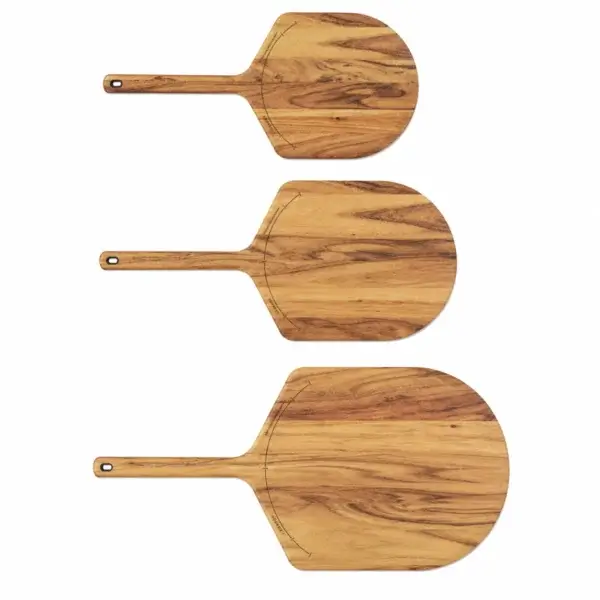
✅ Gozney wooden pizza peel made from FSC-certified acacia, designed for preparing, placing in the oven and serving your pizzas.

✅ Available in 12″, 14″ and 16″, so you can choose the right size to suit the diameter of the pizza you want to make.

✅ Naturally non-stick surface that makes it easy to work the dough and assemble the pizza directly on the peel.

✅ Bevelled edge designed to allow the peel to slide under the pizza more easily when placing it in or removing it from the oven.

✅ Engraved size and cutting guides to help you during preparation and ensure more uniform slices.

✅ 13 mm thick construction with a metal rim, combining a sturdy base with a practical solution for hanging storage.

Configure it to your liking

Clear selection
SKU: N/A Categories: , ,
Métodos de pago

The Gozney wooden pizza peel is designed to assist with much of the process: preparing the pizza on its surface, transferring it to the oven and then serving it directly at the table. Its acacia wood construction combines a natural aesthetic with features specifically designed for working with pizza.

It is available in three sizes – for 12”, 14” and 16” pizzas – so you can choose the option that suits the diameter of the pizza you wish to make. All three share the same construction and key features; the main difference is the size.

To make the right choice, it’s also worth considering your oven. Gozney specifically recommends the 12″ Standard version alongside the Arc Lite in its Essentials Bundle.

Naturally non-stick surface

The acacia wood itself provides a surface that Gozney describes as naturally non-stick. This allows you to prepare the pizza directly on the peel and gives you the time you need to stretch the dough and add the toppings before placing it in the oven.

This is a particularly useful advantage during preparation, because the peel does not merely serve as a tool for moving the pizza: it also forms part of the work surface and, once cooking is complete, can accompany the pizza right up to the moment it is served.

Bevelled edge
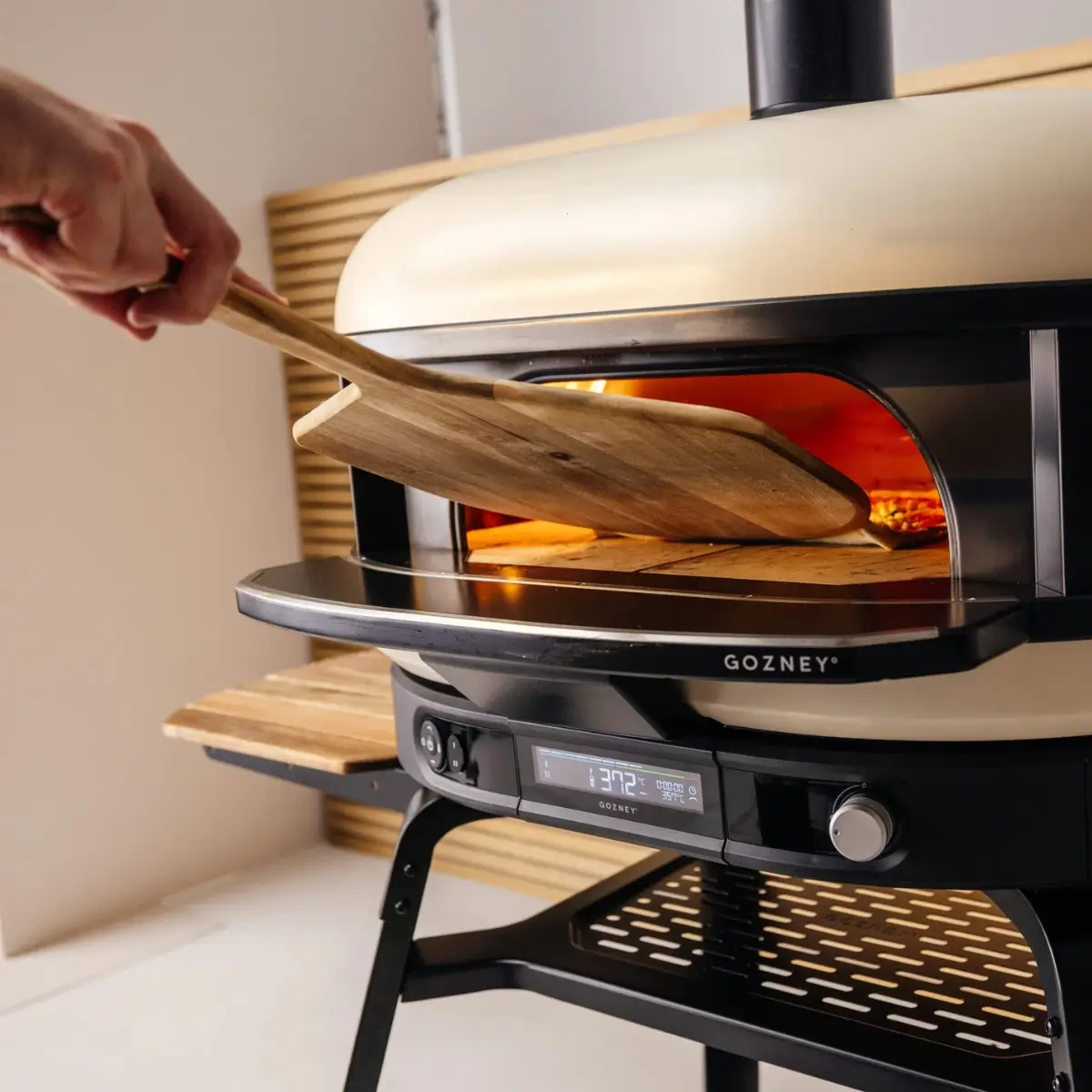
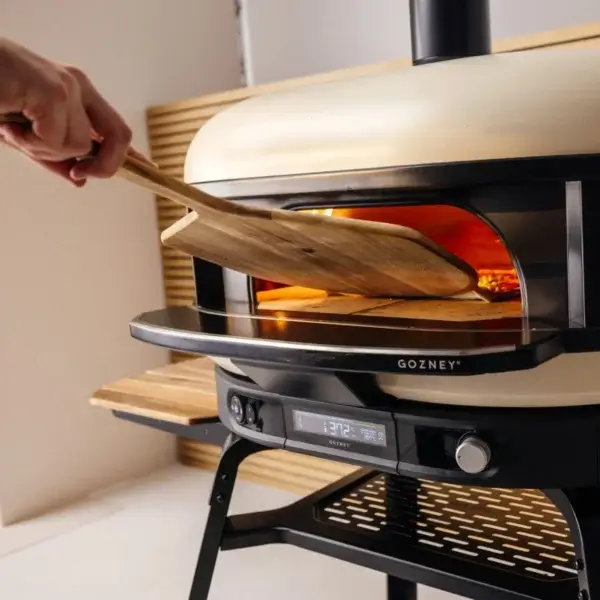
Pala de madera Gozney introduciendo una pizza en el horno


The edge of the peel is bevelled to allow the wood to slide more easily under the pizza. This design aids both when placing the pizza in the oven and when sliding the peel back under it when it is time to remove it.

It is a simple detail, but one directly related to handling: the end of the peel offers a smoother transition between the cooking surface and the wood, making it easier to position the pizza naturally during service.

Three sizes for 12-, 14- and 16-inch pizzas
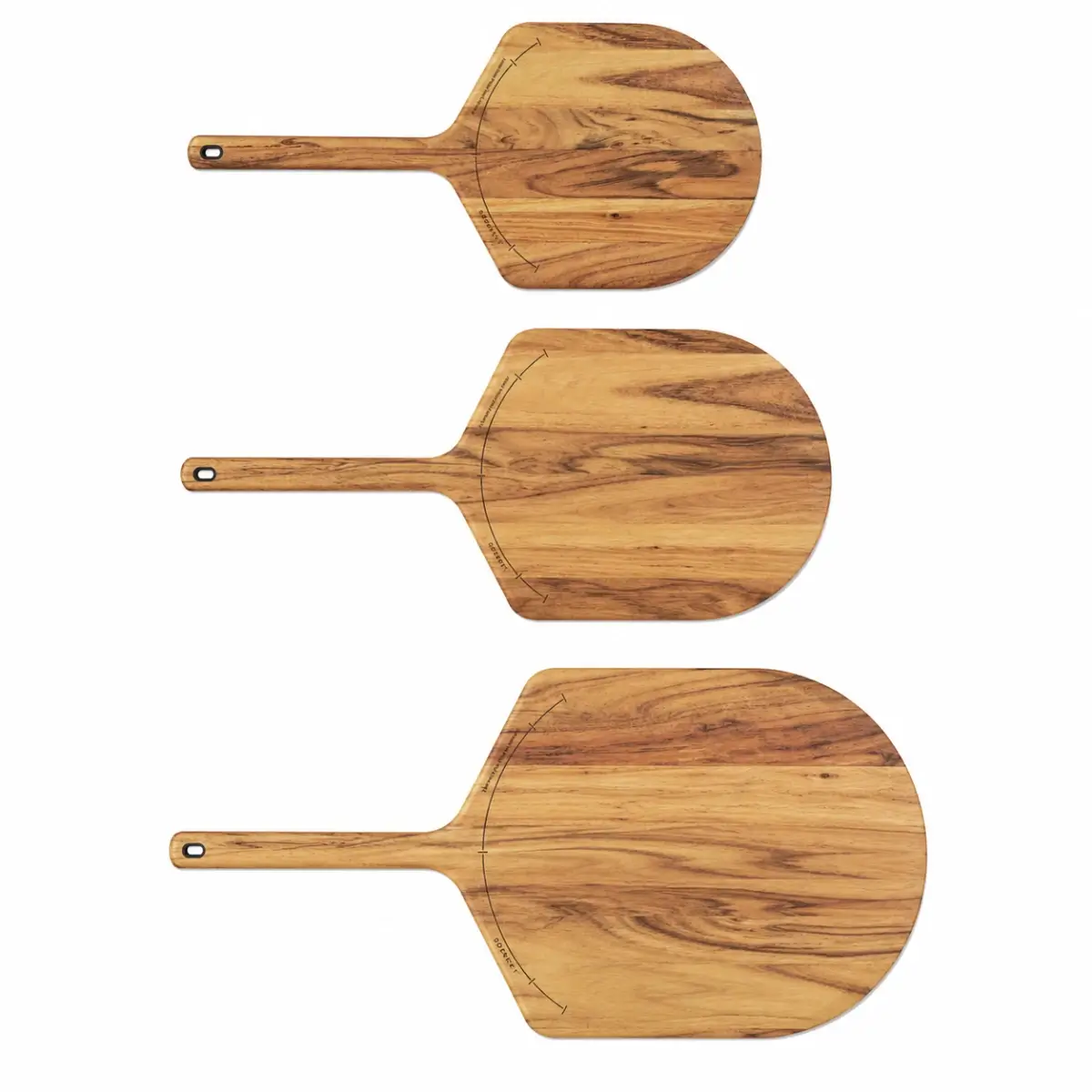
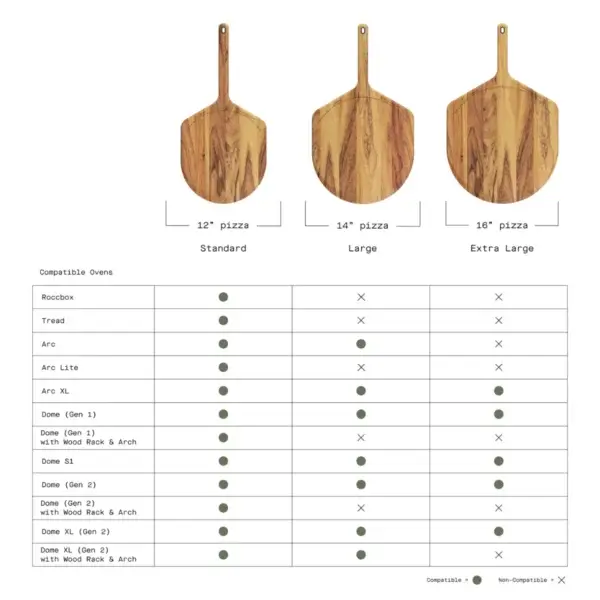
Comparativa de las palas de acacia Gozney para pizzas de 12, 14 y 16 pulgadas

Gozney offers three sizes: Standard for 12-inch (approx. 30.5 cm) pizzas, Large for 14-inch (approx. 35.6 cm) pizzas and Extra Large for 16-inch (approx. 40.6 cm) pizzas. This allows you to adapt the working surface to the diameter of the pizza you wish to prepare and serve.

The main features are common to all three variants. Therefore, your choice does not affect how you use the peel, but primarily the amount of surface area available. Specific compatibility with each oven must be confirmed by model beforehand.

From preparing the pizza to serving it at the table
Preparación y manejo de pizza con la pala de madera de acacia Gozney

This acacia pizza peel offers more than just a way to place a pizza in the oven. Gozney presents it as a tool for assembling the pizza directly on the wood, sliding it into the oven and then using the same surface to serve it.

This approach works particularly well when the pizza is part of a shared meal: the wood provides a natural presentation and allows you to move from preparation to serving using a single utensil designed for both functions.

To complete the process inside the oven, Gozney recommends using this peel in combination with a dedicated turning peel, thereby separating the preparation and serving stages from controlling the pizza whilst it is cooking.

Engraved guides

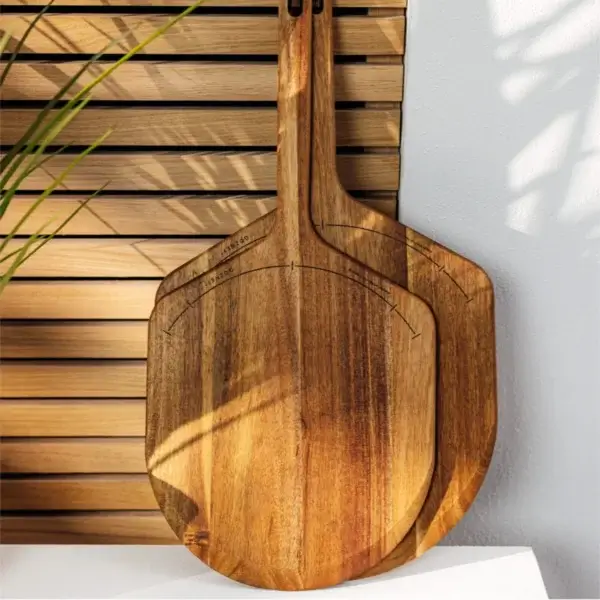
The surface features engraved lines that act as a perimeter guide for the pizza and as a reference for cutting. During preparation, they help visualise the size the dough should occupy on the peel before going into the oven.

When the pizza is returned to the peel for serving, these same marks provide a visual reference for dividing it into uniform slices. In this way, the design links two distinct stages of the process without adding any moving parts or additional accessories.

FSC-certified acacia with a robust construction

Gozney manufactures the peel from sustainably sourced FSC-certified acacia wood. In addition to the warm appearance characteristic of the wood, the manufacturer highlights the material’s durability as part of a design intended to withstand the various stages of pizza preparation and service.

The peel has a stated thickness of 13 mm, equivalent to 1.3 cm. This thickness is consistent across all variants and provides a solid base to work on, whilst maintaining the traditional shape of a wooden pizza peel.

Metal ring for hanging the peel

Pala de madera de acacia Gozney colgada junto a un horno de pizza

At the end of the handle, there is a metal ring that allows the peel to be hung up when not in use. It is a practical solution for integrating it into an outdoor kitchen area and keeping it close to the preparation area.

The ring is a standard feature across all three variants, so choosing between 12”, 14” and 16” does not affect this storage system. You simply need to allow for the space required for your chosen peel size.

Comparison of variants

Feature 12″ Standard 14″ Large 16″ Extra Large
Pizza size 12″ (approx. 30.5 cm) 14″ (approx. 35.6 cm) 16″ (approx. 40.6 cm)
Construction and features Common to the range Common to the range Common to the range

Cleaning

As a general guideline for acacia wood utensils intended for contact with food, it is recommended that you remove any food residue after use, wash the surface by hand with warm water and mild soap, and dry it thoroughly.

Avoid leaving the wood submerged or damp for prolonged periods. After cleaning, dry it with a clean cloth and allow it to air dry completely before storing it, preferably in a position that allows for good air circulation.

Caring for acacia wood

To help prevent the wood from drying out, it can be treated periodically with food-grade mineral oil specifically recommended for chopping boards and surfaces that come into contact with food.

Once the board is completely clean and dry, apply a thin, even layer using a clean cloth. Leave the oil to soak in for several hours or overnight, then wipe off any excess with a dry cloth. As a general guide, this can be repeated approximately once a month or whenever the wood looks dry or dull.

Do not use olive oil, sunflower oil or other cooking oils to condition the chopping board, as they may oxidise and go rancid. If you use a protective wax, it must be specifically suitable for chopping boards or wooden surfaces that come into contact with food.

Cleaning

As a general guideline for acacia wood utensils intended for food contact, it is recommended that you remove any food residue after use, wash the surface by hand with warm water and mild soap, and dry it thoroughly.

Avoid leaving the wood submerged or damp for prolonged periods. After cleaning, dry it with a clean cloth and allow it to air dry completely before storing it, preferably in a position that allows for good air circulation.

Caring for acacia wood

To help prevent the wood from drying out, it can be treated periodically with food-grade mineral oil specifically designed for chopping boards and surfaces that come into contact with food.

Once the board is completely clean and dry, apply a thin, even layer using a clean cloth. Leave the oil to soak in for several hours or overnight, then wipe off any excess with a dry cloth. As a general guide, this can be repeated approximately once a month or whenever the wood looks dry or dull.

Do not use olive oil, sunflower oil or other cooking oils to condition the chopping board, as they may oxidise and go rancid. If you use a protective wax, it must be specifically designed for chopping boards or wooden surfaces that come into contact with food.

Cleaning

As a general guideline for acacia wood utensils intended to come into contact with food, it is recommended that you remove any food residue after use, wash the surface by hand with warm water and mild soap, and dry it thoroughly.

Avoid leaving the wood submerged or damp for prolonged periods. After cleaning, dry it with a clean cloth and allow it to air dry completely before storing it, preferably in a position that allows for good air circulation.

Caring for acacia wood

To help prevent the wood from drying out, it can be treated periodically with food-grade mineral oil specifically recommended for chopping boards and surfaces that come into contact with food.

Once the board is completely clean and dry, apply a thin, even coat using a clean cloth. Leave the oil to soak in for several hours or overnight, then wipe off any excess with a dry cloth. As a general guide, this can be repeated approximately once a month or whenever the wood looks dry or dull.

Do not use olive oil, sunflower oil or other cooking oils to condition the board, as they may oxidise and go rancid. If you use a protective wax, it must be specifically labelled for chopping boards or wooden surfaces that come into contact with food.

Cleaning

As a general guideline for acacia wood utensils intended for food contact, it is recommended that you remove any residue after use, wash the surface by hand with warm water and mild soap, and dry it thoroughly.

Avoid leaving the wood submerged or damp for prolonged periods. After cleaning, dry it with a clean cloth and allow it to air dry completely before storing it, preferably in a position that allows for good air circulation.

Caring for acacia wood

To help prevent the wood from drying out, it can be treated periodically with food-grade mineral oil specifically suitable for chopping boards and surfaces that come into contact with food.

Once the board is completely clean and dry, apply a thin, even coat using a clean cloth. Leave the oil to soak in for several hours or overnight, then wipe off any excess with a dry cloth. As a general guide, this can be repeated approximately once a month or whenever the wood looks dry or dull.

Do not use olive oil, sunflower oil or other cooking oils to condition the chopping board, as they may oxidise and go rancid. If you use a protective wax, it must be specifically designed for chopping boards or wooden surfaces that come into contact with food.

  • Surface
    • Standard pizza size: 16" (approx. 40.6 cm)
    • Naturally non-stick wooden surface
    • Engraved pizza perimeter guide
    • Engraved cutting guides
  • Materials
    • Sustainably sourced FSC-certified acacia wood
  • Features
    • Bevelled edge for easy pizza placement
    • Metal hanging ring
  • Dimensions
    • Thickness: 13 mm
  • Surface
    • Reference pizza size: 14" (approx. 35.6 cm)
    • Naturally non-stick wooden surface
    • Engraved pizza perimeter guide
    • Engraved cutting guides
  • Materials
    • Sustainably sourced FSC acacia wood
  • Included
    • Bevelled edge for easy pizza placement
    • Metal hanging ring
  • Dimensions
    • Thickness: 13 mm
  • Surface
    • Standard pizza size: 12" (approx. 30.5 cm)
    • Naturally non-stick wooden surface
    • Engraved pizza perimeter guide
    • Engraved cutting guides
  • Materials
    • Sustainably sourced FSC-certified acacia wood
  • Included
    • Bevelled edge for easy pizza placement
    • Metal hanging ring
  • Dimensions
    • Thickness: 13 mm