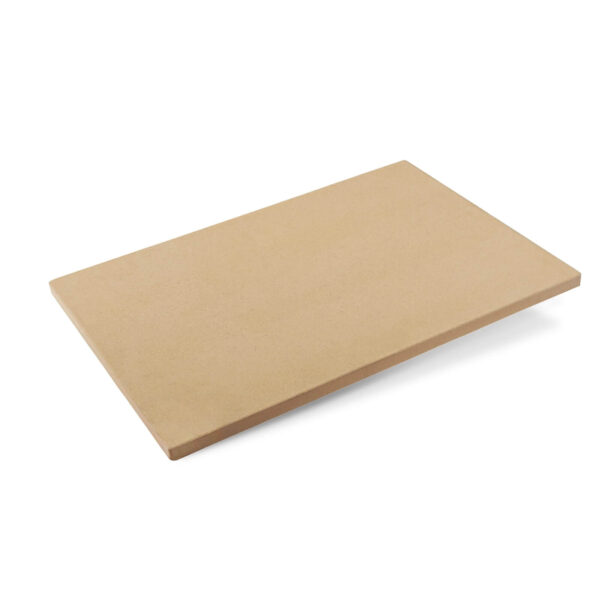
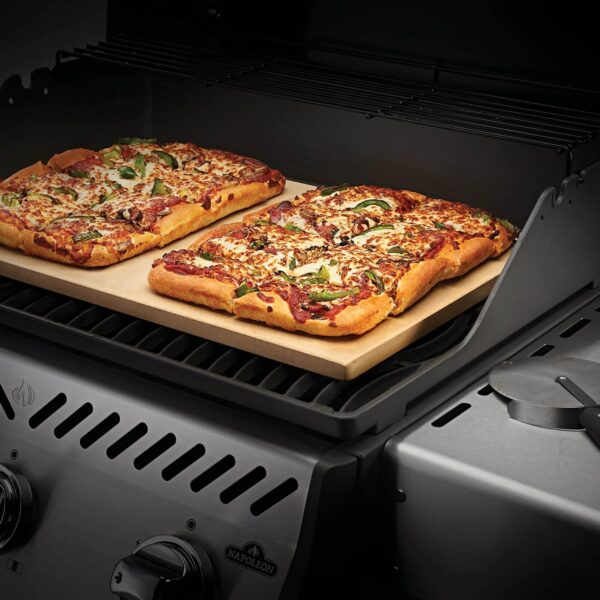
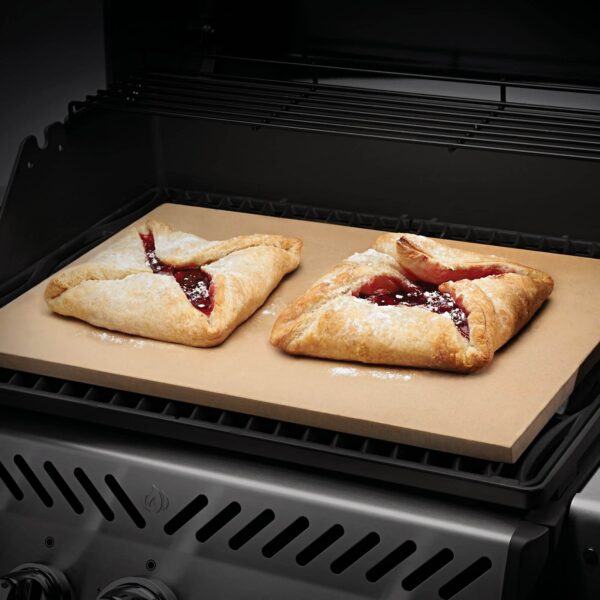
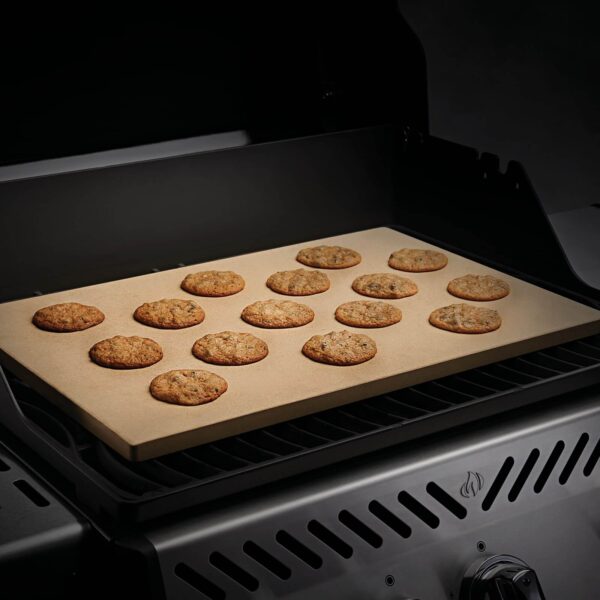
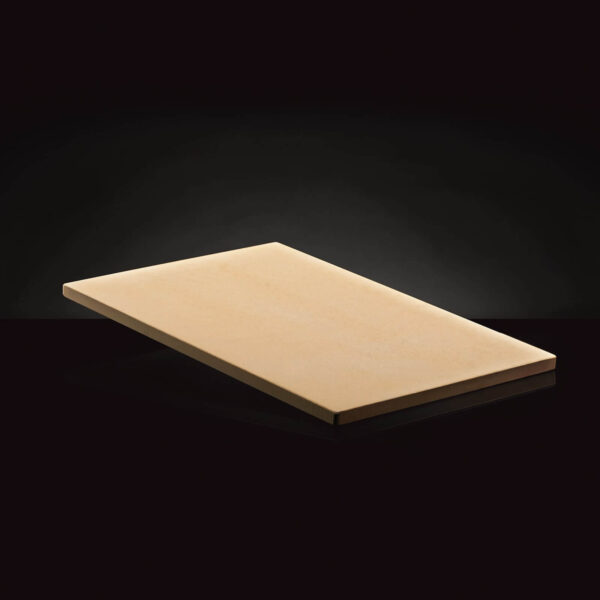
The Napoleon rectangular baking stone takes the baking experience to the next level, allowing home cooking enthusiasts to enjoy results worthy of a professional oven. Its generous design and specialised engineering make it an essential accessory, not only for preparing giant pizzas, but also for a wide range of baked goods. Whether used on a barbecue or in a conventional oven, this stone guarantees consistent, crispy and delicious results.
Robustness and Superior Heat Distribution
The stone is 1.5 cm thick, giving it remarkable structural strength. This density not only ensures a long service life, but also contributes to even heat distribution, allowing all foods to cook evenly, without cold spots or burnt edges. Ideal for achieving crispy, well-seared bases, especially in recipes that require thermal precision.
Ideal for Giant Pizzas and Family Gatherings
Thanks to its dimensions of 51 x 34 cm, this stone is the perfect ally for preparing large pizzas, ideal for sharing at gatherings, celebrations or family dinners. Its large surface area allows you to bake several portions at once, optimising cooking time and improving efficiency in the kitchen.
Professional Oven Quality at Home
The porous stone extracts moisture from the dough on contact, replicating the effect of professional stone ovens. The result is a light, crispy and airy crust, ideal not only for pizzas, but also for artisan breads, focaccias, biscuits and pastries.
Natural Surface, No Residual Odours or Flavours
One of the biggest advantages of this stone is that it does not retain odours or flavours. Each use offers a clean slate for new preparations, preventing any transfer of flavours between sweet and savoury foods. Its natural finish is safe and efficient, even with intensive use.
Natural Seasoning that Improves with Time
Similar to cast iron, this stone is progressively seasoned with each use, creating a natural non-stick coating. The more it is used, the better it performs, making preparations easier to remove without the need for oils or baking paper.
Versatility Beyond the Barbecue
Although designed to withstand high temperatures on grills and barbecues, it is also fully compatible with conventional ovens. This flexibility makes it a useful tool for all types of kitchens, from the most modern to the most traditional.
Care, Maintenance and Tips for Use to Preserve the Performance of Your Napoleon Stone
Investing in a high-quality baking stone such as Napoleon's not only guarantees spectacular results every time you bake, but also requires specific care to preserve its functionality, durability and natural non-stick properties. Proper maintenance is essential for this tool to continue to provide even cooking, without flavour transfer and with a perfect crispy crust every time it is used.
Unlike other kitchen utensils, porous stones require delicate treatment, aimed at respecting their natural structure and promoting the progressive curing process, which improves their performance with continued use.
Why is proper maintenance important?
The stone is made of porous material that absorbs and regulates moisture during cooking. This unique property is the key to obtaining a crispy and light crust. However, it also means that it can absorb liquids or chemicals if not cleaned properly. In addition, a well-cared-for stone not only improves its properties over time, but also becomes a more efficient, safer and more hygienic tool.
Detailed steps for optimal care
1. Allow to cool completely before handling
Before cleaning, it is crucial to allow the stone to cool completely naturally. Thermal shock—such as placing it under cold water while it is still hot—can cause irreparable cracks or internal fractures due to the sudden temperature difference.
2. Manual cleaning with warm water (no chemicals)
Once cool, clean the stone with warm water only. Do not use soap, detergent or chemicals, as its porous material can absorb them and transfer unpleasant flavours to your next preparations. If there are food residues stuck to it, scrape gently with a wooden or silicone spatula.
3. Avoid aggressive scrubbing or metal brushes
To maintain its cured surface and avoid damaging its porous texture, use a soft sponge or soft-bristled brush. The use of metal scouring pads, abrasives or hard sponges can wear away the surface layer that forms naturally with each use.
4. Natural drying and proper storage
After cleaning, let the stone air dry completely. Never store it wet, as this could cause mould or unpleasant odours to develop. To avoid knocks or moisture build-up, store it in a dry, well-ventilated place, ideally wrapped in kraft paper or cotton cloth, and separated from other utensils that could damage it.
5. Do not use it as a serving tray or over direct heater
Although heat-resistant, the stone should not be used as a tray over direct flames or as a cutting surface. Using it outside of its cooking context can compromise its structure or cause permanent stains.
Recommended cleaning frequency
It is not necessary to clean the stone after each use, unless there are significant food residues. The more it is used, the more its surface cures and the more non-stick it becomes.
Occasional surface cleaning is sufficient to keep it in optimal condition.
Additional benefit of continuous curing
Over time and with use, the stone will acquire a dark patina. This colouring is not a defect, but a sign that the surface has been properly cured. This natural layer helps to improve thermal performance, prevent food from sticking and enhance durability.
Recipe for Rustic Honey and Almond Biscuits
+ Vegan Version with Orange and Coconut
Delicate on the outside, tender on the inside. This baking recipe is designed to get the most out of the Napoleon stone, achieving even baking, a crispy base and an enveloping flavour. Ideal to accompany coffee, breakfast or a homemade snack.
Ingredients (for 20 biscuits):
Classic version:
- 200 g all-purpose wheat flour
- 100 g butter at room temperature
- 80 g brown sugar
- 2 tablespoons natural honey
- 1 egg
- 1 teaspoon vanilla extract
- 1/2 teaspoon baking powder
- 50 g chopped almonds (toasted)
- Pinch of salt
Vegan version (no dairy or eggs):
- 200 g wholemeal flour
- 80 ml melted coconut oil
- 60 g coconut sugar
- 2 tablespoons agave or maple syrup
- Zest of 1 orange
- 1 tablespoon ground flaxseed + 3 tablespoons water (egg substitute)
- 40 g shredded coconut
- Pinch of salt
Steps:
- Prepare the stone: Place the Napoleon stone in the oven or barbecue and preheat to 180°C for at least 30 minutes. This will allow the biscuits to cook evenly from below and develop a slightly crispy base.
- Make the dough (classic version): In a bowl, beat the butter with the sugar until creamy. Add the egg, honey and vanilla. Mix the dry ingredients separately and add them gradually. Add the almonds at the end. Refrigerate the dough for 20 minutes.
- Make the dough (vegan version): Mix the flaxseed with the water and let it rest for 10 minutes. Then, mix in the coconut oil, syrup, coconut sugar, and orange zest. Add the dry ingredients until a homogeneous dough forms. Let it rest in the refrigerator for another 20 minutes.
- Shaping: With slightly damp hands, form small balls of dough and flatten them gently. Place on baking paper or a wooden tray to slide onto the hot stone.
- Baking on the stone: Place the biscuits on the stone using a scoop or tray. Bake for 10 to 12 minutes, making sure the edges sear without burning.
- Cooling and perfect texture: Remove the biscuits with a flat spatula and let them cool on a wire rack. This will ensure they are crispy on the outside and soft in the centre.
Final tip:
You can
customise the recipe by adding chocolate chips, raisins, nuts or spices such as cinnamon or cardamom. Using the Napoleon stone ensures a firm base and even baking, elevating your homemade biscuits to a professional level.