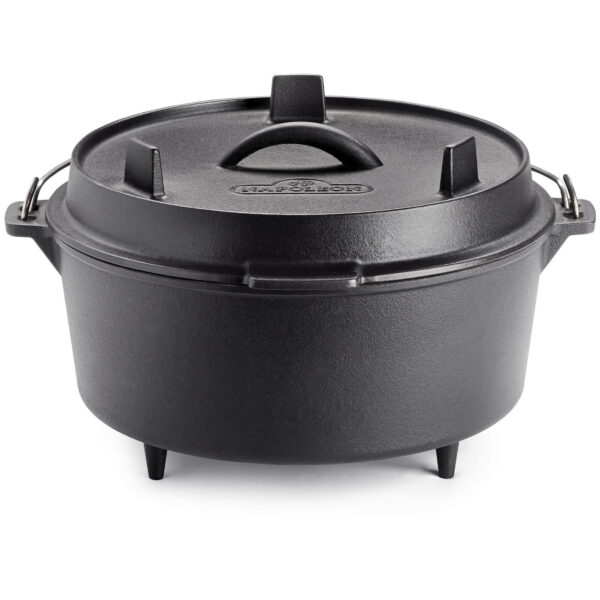
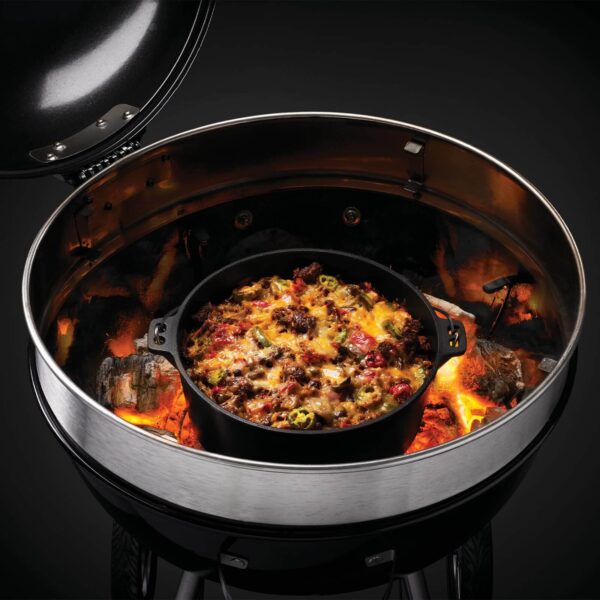
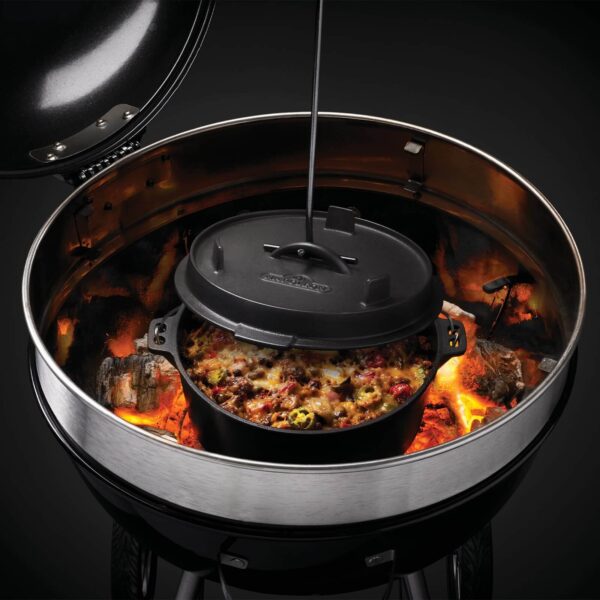
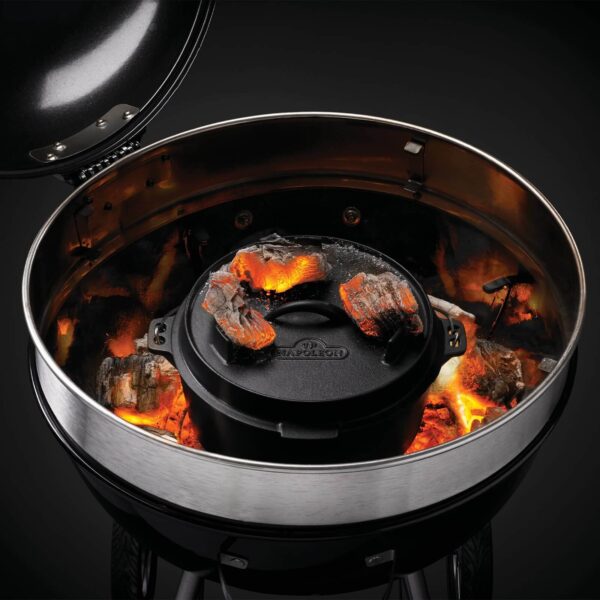
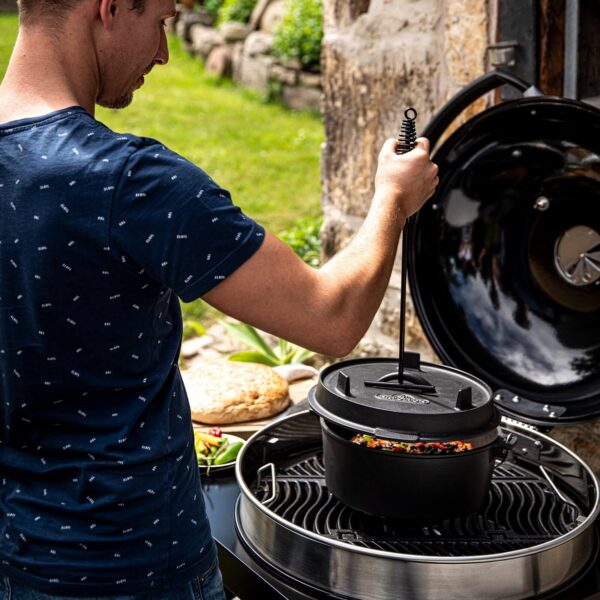
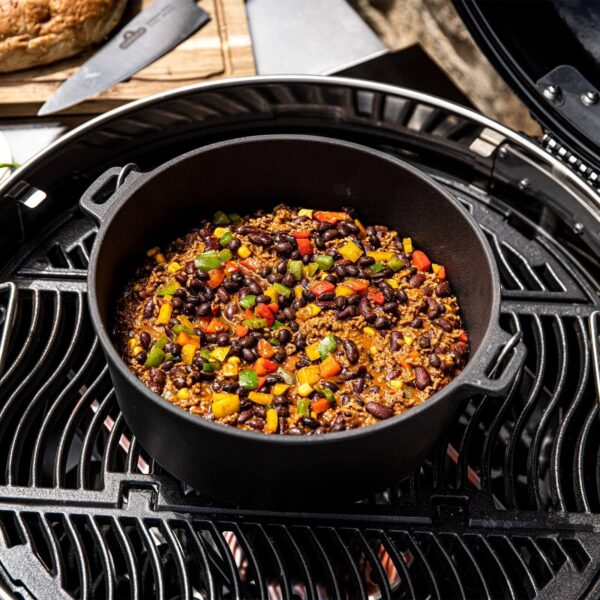
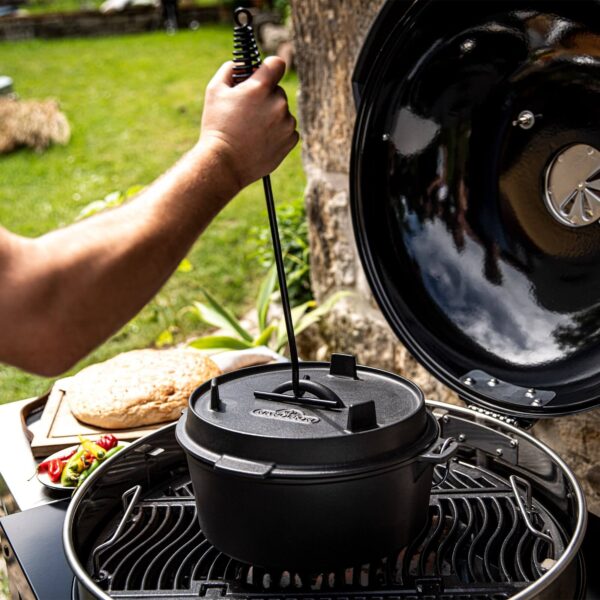
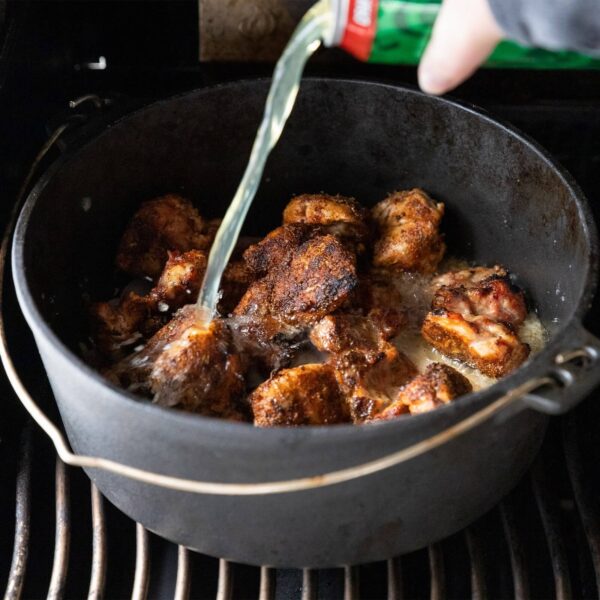
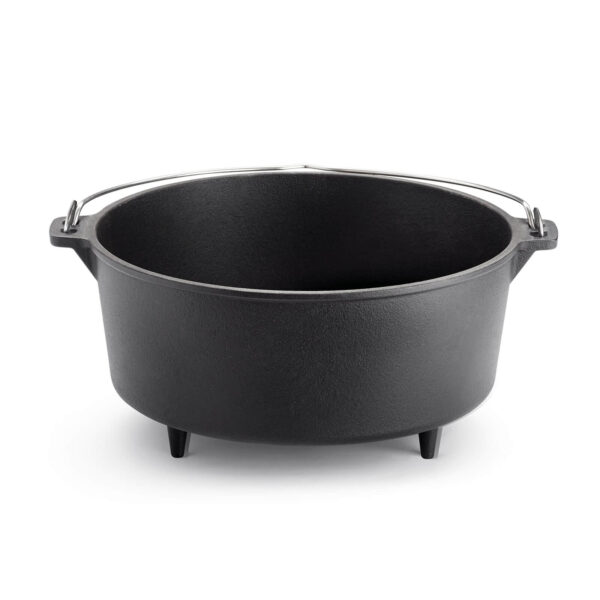
The Napoleon Cast Iron Dutch Oven is an essential piece of equipment that every outdoor cooking enthusiast should have. Available in two sizes—5.7 litres and 4.25 litres—this Dutch oven is perfect for a variety of cooking needs, whether you’re cooking for a crowd or a smaller group. With its sturdy cast iron construction, it guarantees even heat distribution, and its multifunctional lid expands your cooking possibilities, making it a truly versatile tool.
Versatility for Use in Various Settings
The Napoleon Dutch oven is not limited to one type of cooking; it is just as useful on a gas or charcoal grill as it is on an outdoor fire pit or even in your conventional kitchen oven. This level of flexibility allows you to use it in a wide range of settings, from a camping expedition to a sophisticated meal in your home.
This versatility ensures that, no matter where you are, you can enjoy the convenience and efficiency this oven offers.
Generous capacities for different needs
With a choice of a 5.7-litre or 4.25-litre model, the Napoleon Dutch oven can accommodate a variety of culinary demands. The 5.7-litre version is ideal for preparing hearty meals, perfect for large family gatherings or outdoor events. On the other hand, the 4.25-litre option is more suitable for preparing meals for smaller groups or even individual dishes that require the same level of care and precision.
Optimal Heat Distribution for Even Cooking
One of the greatest benefits of this Dutch oven is its solid cast iron construction, which ensures exceptionally even heat distribution. This material is known for its ability to retain heat and distribute it evenly throughout the pot, which is crucial for perfect cooking results.
Whether you’re cooking a stew, baking bread or roasting meat, you can experience that every part of your dish will be cooked evenly and consistently.
Sturdy Design and Easy Handling
The Napoleon Dutch oven has been carefully designed for ease of use. Both models feature integrated handles on the pot and lid, allowing for safe and easy handling, even when hot. The lid can be opened without additional tools, making it easy to monitor the cooking process without significantly interrupting it. In addition, its sturdy design ensures that it will withstand frequent use and the most demanding conditions, whether in the kitchen or in the great outdoors.
Adaptability to Various Recipes and Cooking Techniques
The Napoleon Dutch oven is a versatile tool that adapts to a multitude of recipes and cooking techniques, making it an indispensable ally in the kitchen. Its cast iron construction allows it to maintain a constant, even temperature, which is essential for cooking a wide variety of dishes.
From stews and casseroles to artisan breads and cakes, this Dutch oven handles every recipe with precision and consistency.
For example, if you love homemade bread, the Napoleon Dutch oven is ideal for baking bread with a golden, crispy crust, thanks to its ability to retain heat efficiently, creating an environment similar to a traditional brick oven. In addition, its sturdy, heavy construction helps keep moisture inside the pot, which is key to achieving bread with a tender crumb and perfect crust.
A Skillet in the Making
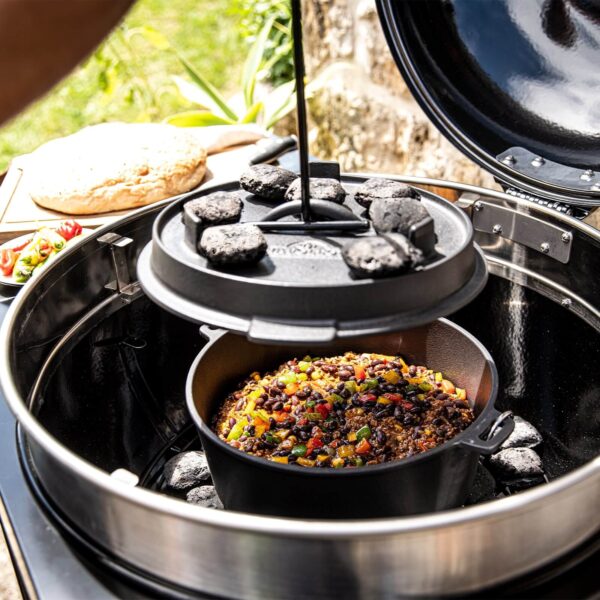
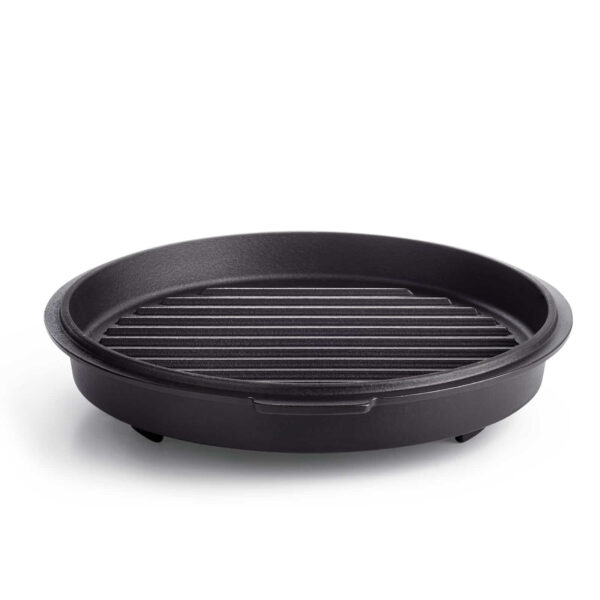
The lid of the Napoleon Dutch oven is much more than just an accessory to cover the pot; it is an additional cooking tool that greatly expands the possibilities in the kitchen, both outdoors and indoors. Thanks to its integrated leg design, this lid can be inverted and used as a stand-alone skillet, adding an extra layer of functionality to this versatile utensil.
When cooking outdoors, on a grill or over a campfire, the lid becomes the ideal tool for searing meats, sautéing vegetables or frying foods before combining them with other ingredients in the main pot. Its surface is designed to distribute heat evenly, allowing for perfect browning and fast cooking, which significantly improves the flavour and texture of food.
The integrated legs on the lid provide stability when used over charcoal or directly on the grill, ensuring that it stays firmly in place and allowing adequate airflow beneath the cooking surface. This feature is especially useful in outdoor cooking scenarios, where stability and even heat distribution are essential for consistent results.
In addition, the multifunctional lid is ideal for recipes that require multiple stages of cooking.
You can start by searing or sealing meats on the lid before transferring them to the main pot to braise or simmer, saving time and utensils by doing everything in one piece of equipment. By being able to use the lid on the same heat source as the pot, you ensure that all components of the dish are kept at the same temperature and cook evenly.
This versatility isn’t limited to the outdoors; in your home kitchen, the lid can be used on the stove to prepare anything from fried eggs to pancakes, using the same cooking technique you would use with a conventional skillet. Made from high-quality cast iron, the lid is as durable and sturdy as the main pot, able to withstand high temperatures and heavy use. With proper care, this multifunctional lid will maintain its performance for years, perfectly complementing the sturdiness and versatility of Napoleon’s Dutch oven.
Unmatched Durability and Strength
Napoleon’s Dutch oven is built to last a lifetime, offering durability and strength that sets it apart from other cookware. Made from high-quality cast iron, this oven is virtually indestructible, capable of withstanding high temperatures and heavy use without losing its integrity. The sturdy nature of cast iron ensures that this oven can be used in any environment, from the home kitchen to the most rustic campsite, without fear of damage or warping.
Cast iron, known for its longevity, requires proper care to maintain its exceptional performance for generations. With proper maintenance, this Dutch oven can become a family heirloom, passing on its usefulness and value from one generation to the next. Its resistance to corrosion, once properly seasoned, means it can withstand years of use without showing significant signs of wear. Furthermore, the robustness of the material ensures that even when used in extreme conditions, such as over an outdoor fire, the Napoleon Dutch oven will retain its shape and functionality.
Country-Style Beef Stew
A comforting classic with a taste of home
Nothing evokes the spirit of rustic cooking quite like a good country stew, slowly cooked over the heat of a grill, wood stove, or outdoor fire. This traditional recipe is perfect for cold days or for sharing in a hearty meal with family.
The use of a Dutch oven not only ensures even cooking, but also intensifies the flavours, allowing each ingredient to shine through.
This beef version is rich, robust and deep in flavour, but we also offer an equally comforting
vegetarian alternative, perfect for those looking for a meatless option without sacrificing flavour or texture.
Traditional Country-Style Beef Stew Recipe
Ingredients:
- 1 kg beef stewing meat, cut into cubes
- 3 carrots, peeled and sliced
- 2 large onions, chopped
- 4 cloves garlic, minced
- 3 medium potatoes, peeled and diced
- 2 cups beef stock
- 1 cup red wine (optional)
- 2 tablespoons tomato paste
- 1 bay leaf
- 2 sprigs fresh thyme
- Salt and pepper to taste
- Vegetable oil
Instructions:
- Prepare the Dutch oven: Preheat the Dutch oven on a gas or charcoal grill, or over a campfire, using medium-high heat. Add a small amount of vegetable oil and allow it to heat up.
- Sear the meat: Season the meat cubes with salt and pepper. Place the meat in the Dutch oven and sear the cubes on all sides until browned. Remove the meat and set aside.
- Sauté the vegetables: In the same pot, add a little more oil if necessary and sauté the onions until translucent. Add the garlic and carrots and cook for a few more minutes.
- Add the liquids: Add the tomato paste and mix well with the vegetables. Then, deglaze the pot with the red wine, if using, scraping the bottom well to incorporate the browned flavours. Let the wine reduce by half.
- Add the broth and spices: Return the meat to the pot, along with the potatoes, beef broth, bay leaf, and thyme. Bring everything to a boil, then reduce the heat and cover.
- Slow Cooking:Cook the stew over low heat for 2 to 3 hours, stirring occasionally, until the meat is tender and the potatoes are falling apart.
- Serving:Remove the bay leaf and thyme before serving. Serve hot, accompanied by crusty bread.
Vegetarian Variation of Mushroom and Lentil Country Stew
Ingredients:
- 400 g mushrooms or portobellos, cut into large chunks
- 1 cup brown lentils (soaked for 2 hours)
- 3 carrots, peeled and sliced
- 2 large onions, chopped
- 4 cloves garlic, minced
- 3 medium potatoes, peeled and diced
- 2 cups vegetable stock
- 1 cup red wine (optional)
- 2 tablespoons tomato paste
- 1 bay leaf
- 2 sprigs fresh thyme
- Salt and pepper to taste
- Olive oil
Instructions:
- Prepare the Dutch oven: Place the Dutch oven on the heat source and add olive oil. Heat well.
- Sauté the mushrooms: Season the mushrooms with salt and pepper and brown them well until they release their water and become slightly crispy. Remove them and set aside.
- Sauté the vegetables: In the same pot, sauté the onions until soft. Add the garlic and carrots, cooking for a few more minutes.
- Add the base: Stir in the tomato paste, mix well, then deglaze with the red wine. Let reduce by half.
- Add the remaining ingredients: Add the potatoes, drained lentils, reserved mushrooms, vegetable stock, bay leaf, and thyme. Bring to a boil, reduce the heat, and cover.
- Slow cooking: Cook over low heat for about 1 hour and 30 minutes, or until the lentils are soft and the potatoes are tender.
- Serving:Remove the bay leaf and thyme before serving. Serve with wholemeal or toasted bread.
Final tips:
- If you prefer an even richer texture, you can add a tablespoon of soy sauce or miso to the vegetarian version to enhance the umami flavour.
- Both stews improve the next day, making them perfect for preparing in advance.
Country-Style Beef Stew
A comforting classic with a taste of home
Nothing evokes the spirit of rustic cooking quite like a good country stew, slowly cooked over the heat of a grill, wood stove, or outdoor fire. This traditional recipe is perfect for cold days or for sharing in a hearty meal with family.
The use of a Dutch oven not only ensures even cooking, but also intensifies the flavours, allowing each ingredient to shine through.
This beef version is rich, robust and deep in flavour, but we also offer an equally comforting
vegetarian alternative, perfect for those looking for a meatless option without sacrificing flavour or texture.
Traditional Country-Style Beef Stew Recipe
Ingredients:
- 1 kg beef stewing meat, cut into cubes
- 3 carrots, peeled and sliced
- 2 large onions, chopped
- 4 cloves garlic, minced
- 3 medium potatoes, peeled and diced
- 2 cups beef stock
- 1 cup red wine (optional)
- 2 tablespoons tomato paste
- 1 bay leaf
- 2 sprigs fresh thyme
- Salt and pepper to taste
- Vegetable oil
Instructions:
- Prepare the Dutch oven: Preheat the Dutch oven on a gas or charcoal grill, or over a campfire, using medium-high heat. Add a small amount of vegetable oil and allow it to heat up.
- Sear the meat: Season the meat cubes with salt and pepper. Place the meat in the Dutch oven and sear the cubes on all sides until browned. Remove the meat and set aside.
- Sauté the vegetables: In the same pot, add a little more oil if necessary and sauté the onions until translucent. Add the garlic and carrots and cook for a few more minutes.
- Add the liquids: Add the tomato paste and mix well with the vegetables. Then, deglaze the pot with the red wine, if using, scraping the bottom well to incorporate the browned flavours. Let the wine reduce by half.
- Add the broth and spices: Return the meat to the pot, along with the potatoes, beef broth, bay leaf, and thyme. Bring everything to a boil, then reduce the heat and cover.
- Slow Cooking:Cook the stew over low heat for 2 to 3 hours, stirring occasionally, until the meat is tender and the potatoes are falling apart.
- Serving:Remove the bay leaf and thyme before serving. Serve hot, accompanied by crusty bread.
Vegetarian Variation of Mushroom and Lentil Country Stew
Ingredients:
- 400 g mushrooms or portobellos, cut into large chunks
- 1 cup brown lentils (soaked for 2 hours)
- 3 carrots, peeled and sliced
- 2 large onions, chopped
- 4 cloves garlic, minced
- 3 medium potatoes, peeled and diced
- 2 cups vegetable stock
- 1 cup red wine (optional)
- 2 tablespoons tomato paste
- 1 bay leaf
- 2 sprigs fresh thyme
- Salt and pepper to taste
- Olive oil
Instructions:
- Prepare the Dutch oven: Place the Dutch oven on the heat source and add olive oil. Heat well.
- Sauté the mushrooms: Season the mushrooms with salt and pepper and brown them well until they release their water and become slightly crispy. Remove them and set aside.
- Sauté the vegetables: In the same pot, sauté the onions until soft. Add the garlic and carrots, cooking for a few more minutes.
- Add the base: Stir in the tomato paste, mix well, then deglaze with the red wine. Let reduce by half.
- Add the remaining ingredients: Add the potatoes, drained lentils, reserved mushrooms, vegetable stock, bay leaf, and thyme. Bring to a boil, reduce the heat, and cover.
- Slow cooking: Cook over low heat for about 1 hour and 30 minutes, or until the lentils are soft and the potatoes are tender.
- Serving:Remove the bay leaf and thyme before serving. Serve with wholemeal or toasted bread.
Final tips:
- If you prefer an even richer texture, you can add a tablespoon of soy sauce or miso to the vegetarian version to enhance the umami flavour.
- Both stews improve the next day, making them perfect for preparing in advance.
Country-Style Beef Stew
A comforting classic with a taste of home
Nothing evokes the spirit of rustic cooking quite like a good country stew, slowly cooked over the heat of a grill, wood stove, or outdoor fire. This traditional recipe is perfect for cold days or for sharing in a hearty meal with family.
The use of a Dutch oven not only ensures even cooking, but also intensifies the flavours, allowing each ingredient to shine through.
This beef version is rich, robust and deep in flavour, but we also offer an equally comforting
vegetarian alternative, perfect for those looking for a meatless option without sacrificing flavour or texture.
Traditional Country-Style Beef Stew Recipe
Ingredients:
- 1 kg beef stewing meat, cut into cubes
- 3 carrots, peeled and sliced
- 2 large onions, chopped
- 4 cloves garlic, minced
- 3 medium potatoes, peeled and diced
- 2 cups beef stock
- 1 cup red wine (optional)
- 2 tablespoons tomato paste
- 1 bay leaf
- 2 sprigs fresh thyme
- Salt and pepper to taste
- Vegetable oil
Instructions:
- Prepare the Dutch oven: Preheat the Dutch oven on a gas or charcoal grill, or over a campfire, using medium-high heat. Add a small amount of vegetable oil and allow it to heat up.
- Sear the meat: Season the meat cubes with salt and pepper. Place the meat in the Dutch oven and sear the cubes on all sides until browned. Remove the meat and set aside.
- Sauté the vegetables: In the same pot, add a little more oil if necessary and sauté the onions until translucent. Add the garlic and carrots and cook for a few more minutes.
- Add the liquids: Add the tomato paste and mix well with the vegetables. Then, deglaze the pot with the red wine, if using, scraping the bottom well to incorporate the browned flavours. Let the wine reduce by half.
- Add the broth and spices: Return the meat to the pot, along with the potatoes, beef broth, bay leaf, and thyme. Bring everything to a boil, then reduce the heat and cover.
- Slow Cooking:Cook the stew over low heat for 2 to 3 hours, stirring occasionally, until the meat is tender and the potatoes are falling apart.
- Serving:Remove the bay leaf and thyme before serving. Serve hot, accompanied by crusty bread.
Vegetarian Variation of Mushroom and Lentil Country Stew
Ingredients:
- 400 g mushrooms or portobellos, cut into large chunks
- 1 cup brown lentils (soaked for 2 hours)
- 3 carrots, peeled and sliced
- 2 large onions, chopped
- 4 cloves garlic, minced
- 3 medium potatoes, peeled and diced
- 2 cups vegetable stock
- 1 cup red wine (optional)
- 2 tablespoons tomato paste
- 1 bay leaf
- 2 sprigs fresh thyme
- Salt and pepper to taste
- Olive oil
Instructions:
- Prepare the Dutch oven: Place the Dutch oven on the heat source and add olive oil. Heat well.
- Sauté the mushrooms: Season the mushrooms with salt and pepper and brown them well until they release their water and become slightly crispy. Remove them and set aside.
- Sauté the vegetables: In the same pot, sauté the onions until soft. Add the garlic and carrots, cooking for a few more minutes.
- Add the base: Stir in the tomato paste, mix well, then deglaze with the red wine. Let reduce by half.
- Add the remaining ingredients: Add the potatoes, drained lentils, reserved mushrooms, vegetable stock, bay leaf, and thyme. Bring to a boil, reduce the heat, and cover.
- Slow cooking: Cook over low heat for about 1 hour and 30 minutes, or until the lentils are soft and the potatoes are tender.
- Serving:Remove the bay leaf and thyme before serving. Serve with wholemeal or toasted bread.
Final tips:
- If you prefer an even richer texture, you can add a tablespoon of soy sauce or miso to the vegetarian version to enhance the umami flavour.
- Both stews improve the next day, making them perfect for preparing in advance.