The Napoleon Digital Thermometer is the essential tool for nailing the cooking point with professional precision in barbecues and indoor kitchens. Its steel probe and quick-reading digital display allow you to check the internal temperature without cutting into the meat or losing juices, switching between °C and °F and working both indoors and outdoors.
🌡️ Materials and construction
The metal probe is designed to safely pierce and transmit the internal food temperature to the thermometer body, where a digital display facilitates immediate reading. The steel stem is easy to clean after each use, promoting durability without the need for complex maintenance.
⚙️ Outstanding features
This model offers °C or °F readout, indoor/outdoor operation and a clear digital interface. Its approach is straightforward: you click, read and decide the next cooking step without guesswork, reducing errors and ensuring consistent results.
🚀 Performance and reading speed
The readout is fast (around a few seconds), allowing you to check temperatures without keeping the lid open too long or interrupting the sealing of the meat. That agility translates into more stable and juicier cooking.
🖥️ Design and aesthetics
The digital display provides clear numbers and an instant “look and decide” experience. The ergonomically designed body promotes a secure grip near the grill, and the thin probe leaves a minimal mark on the food.
🔌 Compatibilities and uses with accessories.
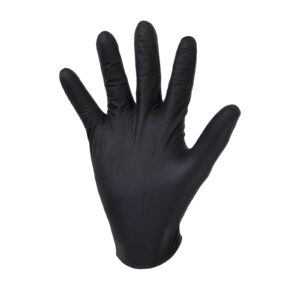
Works independently and complements any grill, oven, griddle or frying pan. It is the ideal companion to tongs, spatulas and heat gloves, integrating frictionlessly into your barbecue or conventional cooking workflow.
🍖 Benefits for different cooking styles
In barbecue it helps to certify the safe point of poultry and large cuts without over-opening the lid; in outdoor cooking it facilitates quick cooking on a griddle; in conventional cooking it controls roasts, breads and pastries; even in air fryers or frying pans it gives peace of mind by measuring the centre of the product.
🛡️ Safety and ease of use
It is intuitive to use: insert the probe in the centre and read. To keep it in optimum condition, wash only the rod with soap and water and avoid the dishwasher. This simple care prolongs service life and maintains accuracy.
🧭 Non-barbecue applications
Beyond the grill, it is used for baking, light confit and internal temperature control in deep frying, where food safety is critical. Its portable design and quick readout make it useful at any cooking station.
Use and Maintenance
To ensure that the thermometer performs accurately for years, it is important to use it correctly, clean it without damaging its components, and store it away from heat and humidity. This plan guides you step by step and minimizes common mistakes.
Use
- Preheat your equipment (grill, oven, griddle).
- Insert the probe into the center of the food, avoiding bones, hard fat, and contact with the grill.
- Wait for the quick reading and decide: continue, rest, or serve.
- For large pieces, measure at 2–3 points and take the lowest temperature as a reference.
- Switch between °C/°F if needed and keep the display in view for accurate readings.
Cleaning
- Turn off or unplug the thermometer if applicable.
- Wash only the probe with warm water and soap; do not immerse the body or put it in the dishwasher.
- Dry immediately with a soft cloth and leave to air for a few minutes.
Care
- Store in a dry place, away from heat sources and impact.
- Avoid bending the probe; use a cover or case if available.
- Calibrate at home from time to time by checking in ice water (~43.3°F) or boiling water (~212°F) to verify response.
Safety
- Wear gloves when near high temperatures and handle the probe firmly.
- Open the lid just enough to take the measurement; prolonged exposure to heat can affect the user and the stability of the cooking process.
- Keep out of reach of children during use.
Classic beef roast
The key to the perfect roast is achieving a juicy center with a golden crust. With a thermometer, you can aim for your favorite doneness without overcooking or undercooking.
Technical goal:
- “Rare”: remove at 50–52°C and rest until ~54–55°C
- “Medium”: remove at 57–58 °C and rest until ~60–63 °C
- “Well done”: remove at 66–68 °C and rest until ~70–72 °C
Ingredients (6–8 servings):
- 1.5–2 kg beef sirloin or round
- 2 tbsp olive oil
- 1 tbsp coarse salt
- 1 tsp freshly ground black pepper
- 2 cloves garlic, crushed
- 1 sprig rosemary or thyme
Steps:
- Preheat the grill or oven to 220°C (high heat).
- Pat the meat dry, rub with oil, salt, pepper, garlic, and herbs.
- Sear the meat for 2–3 min on each side over direct heat until browned.
- Transfer to indirect heat (160–180 °C), insert the probe into the center, avoiding fat or bone.
- Cook until the removal temperature is reached according to your preferred doneness; measure at 2–3 points and use the lowest reading.
- Remove, rest for 10–15 minutes on a rack (the juices will redistribute and the temperature will rise 2–3°C).
- Slice against the grain and serve with the juices.
Control notes: opening the lid just enough and measuring quickly preserves heat and stability; if the outside browns too much before reaching temperature, lower the ambient temperature by 10–15°C.
🥦 Vegetarian variation: Whole roasted broccoli with tandoori touches
Whole roasted broccoli is incredible when the central stem is tender and the florets retain some bite. Using the thermometer on the
stem allows you to get it just right without overcooking it or leaving it raw inside.
Technical goal (texture):
- Tender with a slight bite: 88–90 °C in the central stem
- Very tender (butter-tender): 92–94 °C
Ingredients (4 servings):
- 2 medium broccoli (800–900 g total), outer leaves removed and stems trimmed
- 3 tbsp. plain or plant-based yogurt
- 1 tbsp. oil
- 1 tbsp. tandoori paste or spice mix (paprika, cumin, coriander, turmeric)
- 1 tsp. salt
- Juice of 1/2 lemon
Steps:
- Preheat the grill or oven to 200 °C (indirect heat).
- Mix the yogurt, oil, spices, salt, and lemon. Coat each head of broccoli well, including the stems and bases.
- Place the broccoli on a rack or tray. Insert the probe into the base of the main stem, going 2–3 cm toward the center.
- Roast for 25–40 minutes (depending on size) until the stem reaches your desired doneness: 88–90°C for al dente, 92–94°C for very tender.
- If the florets brown too quickly, loosely cover with foil during the last phase.
- Remove, rest for 5 min, cut into wedges or separate the florets, and serve with fresh herbs or an extra squeeze of lemon.
Control notes: measure at
two points (stem and area between bouquets) to confirm uniformity. If you are looking for a crispy contrast, remove at 88–90 °C; for a silky texture, stretch to 92–94 °C.