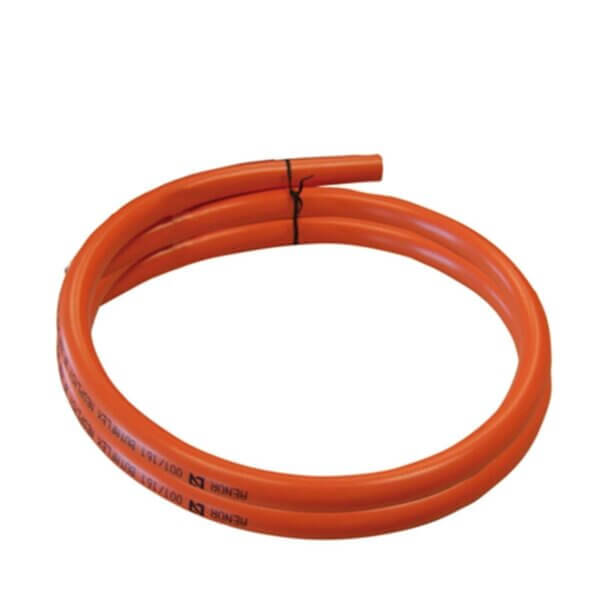
Designed for maximum safety and functionality, this butane/propane gas hose with clamps included is the perfect solution for those who need a reliable connection between a gas cylinder and a gas appliance. Whether you are installing a barbecue, a cooker or any compatible equipment, this accessory guarantees a stable, leak-free and easy-to-install gas supply.
Available in two lengths—80cm and 150 cm—the product adapts to different configurations and spaces, allowing for comfortable use in outdoor and indoor environments. The standard orange rubber, renowned for its durability and regulatory compliance, is equipped with two high-strength metal clamps, ensuring a firm and risk-free fixation.
🔒 Your Peace of Mind is a Priority
One of the most important features of this rubber is its safety certification for use with butane and propane, two of the most common gases in domestic and recreational environments. Manufactured from high quality materials, this rubber is designed to withstand the pressure and temperature demands of transporting liquefied gas, ensuring a tight, secure and leak-free connection.
The inclusion of adjustable metal clamps further enhances the safety of the system. These clamps allow a firm hold on both ends of the rubber, preventing any possibility of slippage or gas leakage during use. The result is a professional, robust and reliable connection, even if the user is not technically experienced.
Moreover, the bright orange colour is not only aesthetic: it facilitates the visual identification of the conduit, allowing a quick check of its condition, position and possible wear. This additional visibility translates into increased safety during continuous use.
📐 Adapt it to Your Space and Needs
One of the great advantages of this product is that it is available in two different lengths: 80 cm and 150 cm, allowing you to choose the size that best suits the particular conditions of each installation.
The 80 cm version is designed for compact installations, where the canister is located close to the appliance. It is an ideal size for portable barbecues, small kitchens or any space where a large hose extension is not required. This shorter length also minimises the gas path, which can result in greater efficiency and less exposure of the rubber to harsh environments.
On the other hand, the 150 cm version is perfect for larger installations, where a longer reach between the canister and the device is required. It is especially useful on large or fixed structure barbecues, where the canister may be housed in separate or remote compartments. This length allows for greater flexibility without compromising the safety of the connection, facilitating the mobility of the equipment or access during use.
Both versions are designed to the same high quality standards, using heat, pressure and abrasion resistant materials, ensuring durability in demanding environments.
🔥 Special for Gas Barbecues
In the barbecue environment, having a safe and efficient gas connection is essential for an uninterrupted and risk-free experience. This rubber is especially recommended for use with butane or propane gas barbecues, whether portable or fixed installations
By allowing a simple and reliable connection between the cylinder and the barbecue, this accessory avoids wasted time and eliminates the need for adapters or additional components. Installation is quick, and once correctly positioned with the clamps, the rubber ensures a constant supply of gas to light burners immediately and maintain a stable flame throughout the cooking.
Its high weather resistance, combined with its structural flexibility, makes it ideal for outdoor environments, where factors such as sun, wind or temperature changes could affect other types of materials. This rubber has been designed to withstand the typical conditions of an outdoor barbecue day.
In short, for any barbecue user looking for a durable, safe and durable solution to the demands of modern barbecue grilling, this rubber is the right choice.
🏠 Also for Household Uses
Although this rubber is particularly suitable for barbecues, its design and functionality also make it suitable for various domestic applications, such as cookers, hobs, cookers or heaters that operate with butane or propane gas.
The standard of connection and the materials used in its manufacture make it a perfectly suitable solution for the home interior. Whether you need to replace an old rubber or mount a new installation, this product meets the needs of the common user with the same efficiency and level of safety as in professional environments.
Its flexibility also allows for easy installation in spaces with angles or corners, adapting without excessive stress or risk of breakage. In addition, its thermal and mechanical resistance guarantees a long service life, even with frequent use.
Having a versatile rubber, which can operate in multiple scenarios without compromising performance, represents a long-term saving and a guarantee of continuous operation.
🛠️ Simple and hassle-free installation
One of the greatest benefits of this product is its ease of installation. Thanks to the included metal clamps, the user does not need complex tools or advanced knowledge to achieve a firm and secure connection. Simply fit the rubber onto the corresponding nipples and tighten the clamps with a flat or Phillips screwdriver.
The rubber has a flexible but strong internal structure, which fits precisely to standard gas cylinder and appliance connectors. The diameter has been calibrated to ensure uniform pressure without the need to apply excessive force during assembly.
This functional design not only facilitates installation but also allows for quick replacement in the event of wear or maintenance. Thus, the user can solve unforeseen events or renovate installations autonomously, saving time and avoiding unnecessary service costs.
🌐 Multifunctional product
Beyond its specific application, this rubber becomes an essential component for any user who uses gas equipment. Its versatility and reliability allow it to be used in multiple contexts: from garden grills to camper kitchens, cookers in rural houses, temporary installations on terraces or campsites, and much more.
The included clamps make it even easier to integrate into different devices. The user gets a complete, ready-to-install product without the need to purchase additional parts.
The simple, economical and effective design proves that there is no need to complicate the functional. This rubber offers exactly what the user needs: a secure, easy to install and durable connection.
🛡️ Maintenance and Use: How to Properly Install, Maintain, and Replace Your Butane/Propane Hose
Gas installation safety starts with the right choice of components, but it also depends on proper installation and periodic maintenance. Below, we explain how to install your butane/propane hose step by step, how to keep it in optimal condition, and what signs to look out for to know when it’s time to replace it.
🧰 Step-by-Step Installation: Easy, Quick, and Safe
1. Check connector compatibility:
Before starting, make sure that both the gas cylinder and the gas appliance (barbecue, stove, burner, etc.) have standard nozzles compatible with the hose. The hose we provide is of standard diameter, suitable for common domestic installations.
2. Turn off the gas and work in a well-ventilated space:
Ensure that the gas cylinder is fully closed. Work in a well-ventilated area and keep away from heat sources or open flames.
3. Place the hose on the nozzles:
Insert one end of the hose into the gas outlet of the cylinder or regulator, and the other end into the appliance’s inlet. Push firmly until the hose is fully inserted into each nozzle.
4. Secure the clamps:
Place the metal clamps over the hose ends, just above the nozzle connection. Tighten securely with a screwdriver to prevent leaks. Do not overtighten, but ensure the clamp doesn’t move.
5. Check for leaks:
Once everything is connected, slightly open the gas valve and use a soapy water mixture (water and detergent) on the connections. If bubbles appear, there’s a leak: repeat the adjustment or replace the hose if necessary. Never use fire to check for leaks.
🔧 Regular Maintenance: Prolong Safety with Simple Inspections
1. Periodic visual inspection (monthly):
Inspect the hose visually once a month. Check for cracks, cuts, discolouration, hardening, or bulging. If you notice any of these signs, replace the hose immediately.
2. Check the clamps:
Ensure that the clamps have not loosened over time. Re-tighten them if necessary to maintain a firm connection.
3. Avoid direct exposure to the sun and extreme heat:
If you use the hose outdoors, ensure it is not permanently exposed to sunlight or direct heat, as this can damage the material. If possible, store the hose under cover when not in use.
4. Safe storage:
If you dismantle the installation for a period (e.g., out of barbecue season), store the hose in a dry place, free of humidity, away from chemicals or flammable substances.
🔄 Replacement: When and How to Change the Gas Hose?
1. Recommended lifespan:
Gas hoses have a recommended lifespan of 3 to 5 years, although this can vary depending on usage and environmental conditions. In any case, the expiration date is usually printed directly on the hose (check the visible marking on the material).
2. Signs of wear or failure:
Replace the hose immediately if you notice any of the following signs:
-
Cracks, hardening, or brittle appearance.
-
Gas smell near the connections (even without bubbles).
-
Bulging or deformation.
-
Loss of flexibility or whitish colour in the rubber.
3. Procedure for replacement:
Follow the same installation steps described above. Turn off the gas, remove the old hose by loosening the clamps, clean the nozzles if necessary, and install the new hose with new or good-condition clamps. Perform the leak test with soapy water before use.
A properly installed and maintained gas hose signifies safety and peace of mind. With this step-by-step procedure, any user can ensure they have a reliable installation, extend the product’s lifespan, and enjoy their barbecue or kitchen without worries.
🛡️ Maintenance and Use: How to Properly Install, Maintain, and Replace Your Butane/Propane Hose
Gas installation safety starts with the right choice of components, but it also depends on proper installation and periodic maintenance. Below, we explain how to install your butane/propane hose step by step, how to keep it in optimal condition, and what signs to look out for to know when it’s time to replace it.
🧰 Step-by-Step Installation: Easy, Quick, and Safe
1. Check connector compatibility:
Before starting, make sure that both the gas cylinder and the gas appliance (barbecue, stove, burner, etc.) have standard nozzles compatible with the hose. The hose we provide is of standard diameter, suitable for common domestic installations.
2. Turn off the gas and work in a well-ventilated space:
Ensure that the gas cylinder is fully closed. Work in a well-ventilated area and keep away from heat sources or open flames.
3. Place the hose on the nozzles:
Insert one end of the hose into the gas outlet of the cylinder or regulator, and the other end into the appliance’s inlet. Push firmly until the hose is fully inserted into each nozzle.
4. Secure the clamps:
Place the metal clamps over the hose ends, just above the nozzle connection. Tighten securely with a screwdriver to prevent leaks. Do not overtighten, but ensure the clamp doesn’t move.
5. Check for leaks:
Once everything is connected, slightly open the gas valve and use a soapy water mixture (water and detergent) on the connections. If bubbles appear, there’s a leak: repeat the adjustment or replace the hose if necessary. Never use fire to check for leaks.
🔧 Regular Maintenance: Prolong Safety with Simple Inspections
1. Periodic visual inspection (monthly):
Inspect the hose visually once a month. Check for cracks, cuts, discolouration, hardening, or bulging. If you notice any of these signs, replace the hose immediately.
2. Check the clamps:
Ensure that the clamps have not loosened over time. Re-tighten them if necessary to maintain a firm connection.
3. Avoid direct exposure to the sun and extreme heat:
If you use the hose outdoors, ensure it is not permanently exposed to sunlight or direct heat, as this can damage the material. If possible, store the hose under cover when not in use.
4. Safe storage:
If you dismantle the installation for a period (e.g., out of barbecue season), store the hose in a dry place, free of humidity, away from chemicals or flammable substances.
🔄 Replacement: When and How to Change the Gas Hose?
1. Recommended lifespan:
Gas hoses have a recommended lifespan of 3 to 5 years, although this can vary depending on usage and environmental conditions. In any case, the expiration date is usually printed directly on the hose (check the visible marking on the material).
2. Signs of wear or failure:
Replace the hose immediately if you notice any of the following signs:
Cracks, hardening, or brittle appearance.
Gas smell near the connections (even without bubbles).
Bulging or deformation.
Loss of flexibility or whitish colour in the rubber.
3. Procedure for replacement:
Follow the same installation steps described above. Turn off the gas, remove the old hose by loosening the clamps, clean the nozzles if necessary, and install the new hose with new or good-condition clamps. Perform the leak test with soapy water before use.
A properly installed and maintained gas hose signifies safety and peace of mind. With this step-by-step procedure, any user can ensure they have a reliable installation, extend the product’s lifespan, and enjoy their barbecue or kitchen without worries.
🛡️ Maintenance and Use: How to Properly Install, Maintain, and Replace Your Butane/Propane Hose
Gas installation safety starts with the right choice of components, but it also depends on proper installation and periodic maintenance. Below, we explain how to install your butane/propane hose step by step, how to keep it in optimal condition, and what signs to look out for to know when it’s time to replace it.
🧰 Step-by-Step Installation: Easy, Quick, and Safe
1. Check connector compatibility:
Before starting, make sure that both the gas cylinder and the gas appliance (barbecue, stove, burner, etc.) have standard nozzles compatible with the hose. The hose we provide is of standard diameter, suitable for common domestic installations.
2. Turn off the gas and work in a well-ventilated space:
Ensure that the gas cylinder is fully closed. Work in a well-ventilated area and keep away from heat sources or open flames.
3. Place the hose on the nozzles:
Insert one end of the hose into the gas outlet of the cylinder or regulator, and the other end into the appliance’s inlet. Push firmly until the hose is fully inserted into each nozzle.
4. Secure the clamps:
Place the metal clamps over the hose ends, just above the nozzle connection. Tighten securely with a screwdriver to prevent leaks. Do not overtighten, but ensure the clamp doesn’t move.
5. Check for leaks:
Once everything is connected, slightly open the gas valve and use a soapy water mixture (water and detergent) on the connections. If bubbles appear, there’s a leak: repeat the adjustment or replace the hose if necessary. Never use fire to check for leaks.
🔧 Regular Maintenance: Prolong Safety with Simple Inspections
1. Periodic visual inspection (monthly):
Inspect the hose visually once a month. Check for cracks, cuts, discolouration, hardening, or bulging. If you notice any of these signs, replace the hose immediately.
2. Check the clamps:
Ensure that the clamps have not loosened over time. Re-tighten them if necessary to maintain a firm connection.
3. Avoid direct exposure to the sun and extreme heat:
If you use the hose outdoors, ensure it is not permanently exposed to sunlight or direct heat, as this can damage the material. If possible, store the hose under cover when not in use.
4. Safe storage:
If you dismantle the installation for a period (e.g., out of barbecue season), store the hose in a dry place, free of humidity, away from chemicals or flammable substances.
🔄 Replacement: When and How to Change the Gas Hose?
1. Recommended lifespan:
Gas hoses have a recommended lifespan of 3 to 5 years, although this can vary depending on usage and environmental conditions. In any case, the expiration date is usually printed directly on the hose (check the visible marking on the material).
2. Signs of wear or failure:
Replace the hose immediately if you notice any of the following signs:
Cracks, hardening, or brittle appearance.
Gas smell near the connections (even without bubbles).
Bulging or deformation.
Loss of flexibility or whitish colour in the rubber.
3. Procedure for replacement:
Follow the same installation steps described above. Turn off the gas, remove the old hose by loosening the clamps, clean the nozzles if necessary, and install the new hose with new or good-condition clamps. Perform the leak test with soapy water before use.
A properly installed and maintained gas hose signifies safety and peace of mind. With this step-by-step procedure, any user can ensure they have a reliable installation, extend the product’s lifespan, and enjoy their barbecue or kitchen without worries.