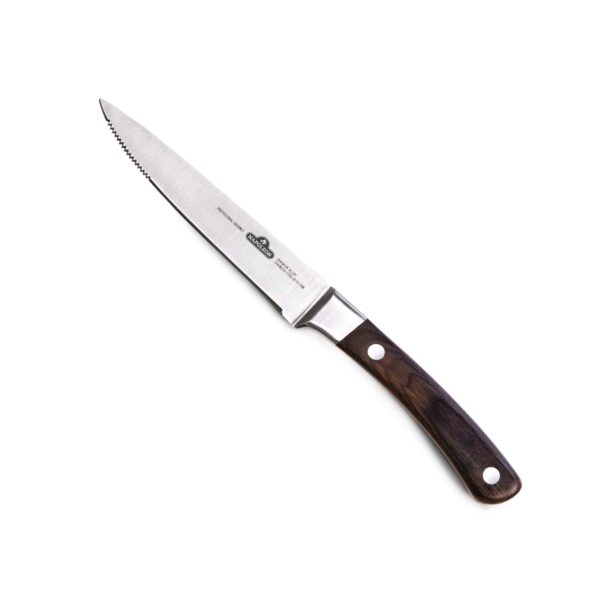
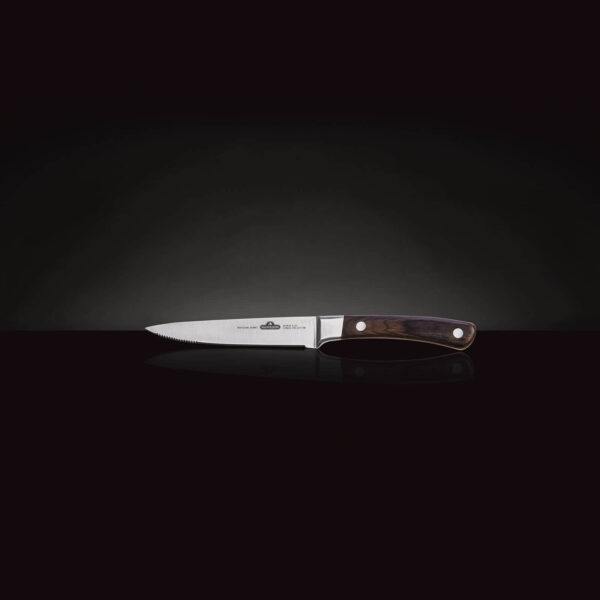
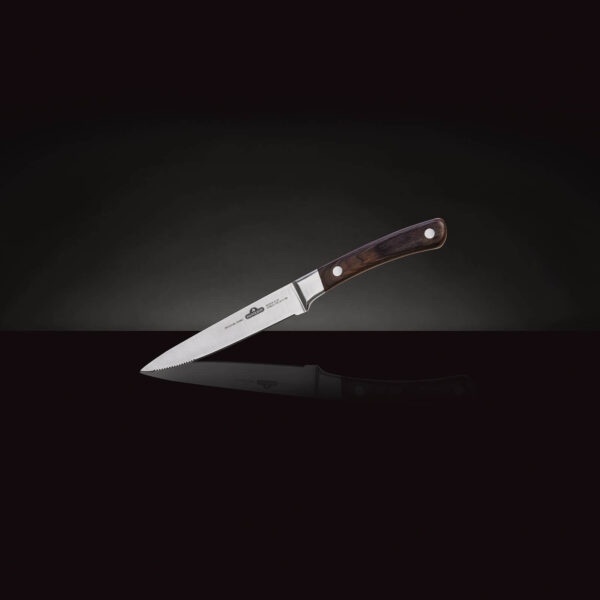
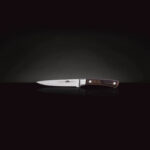
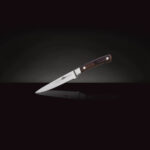
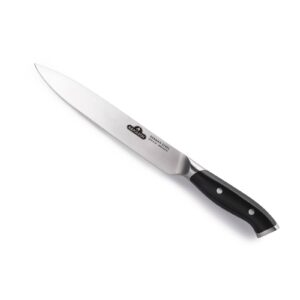
The perfect combination of precision, ergonomic design and high-performance materials comes together in the Napoleon Pro Serrated Meat Knife, an elite culinary tool that transcends the traditional concept of a knife. Not only does this piece belong to Napoleon’s exclusive PRO Series, but it also represents the essence of culinary engineering applied to the art of cutting. Designed for the most demanding users, from professional chefs to barbecue enthusiasts, this knife becomes an extension of the hand, bringing power, control and distinction to every cut.
Precision, Strength and Unmatched Durability
At the core of the knife is a 12.7 cm blade forged from high-carbon stainless steel, an alloy known for its ability to maintain its edge longer and resist wear from intensive use. This blade offers superior hardness and a molecular structure that minimises corrosion, allowing for consistent performance even after multiple cutting sessions with tough meats, crispy crusts or tough skins. This blade does more than just cut: it enhances the art of cooking with every stroke.
Versatility for All Types of Cuts
The double-edged design—with one serrated side and one smooth side—makes this knife a truly multifunctional tool. The serrated edge effectively tears through dense muscle fibres without applying excessive pressure, ideal for roasted meats, crusty bread or even ripe tomatoes. The smooth edge, on the other hand, offers fine, clean, tear-free cuts, perfect for delicate plating, carpaccios or precise filleting. This dual cutting capability not only increases functionality, but also provides an unprecedented level of professional control.
Natural Beauty and Total Comfort
The handle is made of polished rosewood, a high-density hardwood that not only adds a touch of handcrafted luxury to the design, but is also carefully moulded to offer superior ergonomics. Its adaptive shape reduces fatigue during extended use, allowing the knife to fit naturally in the user’s hand. In addition, the polished finish provides resistance to moisture and heat, while its balance with the blade creates an intuitive, safe and enjoyable cutting experience.
Ideal Dimensions for Professional and Home Cooking
With a total length of 23.5 cm, this knife strikes the perfect balance between manoeuvrability and reach. Its compact size facilitates controlled cuts on meat, firm vegetables or baked goods, while its robust presence allows you to carve large pieces with ease. It is a tool that shines in both demanding kitchens and family barbecues, adapting effectively to every context.
Extended Uses in Conventional and Professional Cooking
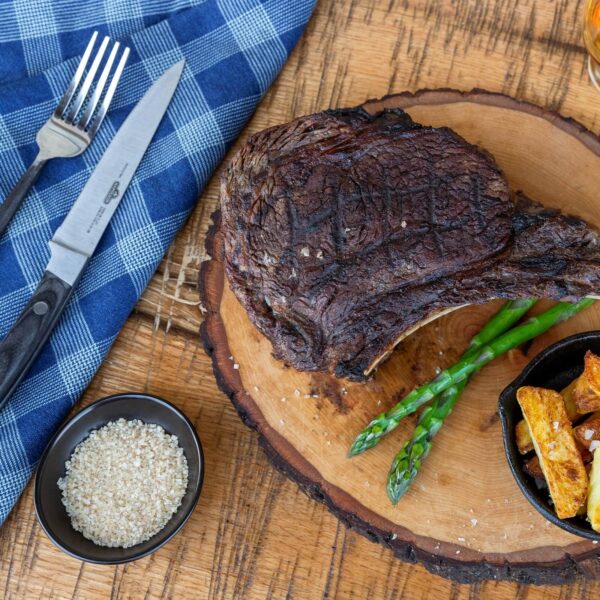
Although it was created for barbecuing, this knife also shines in contexts unrelated to barbecuing. Its serrated edge makes it easy to cut rustic breads, thick-skinned fruits such as pineapple and watermelon, and baked goods with firm crusts. Furthermore, its sleek, professional design makes it an excellent choice for use in restaurant kitchens, artisan bakeries or as a serving knife on charcuterie boards and banquet tables.
🔧 Maintenance and Use of Napoleon's Pro Serrated Meat Knife To Preserve Excellence Step by Step
The
Napoleon Pro Serrated Meat Knife is made from high-quality materials that guarantee outstanding, long-lasting performance. However, like any precision tool, its effectiveness and appearance depend on
proper and regular maintenance. Below is a detailed guide to prolonging its useful life, keeping the blade sharp and preserving the natural beauty of its rosewood handle.
Step 1: Clean immediately after each use
Why? The high-carbon stainless steel blade, although corrosion resistant, can rust if exposed to moisture, food acids or salts for long periods of time.
- How to do it correctly:
- Wash the knife by hand with a soft sponge, warm water and a neutral soap.
- Avoid metal scouring pads, abrasive detergents and dishwashers.
- Do not let the knife soak or run under water for long periods of time.
Step 2: Thorough drying
Why is this important? Immediate drying prevents stains from appearing on the blade and protects the wood of the handle from absorbing moisture.
- How to do it correctly:
- Use a clean, dry microfibre or cotton cloth.
- Make sure to dry the joint between the blade and the handle thoroughly, as moisture can accumulate there.
Step 3: Safe and proper storage
Why? Contact with other utensils can damage the cutting edge or cause accidents.
- How to store the knife:
- Place it in a wooden knife block, protective cover or magnetic kitchen bar.
- Do not let the knife lie loose in drawers. This prevents nicks, deformation of the cutting edge and damage to the handle.
Step 4: Sharpening and maintenance of the cutting edge
- Smooth edge:
- It should be sharpened periodically with a whetstone, ceramic sharpener or diamond sharpener.
- A sharpening angle of 20° is recommended to maintain the balance between sharpness and durability.
- Serrated edge:
- Requires less maintenance and should be sharpened by a professional with specific tools to avoid damaging the micro-serrations.
Step 5: Moisturising and caring for the rosewood handle
Why? Natural wood can dry out or crack over time.
- Recommendations:
- Apply a thin layer of food-grade mineral oil every 2 to 3 months.
- Let absorb for 10-15 minutes and remove excess with a clean cloth.
- Do not expose the handle to direct heat sources or prolonged sunlight.
Step 6: Recommended uses for the knife
This knife is not just for meat; it is also ideal for:
- Clean cuts of rustic and artisan breads without crumbling the crumb.
- Preparation of large fruits with hard skin such as pineapple, papaya, watermelon or pumpkin.
- Filleting firm fish, especially when a precise cut through the skin is required.
- Carving small roasts, ribs or portions with crisp edges.
- Cutting hard or semi-cured cheeses on serving boards.
- Preparing firm vegetables for gourmet dishes.
With this care, your Napoleon Pro knife will remain a high-performance tool for many years.
🥩 Recipe for Pork Loin with Coffee and Dark Chocolate Crust
A bold dish that combines intense and complex flavours, ideal for special dinners or gourmet menus. The spicy crust with coffee and cocoa enhances the flavour of the pork, while the Napoleon knife guarantees a thin cut that doesn't spoil the presentation.
Ingredients (serves 4-6):
- 1 pork loin (1.5 kg, trimmed and excess fat removed)
- 2 tablespoons ground Arabica coffee
- 1 tablespoon bitter cocoa powder
- 1 tablespoon dark brown sugar
- 1 teaspoon ground cumin
- 1 teaspoon garlic powder
- 1 teaspoon smoked paprika
- ½ teaspoon freshly ground black pepper
- 1 tablespoon coarse sea salt
- 3 tablespoons extra virgin olive oil
- 1 sprig of fresh rosemary
- 2 cloves of garlic, crushed
- Cooking thermometer (recommended)
Step-by-step preparation:
- Preheat the oven or closed grill to 180°C. If using a charcoal grill, make sure you have an indirect cooking area.
- In a bowl, mix together the coffee, cocoa, sugar, cumin, garlic powder, paprika, pepper and salt.
- Pat the tenderloin dry with kitchen paper and brush with olive oil on all sides.
- Sprinkle the spice mixture over the pork loin, pressing firmly to form an even layer.
- In a hot frying pan or griddle, sear the pork loin on all sides for 3-4 minutes until the crust is crispy.
- Transfer to the oven or indirect area of the grill. Add a sprig of rosemary and the garlic cloves to the tray.
- Cook for 25-30 minutes or until the centre reaches 65°C.
- Remove and let rest for 10 minutes, covered with foil.
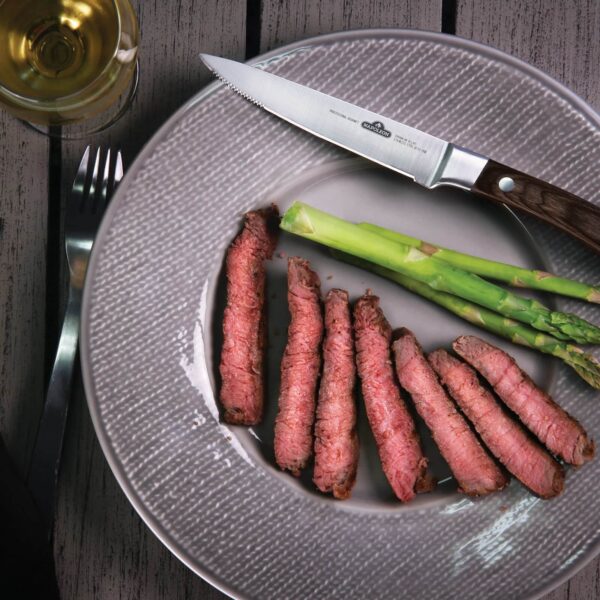
- Use the Pro Knife to make thin, clean cuts that respect the crust without breaking it.
- Serve with sweet potato purée and balsamic reduction or dark chimichurri.
🥗 Vegetarian version of butternut squash with coffee and chocolate crust
A bold vegetarian recipe with earthy, complex flavours. The roasted squash takes on a deep umami profile thanks to the spicy crust, making it a main course that is just as sophisticated as its meat-based counterpart.
Ingredients (serves 2-4):
- 1 large butternut squash (approx. 1.2 kg)
- 1 tablespoon finely ground coffee
- 1 tablespoon unsweetened cocoa powder
- ½ tablespoon muscovado sugar
- ½ teaspoon smoked paprika
- 1 teaspoon sea salt
- ½ teaspoon black pepper
- 3 tablespoons extra virgin olive oil
- Optional: nutmeg or cinnamon for a sweet note
- 2 tablespoons Greek yoghurt or coconut cream to serve
- Lime zest (optional)
Step-by-step preparation:
- Preheat the oven to 200°C with heat from above and below.
- Peel the pumpkin and cut it into thick slices (2-2.5 cm) with the Pro Knife to achieve firm, even cuts.
- In a bowl, mix the dry seasonings: coffee, cocoa, sugar, paprika, salt, pepper and optional spices.
- Coat the slices with oil and sprinkle generously with the crust mixture on both sides.
- Place the slices on a baking tray lined with baking paper.
- Bake for 30-35 minutes, turning halfway through, until the pumpkin is tender and the crust is caramelised.
- Serve hot, with a spoonful of Greek yoghurt or coconut cream on top, and lime zest for a fresh contrast.
Pairing suggestion for both recipes:
- Pork loin: a robust red wine such as a Malbec or Cabernet Sauvignon.
- Vegetarian version: an aged white wine (Chardonnay) or a smoky tea such as Lapsang Souchong.