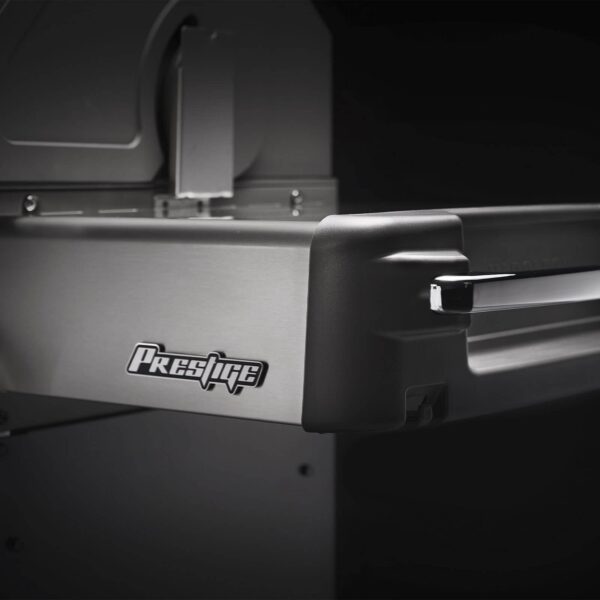
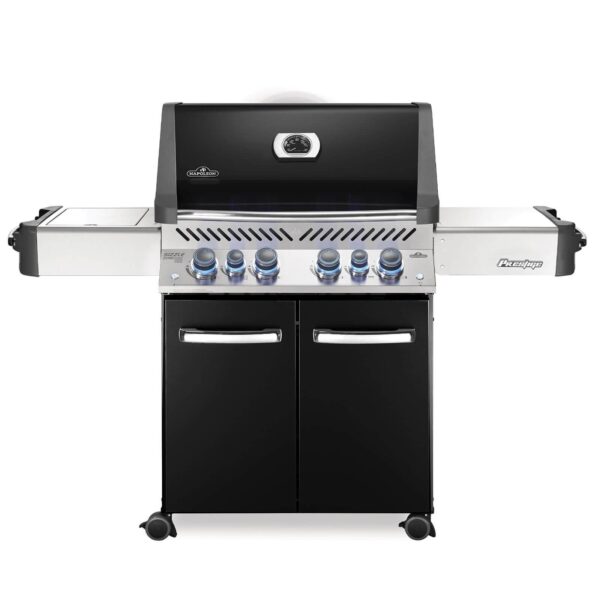
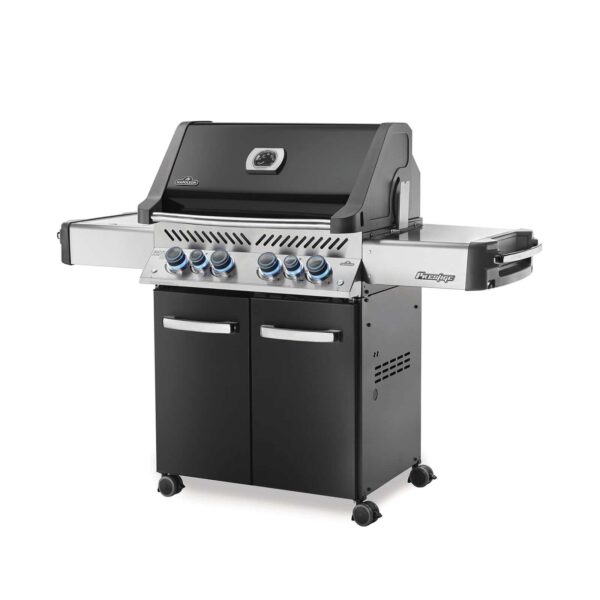
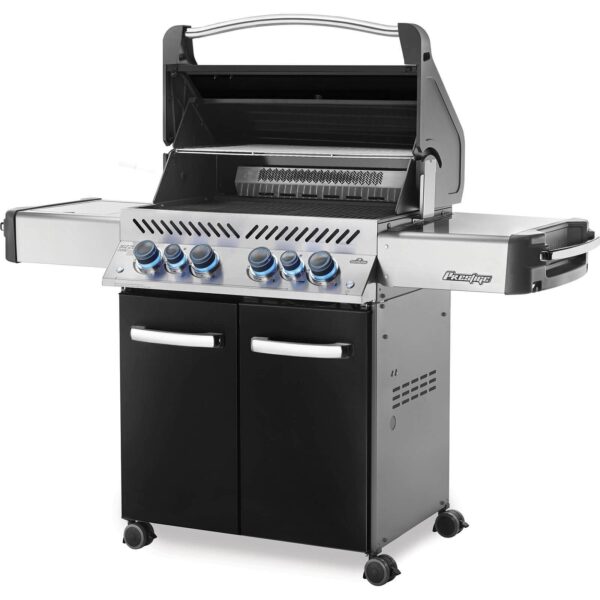
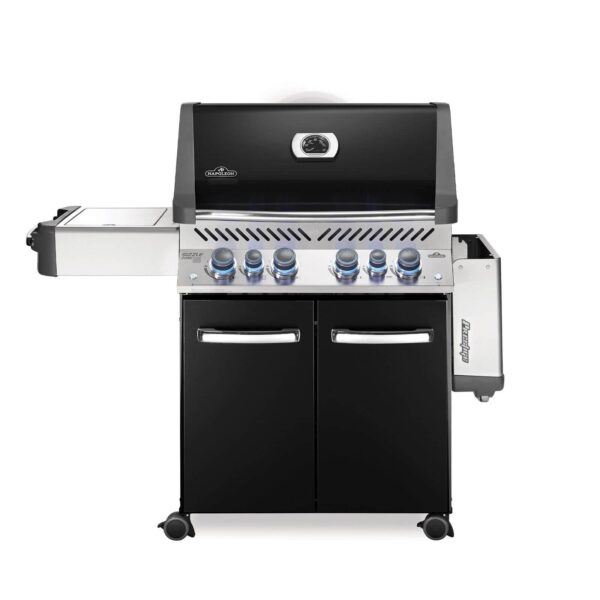
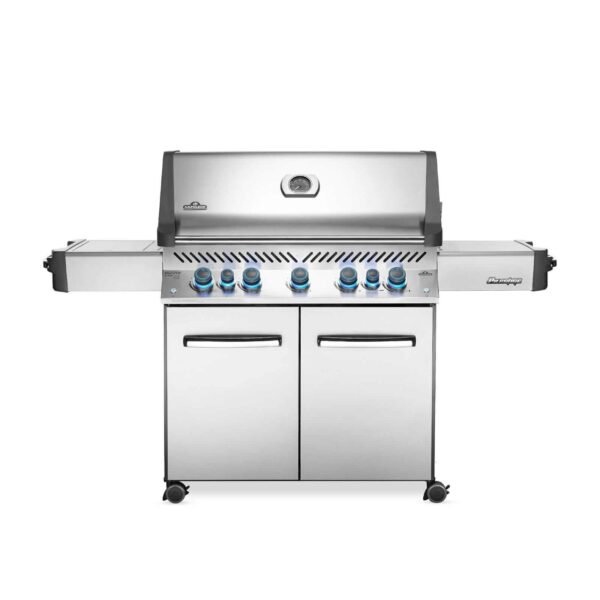
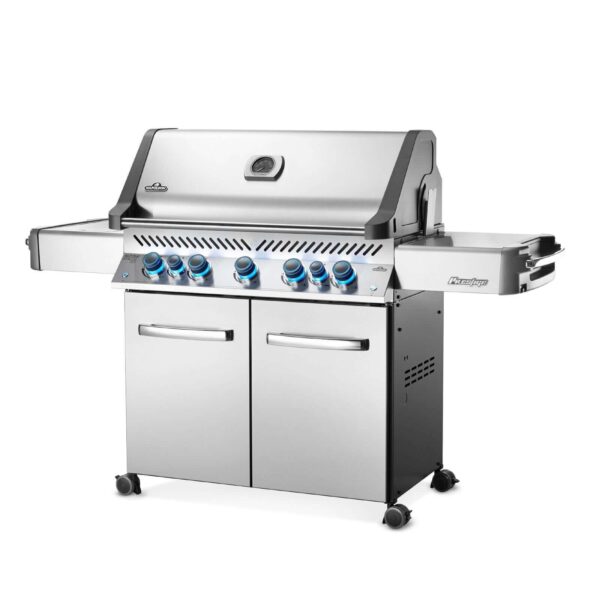
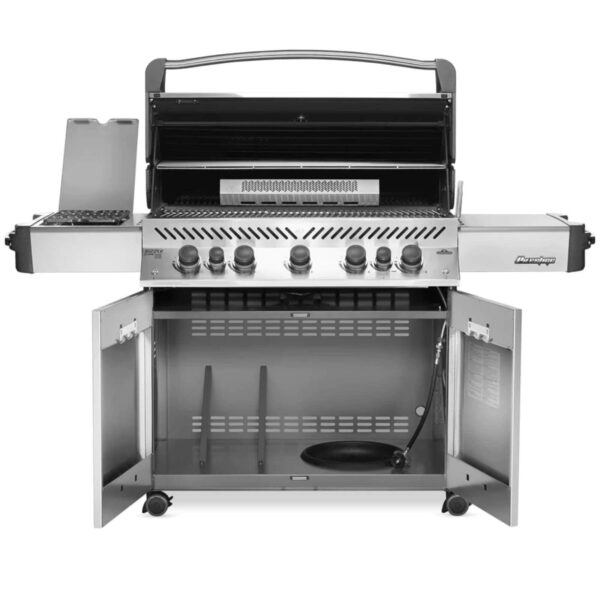
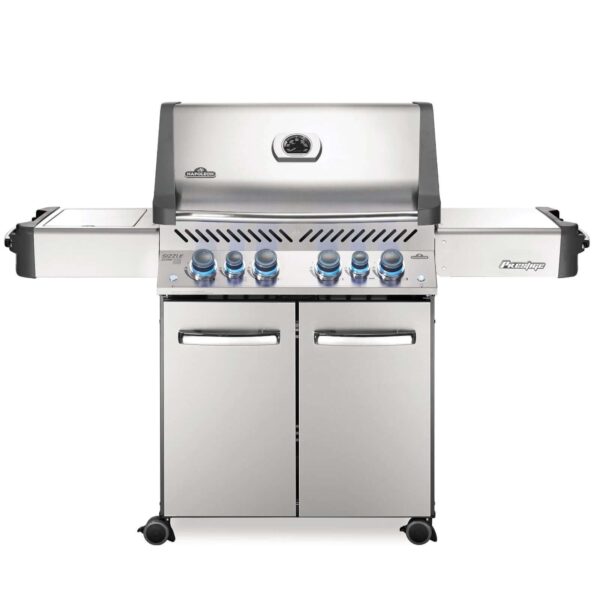
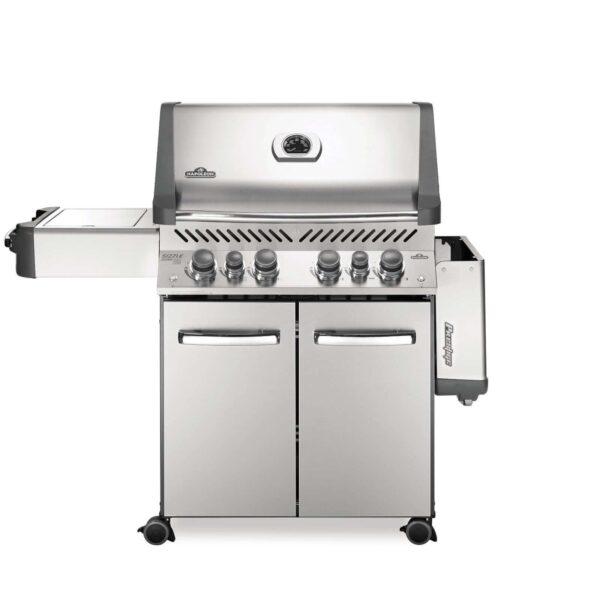
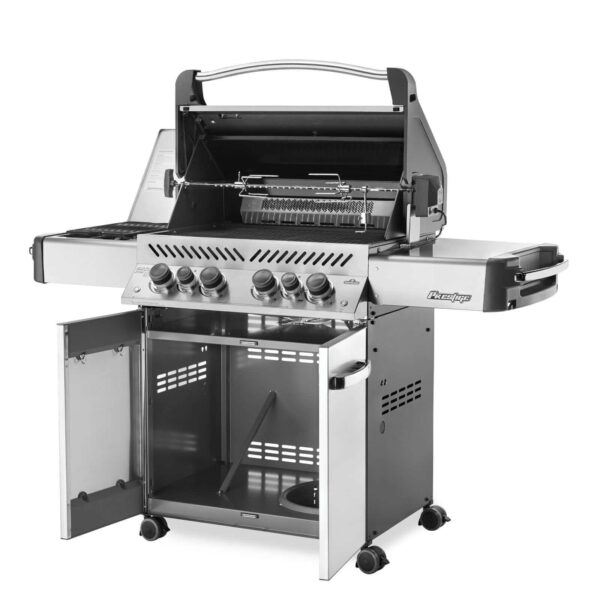
Napoleon’s Prestige barbecues represent the perfect balance between technology, design and outdoor dining excellence. Available in a range of models with finishes and functionalities to suit different lifestyles, these barbecues are designed for beginners to the world of grilling as well as true grill masters.
With premium construction, high-performance burners, precise temperature control and innovative features, each model in the Prestige line transforms any deck, patio or garden into a true professional kitchen.
Available Models and Key Differences
The Prestige range is presented as a variable product line that includes four distinct models:
Prestige 500 Stainless Steel
A stainless steel classic that stands out for its robustness, polished aesthetics and high performance. Perfect for those who prioritise durability and professional style.
Prestige 500 Black
The black version with a glossy finish adds a modern and sophisticated touch, ideal for those who want a stylish barbecue that blends in with a bolder decorative environment.
Phantom Prestige 500 RSIB
With its distinctive matt black enamel finish and unique design details, this model is in a class of its own. It combines power, ergonomics and an unrivalled appearance, ideal for premium environments.
Prestige 665 RSIB Stainless Steel
The largest model in the family, with five main burners, large cooking capacity and plenty of power for events, celebrations and frequent use. The perfect choice for those looking to take their outdoor cooking to the next level.
Each model includes unique features, while maintaining a common foundation of quality and technology.
Premium Construction and Unmatched Durability
Prestige barbecues are constructed of 16-gauge type 304 stainless steel, a high-end alloy that is especially resistant to corrosion, ideal for outdoor use and food contact.
The visible surfaces, grates, burners and sealing plates are designed to withstand extreme conditions, such as rain, humidity, ambient salinity or drastic temperature changes, without tarnishing or warping. The Phantom version, for example, also features a matt black enamel that not only adds elegance, but also greater resistance to scratching and grease stains.
This structural quality guarantees a very long service life, even with intensive use, making any Prestige model a smart investment for private households as well as for catering and culinary landscaping professionals.
Powerful, Intelligently Distributed Burners
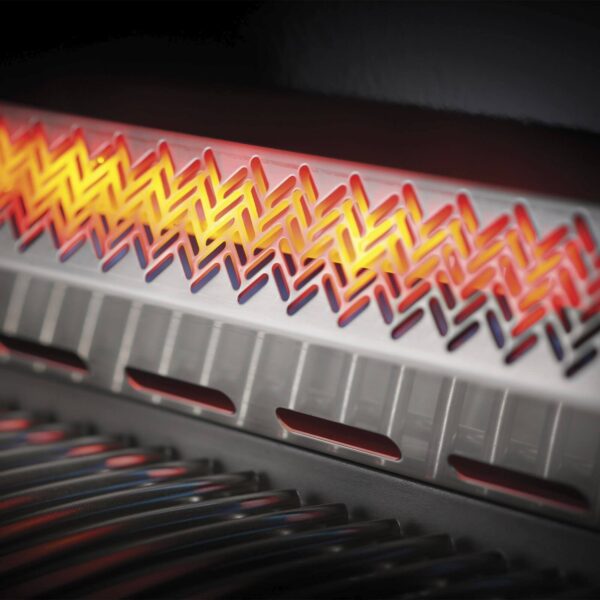
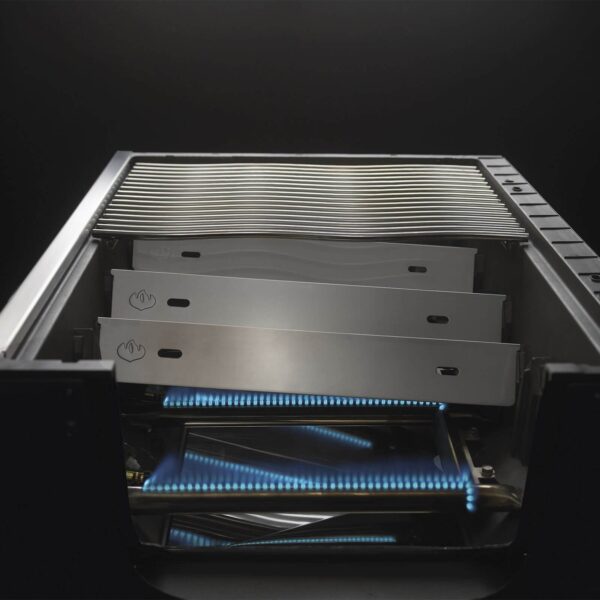
Each Prestige model features high-performance stainless steel burners with double row of orifices, allowing for more efficient combustion and better regulation of gas flow.
Depending on the model, four to five main burners are included, plus a SIZZLE ZONE™ infrared side burner and a rear rotisserie burner. This configuration allows for the creation of distinct heat zones, essential for mastering direct cooking, indirect cooking, searing, smoking, roasting and side dish preparation techniques.
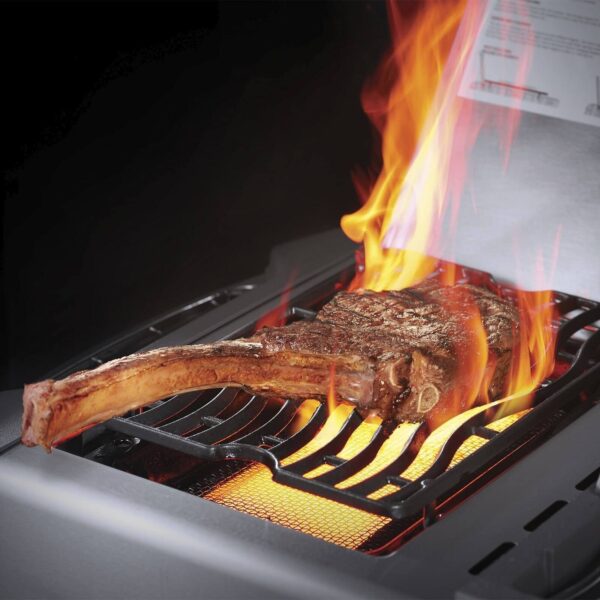
The SIZZLE ZONE™ side burner reaches temperatures of up to 980°C in less than a minute, ideal for searing meats, sautéing vegetables or even flambéing desserts. The infrared rear burner, meanwhile, provides gentle, even, enveloping cooking for large pieces such as ribs or whole poultry.
Advanced Cooking Technology
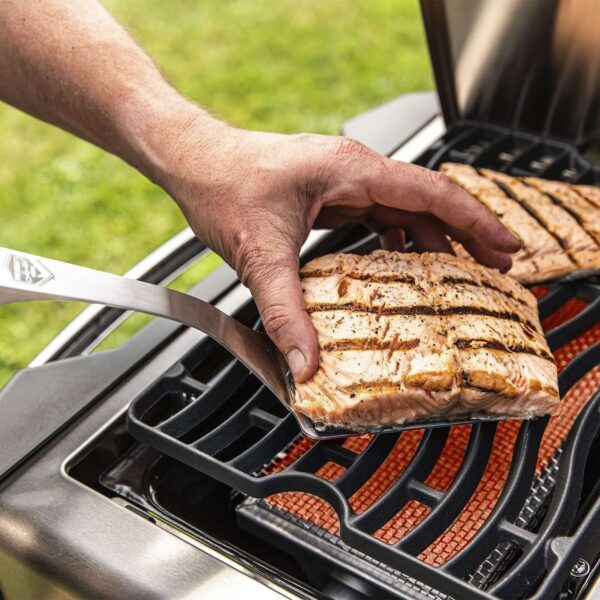
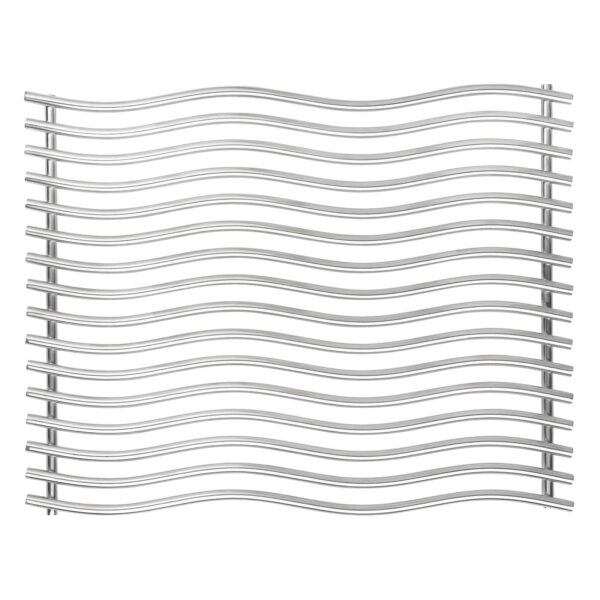
The Wave™ grids with their unique Napoleon wave design ensure even heat distribution and improve heat retention. This design prevents small foods from falling between the slits and allows for even sealing due to the constant contact between the metal and the ingredients.
In addition, the dual-level sealing plates act as heat diffusers and juice vaporisers. They convert cooking liquids into aromatic steam, which is then re-infused into the food, intensifying the natural flavour of meat, vegetables and fish.
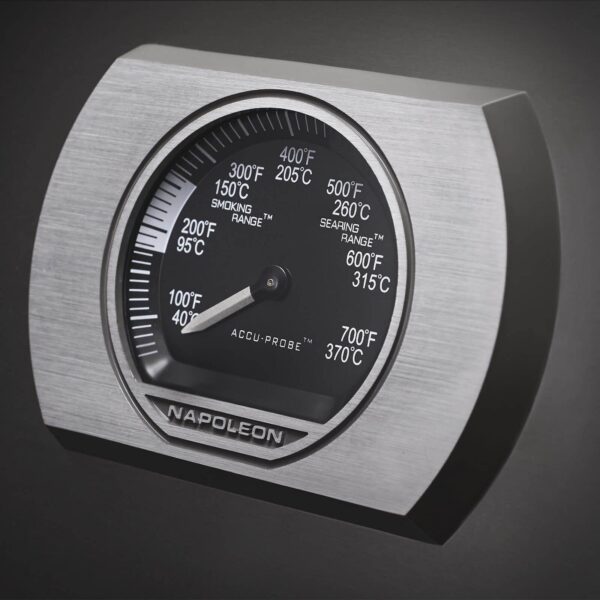
The convection lid and Accu-Probe™ thermometer further enhance thermal control, transforming the barbecue into a surround heat oven for extended cooking recipes.
Precision and Total Control
Thanks to the integration of the Accu-Probe™ thermometer, it is possible to accurately control the thermal level from 40 °C to 370 °C. This wide range allows from slow cooking at low temperatures to intense searing in seconds.
Each burner is individually controlled to precisely adjust the temperature in different zones, creating customised cooking environments. This is especially useful when preparing simultaneous dishes with different techniques and times.
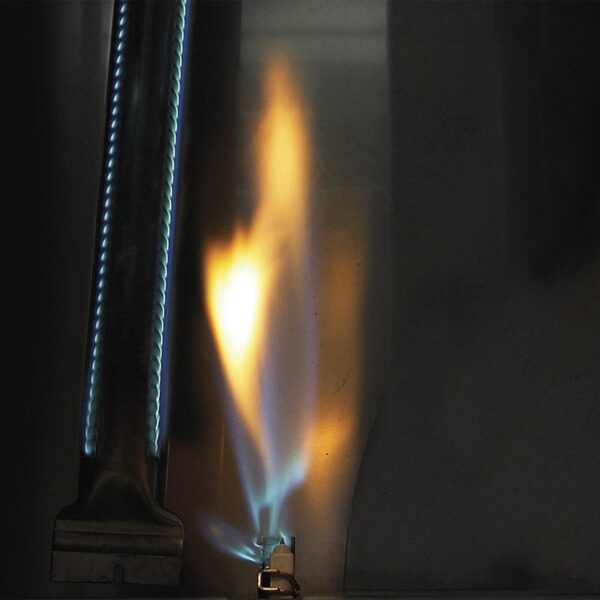
The Jetfire™ system ensures fast and safe ignitions in all conditions, while the automatic cross ignition adds extra safety by keeping the flow under control even if one burner goes out unexpectedly.
Safety and Elegance Lighting
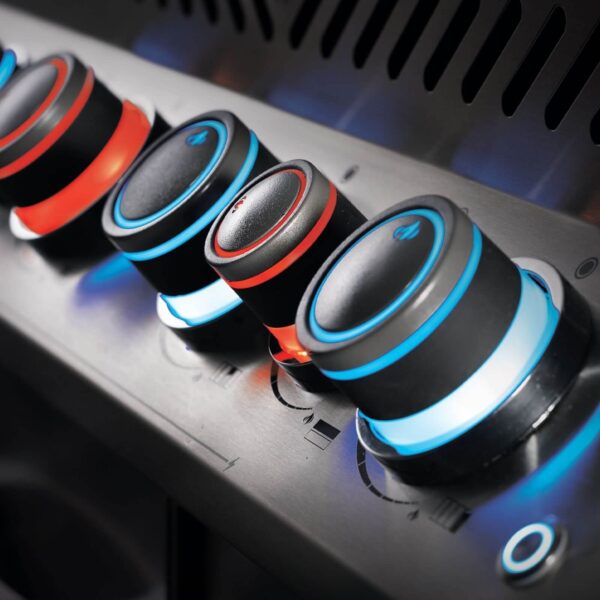
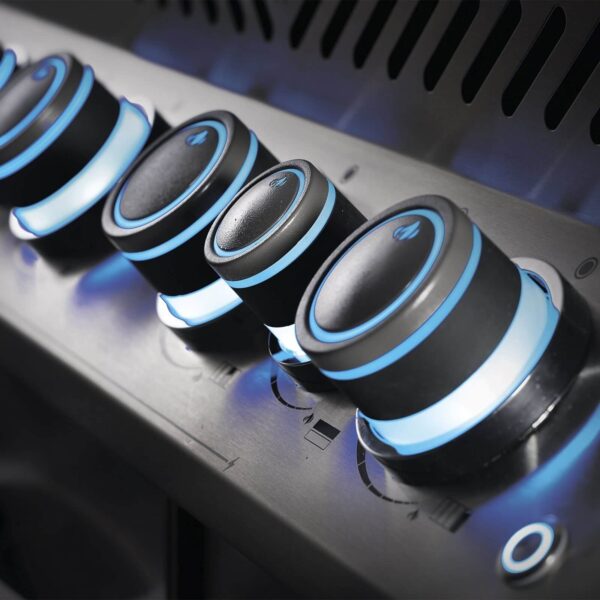
All Prestige barbecues include backlit knobs with Safety Glow™ technology, which switch from blue (off) to red (on), offering clear and aesthetically pleasing visual confirmation.
Superior models such as the Phantom or Prestige 665 also integrate multi-colour LED lighting for convenient night-time cooking or to personalise the visual ambience of the barbecue, adding a touch of distinction.
This visual safety system not only prevents accidents, but also enhances the night-time experience, allowing full operation of the barbecue without the need for additional lighting.
Ergonomic and Space-Saving Design
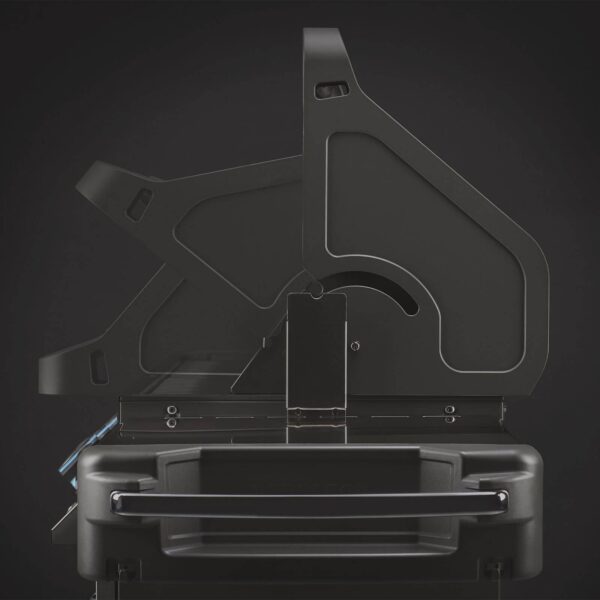
Thanks to the Lift Ease™ lid design, opening is smooth, quiet and effortless. This technology shifts the centre of gravity to the rear, allowing the lid to slide vertically without taking up extra space in depth.
Unique to Napoleon, this mechanism is essential in tight spaces, built-in outdoor kitchens or terraces, as it allows the lid to open and close repeatedly without moving furniture or interrupting workflow.
In addition, this robust design minimises heat loss when opening the lid, keeping the interior temperature constant and efficient.
Ideal for all types of users
Whether you are a casual barbecue lover or a true grill enthusiast, Prestige barbecues adapt to every user’s level of experience.
Thanks to their ease of use, intuitive ignition, thermal versatility and refined aesthetics, they are ideal for both casual home use and professional settings where consistent performance, efficiency and presentation are required.
Their large group cooking capability makes them perfect for social events, family gatherings, banquets or outdoor dining celebrations.
Non-Barbecue Applications
Beyond their primary function, Prestige barbecues can function as fully independent outdoor kitchens. They are perfect for:
Residential areas without an installed kitchen.
Architectural and landscaping projects that integrate cooking areas.
Catering events, weddings, fairs and gastronomic markets.
Special preparations during holiday or summer seasons.
The side burner allows the use of woks, pots or pans, turning the barbecue into a versatile cooking point for frying, boiling, flambéing or even preparing hot desserts.
Napoleon Prestige Model Comparison Chart
Technical comparison to help you choose the model that best suits your needs.
Maintenance, Cleaning and Uses to preserve the excellence of your Napoleon Prestige
A high-end barbecue deserves care that matches its quality. Regular maintenance and responsible use of your Napoleon Prestige not only extend the life of the equipment, but also ensure that each cooking session is impeccable, safe and satisfying. These barbecues have been designed with ease of maintenance in mind, with removable trays, corrosion-resistant materials and components that are easy to clean.By integrating this care into your routine, you can ensure that your barbecue will work as well as it did on the first day, even after years of intensive grilling, entire summer seasons or multiple family events.
Why constant maintenance is essential
Prestige barbecues are designed with high-end materials such as 304 stainless steel, dual-port burners and automatic ignition systems. However, like any equipment exposed to heat, grease and the elements, they
need regular attention to avoid blockages, residue build-up or premature deterioration.A dirty barbecue not only loses thermal efficiency: it also increases the risk of flare-ups, wear and tear of key components or even internal corrosion in hidden areas.
Cleaning after each use: a simple but crucial routine
- Cleaning the grills while they are still hot. Just at the end of cooking (or during the last few minutes with the lid closed), brush the grills with a stainless steel wire brush. This removes food residues, solidified fat and charred particles that could affect the flavours in future preparations.
- Removing grease residue. Grease trays are designed to be easy to remove and empty. They should be cleaned after each use if you have cooked meat with a high fat content, such as sausages, ribs or burgers.
- Wipe with a cloth using warm water and neutral soap. Clean the exterior, controls and lid with a damp cloth to maintain shine and prevent splashes or steam stains. Avoid abrasive products that may damage the enamel or matte finish of the Phantom model.
Monthly deep cleaning: the key to consistent performance
- Remove the grills, diffuser plates and burner guards. Access the interior to clean hidden areas where invisible residue accumulates. Use specific barbecue degreasers or a solution of vinegar and bicarbonate of soda.
- Clean the burner orifices. Use a soft-bristled brush or a fine metal needle to unblock the small orifices through which the gas exits. This ensures a uniform and unobstructed flame.
- Wash the diffuser plates with a sponge and hot water. Remove any solidified grease, which can catch fire if it accumulates in excess. Let them dry completely before putting them back.
Quarterly and annual care: inspection and safety
- Check the gas connections and hoses. Apply a mixture of soap and water to the joints and look for bubbles that indicate leaks. This simple test can prevent accidents.
- Lubricate the knobs if they are stiff. Use a gas-safe lubricant (always check the manufacturer's manual) to keep the mechanism smooth and precise.
- Check the cover of the Jetfire™ system electrodes. Build-up of grease or soot can interfere with ignition. Clean them with a dry cotton swab without applying too much pressure.
Exterior protection: aesthetic and functional care
- Use a Napoleon protective cover specific to the model. Protects from sun, rain, dust and salt. A good cover prevents discolouration, wear of sensitive surfaces and premature ageing of steel or plastic components.
- Store in a covered area during the winter if not in use. Although they are designed to withstand the whole year, it is advisable to protect them from the most extreme conditions to keep their appearance intact.
Recommendations for use: best practices for professional results
- Always preheat the barbecue for 5 to 10 minutes before cooking. This allows the grill to be sterilised, the temperature to stabilise and the sealing efficiency to improve.
- Avoid using flammable liquids to start the flame. The Jetfire™ system provides automatic ignition, and the use of liquids can damage the electrodes or cause unnecessary risks.
- Don't let grease accumulate without cleaning it for more than a week. In addition to being a fire hazard, old grease generates bitter flavours and unpleasant odours.
- Always turn off the burners and close the gas valve after each use. This is an essential safety measure to prevent leaks.
Maintenance, Cleaning and Uses to preserve the excellence of your Napoleon Prestige
A high-end barbecue deserves care that matches its quality. Regular maintenance and responsible use of your Napoleon Prestige not only extend the life of the equipment, but also ensure that each cooking session is impeccable, safe and satisfying. These barbecues have been designed with ease of maintenance in mind, with removable trays, corrosion-resistant materials and components that are easy to clean.
By integrating this care into your routine, you can ensure that your barbecue will work as well as it did on the first day, even after years of intensive grilling, entire summer seasons or multiple family events.
Why constant maintenance is essential
Prestige barbecues are designed with high-end materials such as 304 stainless steel, dual-port burners and automatic ignition systems. However, like any equipment exposed to heat, grease and the elements, they
need regular attention to avoid blockages, residue build-up or premature deterioration.
A dirty barbecue not only loses thermal efficiency: it also increases the risk of flare-ups, wear and tear of key components or even internal corrosion in hidden areas.
Cleaning after each use: a simple but crucial routine
- Cleaning the grills while they are still hot. Just at the end of cooking (or during the last few minutes with the lid closed), brush the grills with a stainless steel wire brush. This removes food residues, solidified fat and charred particles that could affect the flavours in future preparations.
- Removing grease residue. Grease trays are designed to be easy to remove and empty. They should be cleaned after each use if you have cooked meat with a high fat content, such as sausages, ribs or burgers.
- Wipe with a cloth using warm water and neutral soap. Clean the exterior, controls and lid with a damp cloth to maintain shine and prevent splashes or steam stains. Avoid abrasive products that may damage the enamel or matte finish of the Phantom model.
Monthly deep cleaning: the key to consistent performance
- Remove the grills, diffuser plates and burner guards. Access the interior to clean hidden areas where invisible residue accumulates. Use specific barbecue degreasers or a solution of vinegar and bicarbonate of soda.
- Clean the burner orifices. Use a soft-bristled brush or a fine metal needle to unblock the small orifices through which the gas exits. This ensures a uniform and unobstructed flame.
- Wash the diffuser plates with a sponge and hot water. Remove any solidified grease, which can catch fire if it accumulates in excess. Let them dry completely before putting them back.
Quarterly and annual care: inspection and safety
- Check the gas connections and hoses. Apply a mixture of soap and water to the joints and look for bubbles that indicate leaks. This simple test can prevent accidents.
- Lubricate the knobs if they are stiff. Use a gas-safe lubricant (always check the manufacturer's manual) to keep the mechanism smooth and precise.
- Check the cover of the Jetfire™ system electrodes. Build-up of grease or soot can interfere with ignition. Clean them with a dry cotton swab without applying too much pressure.
Exterior protection: aesthetic and functional care
- Use a Napoleon protective cover specific to the model. Protects from sun, rain, dust and salt. A good cover prevents discolouration, wear of sensitive surfaces and premature ageing of steel or plastic components.
- Store in a covered area during the winter if not in use. Although they are designed to withstand the whole year, it is advisable to protect them from the most extreme conditions to keep their appearance intact.
Recommendations for use: best practices for professional results
- Always preheat the barbecue for 5 to 10 minutes before cooking. This allows the grill to be sterilised, the temperature to stabilise and the sealing efficiency to improve.
- Avoid using flammable liquids to start the flame. The Jetfire™ system provides automatic ignition, and the use of liquids can damage the electrodes or cause unnecessary risks.
- Don't let grease accumulate without cleaning it for more than a week. In addition to being a fire hazard, old grease generates bitter flavours and unpleasant odours.
- Always turn off the burners and close the gas valve after each use. This is an essential safety measure to prevent leaks.
Maintenance, Cleaning and Uses to preserve the excellence of your Napoleon Prestige
A high-end barbecue deserves care that matches its quality. Regular maintenance and responsible use of your Napoleon Prestige not only extend the life of the equipment, but also ensure that each cooking session is impeccable, safe and satisfying. These barbecues have been designed with ease of maintenance in mind, with removable trays, corrosion-resistant materials and components that are easy to clean.
By integrating this care into your routine, you can ensure that your barbecue will work as well as it did on the first day, even after years of intensive grilling, entire summer seasons or multiple family events.
Why constant maintenance is essential
Prestige barbecues are designed with high-end materials such as 304 stainless steel, dual-port burners and automatic ignition systems. However, like any equipment exposed to heat, grease and the elements, they
need regular attention to avoid blockages, residue build-up or premature deterioration.
A dirty barbecue not only loses thermal efficiency: it also increases the risk of flare-ups, wear and tear of key components or even internal corrosion in hidden areas.
Cleaning after each use: a simple but crucial routine
- Cleaning the grills while they are still hot. Just at the end of cooking (or during the last few minutes with the lid closed), brush the grills with a stainless steel wire brush. This removes food residues, solidified fat and charred particles that could affect the flavours in future preparations.
- Removing grease residue. Grease trays are designed to be easy to remove and empty. They should be cleaned after each use if you have cooked meat with a high fat content, such as sausages, ribs or burgers.
- Wipe with a cloth using warm water and neutral soap. Clean the exterior, controls and lid with a damp cloth to maintain shine and prevent splashes or steam stains. Avoid abrasive products that may damage the enamel or matte finish of the Phantom model.
Monthly deep cleaning: the key to consistent performance
- Remove the grills, diffuser plates and burner guards. Access the interior to clean hidden areas where invisible residue accumulates. Use specific barbecue degreasers or a solution of vinegar and bicarbonate of soda.
- Clean the burner orifices. Use a soft-bristled brush or a fine metal needle to unblock the small orifices through which the gas exits. This ensures a uniform and unobstructed flame.
- Wash the diffuser plates with a sponge and hot water. Remove any solidified grease, which can catch fire if it accumulates in excess. Let them dry completely before putting them back.
Quarterly and annual care: inspection and safety
- Check the gas connections and hoses. Apply a mixture of soap and water to the joints and look for bubbles that indicate leaks. This simple test can prevent accidents.
- Lubricate the knobs if they are stiff. Use a gas-safe lubricant (always check the manufacturer's manual) to keep the mechanism smooth and precise.
- Check the cover of the Jetfire™ system electrodes. Build-up of grease or soot can interfere with ignition. Clean them with a dry cotton swab without applying too much pressure.
Exterior protection: aesthetic and functional care
- Use a Napoleon protective cover specific to the model. Protects from sun, rain, dust and salt. A good cover prevents discolouration, wear of sensitive surfaces and premature ageing of steel or plastic components.
- Store in a covered area during the winter if not in use. Although they are designed to withstand the whole year, it is advisable to protect them from the most extreme conditions to keep their appearance intact.
Recommendations for use: best practices for professional results
- Always preheat the barbecue for 5 to 10 minutes before cooking. This allows the grill to be sterilised, the temperature to stabilise and the sealing efficiency to improve.
- Avoid using flammable liquids to start the flame. The Jetfire™ system provides automatic ignition, and the use of liquids can damage the electrodes or cause unnecessary risks.
- Don't let grease accumulate without cleaning it for more than a week. In addition to being a fire hazard, old grease generates bitter flavours and unpleasant odours.
- Always turn off the burners and close the gas valve after each use. This is an essential safety measure to prevent leaks.
Maintenance, Cleaning and Uses to preserve the excellence of your Napoleon Prestige
A high-end barbecue deserves care that matches its quality. Regular maintenance and responsible use of your Napoleon Prestige not only extend the life of the equipment, but also ensure that each cooking session is impeccable, safe and satisfying. These barbecues have been designed with ease of maintenance in mind, with removable trays, corrosion-resistant materials and components that are easy to clean.
By integrating this care into your routine, you can ensure that your barbecue will work as well as it did on the first day, even after years of intensive grilling, entire summer seasons or multiple family events.
Why constant maintenance is essential
Prestige barbecues are designed with high-end materials such as 304 stainless steel, dual-port burners and automatic ignition systems. However, like any equipment exposed to heat, grease and the elements, they
need regular attention to avoid blockages, residue build-up or premature deterioration.
A dirty barbecue not only loses thermal efficiency: it also increases the risk of flare-ups, wear and tear of key components or even internal corrosion in hidden areas.
Cleaning after each use: a simple but crucial routine
- Cleaning the grills while they are still hot. Just at the end of cooking (or during the last few minutes with the lid closed), brush the grills with a stainless steel wire brush. This removes food residues, solidified fat and charred particles that could affect the flavours in future preparations.
- Removing grease residue. Grease trays are designed to be easy to remove and empty. They should be cleaned after each use if you have cooked meat with a high fat content, such as sausages, ribs or burgers.
- Wipe with a cloth using warm water and neutral soap. Clean the exterior, controls and lid with a damp cloth to maintain shine and prevent splashes or steam stains. Avoid abrasive products that may damage the enamel or matte finish of the Phantom model.
Monthly deep cleaning: the key to consistent performance
- Remove the grills, diffuser plates and burner guards. Access the interior to clean hidden areas where invisible residue accumulates. Use specific barbecue degreasers or a solution of vinegar and bicarbonate of soda.
- Clean the burner orifices. Use a soft-bristled brush or a fine metal needle to unblock the small orifices through which the gas exits. This ensures a uniform and unobstructed flame.
- Wash the diffuser plates with a sponge and hot water. Remove any solidified grease, which can catch fire if it accumulates in excess. Let them dry completely before putting them back.
Quarterly and annual care: inspection and safety
- Check the gas connections and hoses. Apply a mixture of soap and water to the joints and look for bubbles that indicate leaks. This simple test can prevent accidents.
- Lubricate the knobs if they are stiff. Use a gas-safe lubricant (always check the manufacturer's manual) to keep the mechanism smooth and precise.
- Check the cover of the Jetfire™ system electrodes. Build-up of grease or soot can interfere with ignition. Clean them with a dry cotton swab without applying too much pressure.
Exterior protection: aesthetic and functional care
- Use a Napoleon protective cover specific to the model. Protects from sun, rain, dust and salt. A good cover prevents discolouration, wear of sensitive surfaces and premature ageing of steel or plastic components.
- Store in a covered area during the winter if not in use. Although they are designed to withstand the whole year, it is advisable to protect them from the most extreme conditions to keep their appearance intact.
Recommendations for use: best practices for professional results
- Always preheat the barbecue for 5 to 10 minutes before cooking. This allows the grill to be sterilised, the temperature to stabilise and the sealing efficiency to improve.
- Avoid using flammable liquids to start the flame. The Jetfire™ system provides automatic ignition, and the use of liquids can damage the electrodes or cause unnecessary risks.
- Don't let grease accumulate without cleaning it for more than a week. In addition to being a fire hazard, old grease generates bitter flavours and unpleasant odours.
- Always turn off the burners and close the gas valve after each use. This is an essential safety measure to prevent leaks.